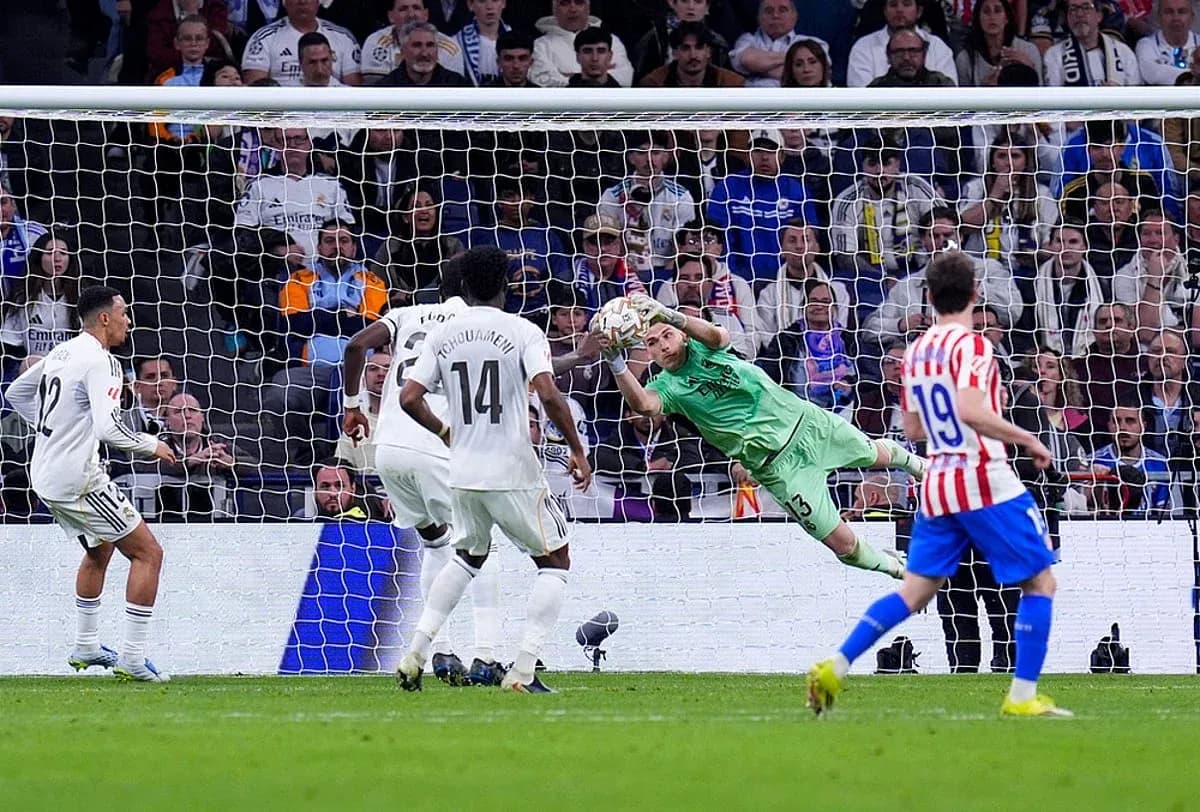
Real Betis and Real Madrid Share Points in La Liga Clash
Under the Seville lights of Estadio de la Cartuja, a neutral-stage La Liga epic finished level, yet felt anything but neutral. Real Betis and Real Madrid shared a 1-1 draw, a result that reverberates differently for two clubs chasing very different dreams. Following this result, the table tells its own story: Betis, 5th with 50 points and a goal difference of 8 (49 scored, 41 conceded), remain firmly in the Europa League hunt. Madrid, 2nd on 74 points with a goal difference of 37 (68 scored, 31 conceded), see another small fragment of their title push chipped away.
I. The Big Picture – Styles Colliding on Neutral Ground
On paper, it was Real Betis “at home”, but the setting at La Cartuja gave the night a cup-final feel. Manuel Pellegrini stayed loyal to his seasonal blueprint: a 4-2-3-1 that has been his default in 24 league matches, emphasizing controlled possession and wide creativity. Across the campaign, Betis have averaged 1.7 goals at home and 1.3 on their travels, 1.5 overall, a steady but not explosive attack that tends to grow into games. Their minute distribution underlines that: 22.45% of their goals come between 76-90 minutes, the clearest sign of a side that believes in the long game.
Alvaro Arbeloa’s Madrid arrived with their now-standard 4-4-2, a shape they have used 15 times in La Liga. It is the framework for a ruthless attack that averages 2.3 goals at home and 1.8 on their travels, 2.1 overall. The late surge is even more pronounced: 26.09% of Madrid’s league goals arrive between 76-90 minutes, a period when Kylian Mbappé and Vinicius Junior habitually turn tight matches into routs.
Yet on this night, that late supremacy never materialised. Betis, who concede 14.63% of their goals in that same 76-90 window, managed to hold their nerve in the very phase where Madrid usually break opponents.
II. Tactical Voids – Absences that Bent the Game’s Shape
Both squads came into this fixture with notable absentees, and the tactical voids were most striking on Madrid’s side. Thibaut Courtois was missing with a thigh injury, pushing Andriy Lunin into the spotlight. Eder Militao’s injury and Aurelien Tchouaméni’s calf problem removed two pillars of Madrid’s central structure, while Arda Güler and Rodrygo were also unavailable, stripping Arbeloa of creative and rotational depth.
The knock-on effect was clear: Dean Donny Huijsen, a defender with a red card already on his seasonal ledger, started alongside Antonio Rüdiger. Huijsen’s profile – 31 tackles, 15 successful blocks and 18 interceptions this season – speaks of an aggressive front-foot centre-back. Against a Betis side that prefers to probe through the lines rather than bombard with crosses, that aggression was both an asset and a risk.
For Betis, the absences of J. Firpo and A. Ortiz trimmed Manuel Pellegrini’s options at left-back and in squad rotation, but did not force a structural rethink. The coach still deployed his familiar back four and double pivot, trusting the spine that has carried Betis to 12 wins and 14 draws in 33 league fixtures.
Disciplinary tendencies also lurked beneath the surface. Betis’ yellow-card profile spikes late, with 24.24% of their bookings between 76-90 minutes and another 16.67% in added time (91-105). Madrid’s own discipline frays as matches stretch: 23.33% of their yellows arrive between 61-75, 18.33% between 76-90, and a further 18.33% in added time. Both sides are used to walking a disciplinary tightrope in the closing stages; this time, neither fell off, but the tension shaped the tempo and risk-taking late on.
III. Key Matchups – Hunter vs Shield, Engine Room vs Enforcer
The headline duel was always going to be Madrid’s front line against Betis’ rearguard. Kylian Mbappé, La Liga’s leading scorer with 24 goals and 4 assists, arrived as the competition’s apex predator: 100 shots, 61 on target, 140 dribbles attempted with 76 successful. His penalty record this season is almost flawless but not perfect – 8 scored, 1 missed – underlining that even Madrid’s most reliable finisher has known the occasional misstep from the spot.
Vinicius Junior, with 13 goals and 5 assists, complements Mbappé with relentless dueling: 366 total duels, 181 won, and 184 dribbles attempted with 83 successful. He draws fouls at a brutal rate (70 drawn), forcing defensive lines into constant micro-adjustments.
Opposite them stood a Betis back four anchored by Marc Bartra and Natan, with Héctor Bellerín and R. Rodriguez flanking. Betis concede 1.1 goals at home and 1.4 on their travels, 1.2 overall – not elite, but organised enough to survive long spells under pressure. Their main structural weakness has been the opening quarter-hour, where 24.39% of their goals against arrive between 0-15 minutes. That vulnerability intersected ominously with Madrid’s own early scoring patterns (7.25% of their goals in 0-15 and 14.49% in 16-30), and the first-half breakthrough for Madrid felt like a statistical inevitability rather than a surprise.
In midfield, the “Engine Room” battle was rich in nuance. For Madrid, Federico Valverde and Jude Bellingham formed the central axis, supported by Brahim Diaz and T. Pitarch from the flanks and half-spaces. Valverde’s season – 5 goals, 8 assists, 1754 passes with 43 key passes and 41 tackles – paints him as the quintessential two-way midfielder. His 8 assists and 89% passing accuracy make him one of La Liga’s most efficient conduits from build-up to final third.
Betis countered with S. Amrabat and A. Fidalgo at the base, freeing Pablo Fornals to float between lines while Antony and A. Ezzalzouli attacked the half-spaces. Ezzalzouli has been Betis’ creative heartbeat: 7 goals and 7 assists, 25 key passes and 73 dribbles attempted with 34 successful. Antony, with 7 goals and 5 assists, adds another layer of incision, though his disciplinary record – 5 yellows and 1 red – hints at the edge he brings to duels.
The duel between Ezzalzouli and Madrid’s right side – Trent Alexander-Arnold and the right-sided central midfielder – was particularly decisive. Ezzalzouli’s 317 duels (164 won) and 62 fouls drawn make him a magnet for contact; against a Madrid team that already carries multiple red-card risks (Huijsen and Álvaro Fernández each with one this season), his ability to unbalance the structure was always going to be central to Betis’ route back into the game.
IV. Statistical Prognosis – xG Balance and Defensive Solidity
Following this result, the broader numbers still tilt the long-term balance towards Madrid, but with caveats. They remain the league’s more potent side, with 68 goals in 33 matches and an away average of 1.8 goals per game, compared to Betis’ 1.7 at home and 1.5 overall. Defensively, Madrid’s 0.9 goals conceded per match overall, and 1.1 on their travels, is marginally stronger than Betis’ 1.2 overall and 1.1 at home.
Yet the minute-by-minute distributions suggest that when these two meet, the expected goals curve is likely to flatten late on. Both teams peak offensively in the final quarter-hour – 22.45% of Betis’ goals and 26.09% of Madrid’s between 76-90 – but both also concede heavily there: Betis with 14.63% of their goals against, Madrid with 23.33% in that same window. In pure probabilistic terms, this fixture always threatened to be decided by a chaotic final act.
Instead, Betis’ structure and Real Madrid’s slightly blunted depth – without Courtois, Militao, Tchouaméni, Güler and Rodrygo – produced a more controlled stalemate than the raw attacking numbers might suggest. If we project this matchup forward, the xG landscape between these squads narrows significantly in high-stakes games: Madrid’s superior individual quality still nudges their expected goals slightly higher, but Betis’ late-game scoring surge and capacity to draw fouls in dangerous areas (through Ezzalzouli and Antony) make them a live threat in any rematch.
In tactical terms, the draw feels like a fair reflection of the underlying data. Madrid remain the hunter in the title race, but Betis have shown that with their 4-2-3-1, late offensive spikes, and disciplined if occasionally fragile back line, they are one of the few sides in La Liga capable of bending Madrid’s attacking machine without breaking.