Real Madrid's Penalty Controversy: Should It Have Been Retaken?
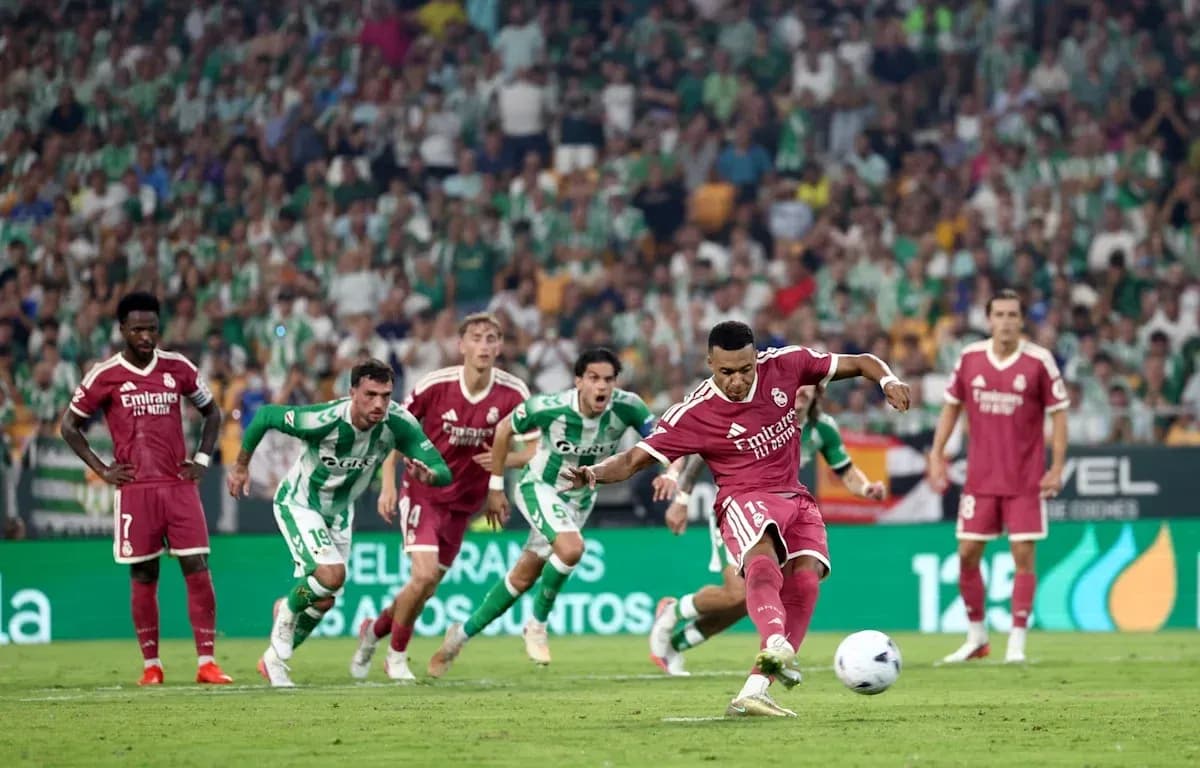
Real Madrid’s first defeat of the Jose Mourinho era has not been allowed to breathe. It has been dissected, frozen, rewound and argued over frame by frame – all for one moment: Kylian Mbappé standing over a penalty in stoppage time against Real Betis, and Marc Bartra stepping into the box too early.
Betis had already done the hard part. Los Verdiblancos struck late, leaving Madrid staring at a 1-0 deficit and ten frantic minutes to rescue something. Vinicius Jr. carved out the lifeline in added time, winning a penalty that dragged every Madrid hope to the edge of the six-yard box.
Mbappé took responsibility. Alvaro Valles guessed right, saved cleanly, and Betis held on. That should have been the story.
It wasn’t.
The freeze-frame that lit the fuse
As soon as the final whistle went, attention snapped to Bartra. On the replay, the defender appears to encroach into the area before Mbappé makes contact with the ball. Social media erupted. The Bernabéu audience watching from afar erupted. Should the penalty have been retaken?
The noise grew loud enough that the CTA – Spain’s refereeing committee – felt compelled to lean on the rulebooks that govern these decisions: IFAB’s Laws of the Game and the CTA’s own CARD manual.
Both point in the same direction.
What the laws actually demand
Under IFAB regulations, encroachment by a defender only forces a retake if that player:
- Directly affects the penalty taker,
- Plays the ball,
- Or challenges an opponent.
There is also a specific clarification for players who are in the air, as Bartra appeared to be. When a player has both feet off the ground, their position is judged by where their feet would land if they were touching the turf. That clause, though, only comes into play when the rest of the conditions for encroachment matter are met.
The CARD manual used by the CTA mirrors that logic. It states that a penalty must be retaken for a defender’s encroachment only when the infringement has a direct impact on the taker, the ball, or an attacking player going for the rebound.
In other words, being early into the box is not, on its own, enough.
Why Mbappé did not get a second chance
Apply those standards to the Madrid–Betis incident and the picture sharpens. For Mbappé to retake his kick, Bartra’s movement into the area would have needed to:
- Interfere with Mbappé’s strike,
- Affect his attempt to reach any rebound,
- Or involve a challenge on another Real Madrid player going for the loose ball.
None of that happened. Valles saved the penalty outright. Bartra did not touch the ball immediately after the kick, did not collide with Mbappé, and did not prevent any Madrid player from attacking a second phase.
His positioning may look ugly in a still image. It may fuel debate about consistency and how tightly encroachment is policed. But under the written laws that referees are told to follow, it did not alter Real Madrid’s opportunity to profit from the penalty or any rebound.
From that angle, the officials’ decision stands on solid ground. The CTA, after reviewing the episode, consider the call on the field to have been correct.
Real Madrid walk away with their first loss under Mourinho, no retake, no late reprieve – and a clear reminder that in this era of microscopic scrutiny, the rulebook can be both shield and sword.