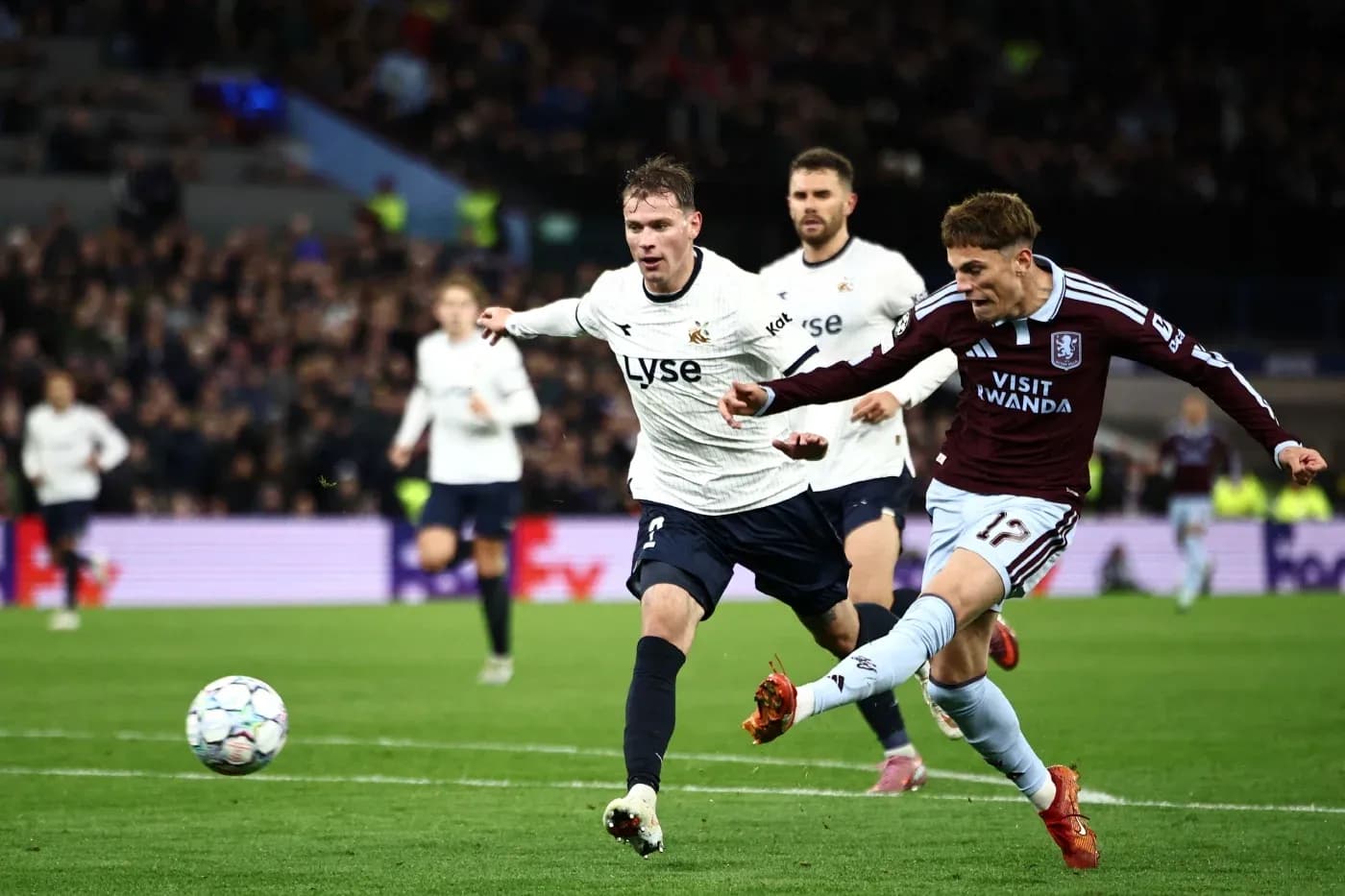
Sabah FA vs Aarhus: UEFA Champions League 3rd Qualifying Round Preview
Sabah FA host Aarhus at Bank Respublika Arena in the UEFA Champions League 3rd Qualifying Round, looking to overturn a 2-1 first-leg defeat in Denmark. The tie is finely balanced: Sabah have the home advantage and stronger underlying metrics, while Aarhus arrive with a one-goal lead and demonstrated attacking power.
In the model’s core prediction, Sabah FA are favoured not necessarily to win the tie outright, but to avoid defeat on the night. The official forecast gives Sabah or draw as the recommended angle, with the probability split at 45% home win, 45% draw, and just 10% away win. That is a very strong tilt towards the hosts when compared to the market.
Bookmakers, however, price this as a more conventional home-favoured but competitive match. Across the main firms, Sabah’s home win odds range from 1.91 to 2.05, implying roughly a 48.8–52.4% chance of a Sabah victory. The draw is between 3.06 and 3.75 (about 26.7–32.7%), and Aarhus are 3.05–3.80 (around 26.3–32.8%). In other words, the market sees Aarhus with roughly a one-in-three shot to win on the night, while the model slashes that to only 10%. That discrepancy is the key value question for bettors.
Looking at recent performance within this Champions League campaign, Sabah’s profile is robust. Their league block shows a form line of “WWWWL”, with 4 wins and 1 loss from 5 matches. They have scored 8 and conceded just 3 in this run, averaging 1.6 goals for and 0.6 against per game. Defensively, they have kept 3 clean sheets in 5 and have not failed to score once. The last-five comparison index backs this up: Sabah’s recent form index is 80 versus Aarhus’s 67, and defensively they rate 84 versus Aarhus’s 68.
Aarhus’s league form string “LWW” is shorter but points to a team that can respond: 2 wins and 1 loss from 3 matches, with 8 scored and 6 conceded (2.7 for, 2.0 against per match). Their attack index is identical to Sabah’s (both at 42 in the last-five block), but their defensive numbers are clearly weaker: 6 conceded in 3, no clean sheets, and a higher goals-against average. Aarhus are more open, higher variance, and more reliant on outscoring opponents.
Goal timing data underlines Sabah’s organised structure. They spread their 8 goals across the 16–90 minute window, with a strong surge between 61–75 minutes (3 goals, 37.50% of their total), while conceding only 3 overall, one in each of the 31–45, 61–75, and 76–90 intervals. Aarhus, by contrast, concede heavily in the 61–75 band (3 of 6 goals against, 42.86%) and are vulnerable to second-half pressure. In a scenario where Sabah need to chase the tie at home, this late-game pattern favours the hosts.
Head-to-head, there is only one competitive reference point: the first leg on 5 August 2026 at Cepheus Park, where Aarhus, as the home side, beat Sabah 2-1. That result aligns with the comparison block’s h2h index (0 for Sabah, 100 for Aarhus), but it was a narrow margin and not enough to override the broader statistical edge Sabah have shown across more matches.
The comparison totals give Sabah a slight overall edge (54.3 vs 45.8), with superiority in form (67 vs 33) and defence (67 vs 33), while attack is rated equal. The Poisson index is heavily skewed towards Sabah (100 vs 0), reinforcing the model’s confidence in the hosts in terms of expected scoring profile.
From a betting perspective, the official advice is clear: “Double chance: Sabah FA or draw”, fully consistent with the 45%/45%/10% probability split. When set against market prices, this looks like the sharpest way to back the model’s view. The double chance (home or draw) will be short, but the model is effectively saying that the chance of Aarhus winning inside 90 minutes is dramatically lower than the 26–33% implied by odds.
Given Sabah’s strong defensive record, home advantage, and late-game scoring trend versus Aarhus’s porous defence, the data-driven call is:
- Primary bet: Double chance – Sabah FA or Draw (following the official prediction).
- Match result lean: Sabah FA to win in 90 minutes, but with substantial draw risk, making the double chance the more conservative, model-aligned play.