Sassuolo Triumphs Over Juventus in Tactical Showdown
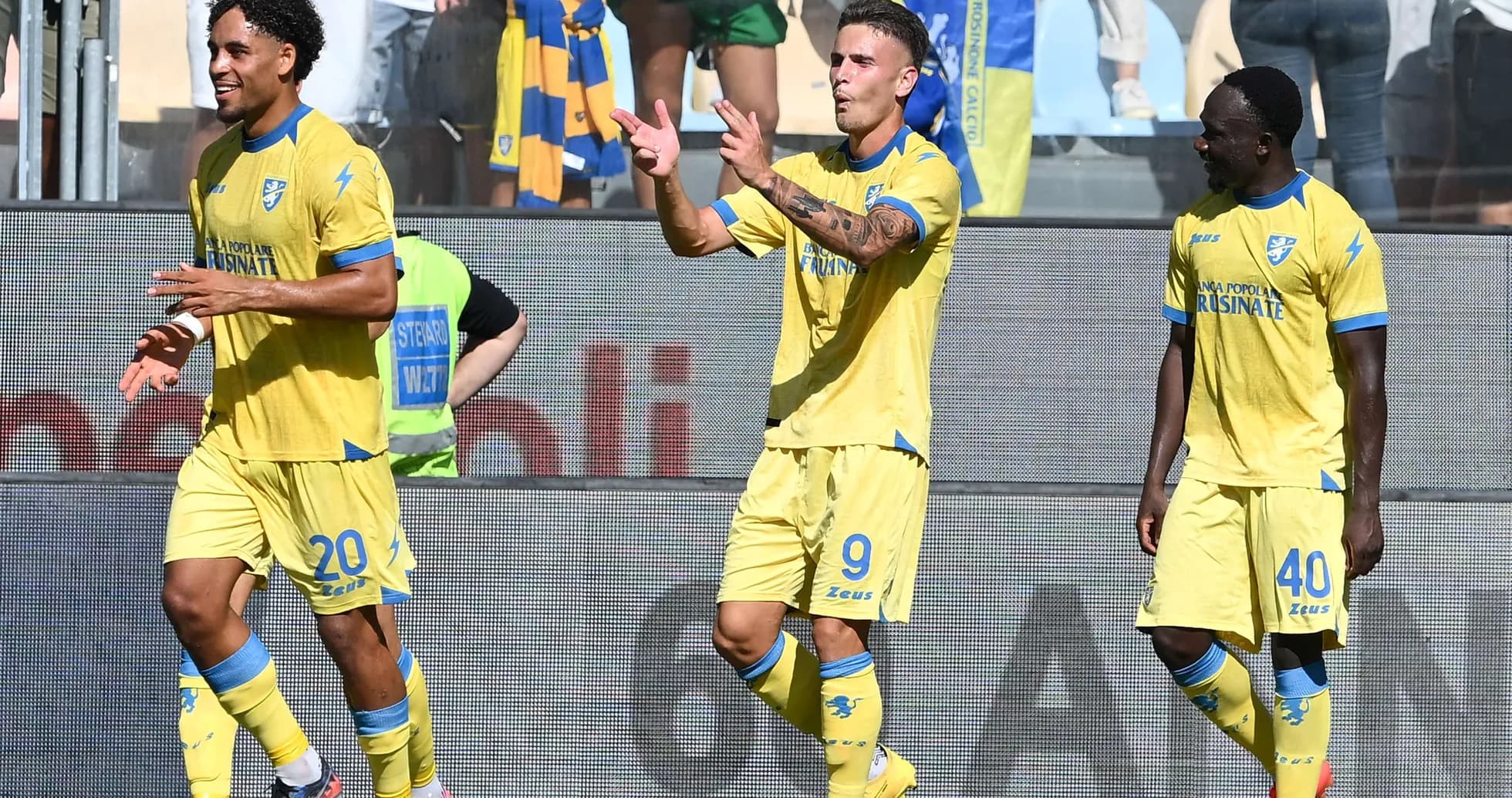
Under the Reggio Emilia lights, this was supposed to be a tactical litmus test for two sides hovering in the same corridor of the Serie A table. Instead, Mapei Stadium became the stage for a statement: Sassuolo 3–2 Juventus, a result that reshapes early-season narratives as much as it does the standings.
Following this result, both clubs sit on 7 points from 4 matches, but their paths to that tally feel very different. Sassuolo, now with a total goal difference of +1 (8 scored, 7 conceded), have turned their home into a cauldron: at home they have 2 wins from 2, scoring 5 and conceding 3. Juventus, with an overall goal difference of +2 (6 for, 4 against), have been more balanced but less explosive, and this defeat away – their first on their travels after a win and a loss, with 3 goals scored and 3 conceded away – exposes some structural questions.
I. The Big Picture – Two 4-2-3-1s, Two Different Souls
Both coaches mirrored each other on the tactical board with a 4-2-3-1, but the interpretations could not have been more distinct.
Alberto Aquilani’s Sassuolo were built on verticality and brave occupation of the half-spaces. A. Muric anchored a back four of S. Cinquegrano, J. Idzes, F. Leysen and J. Doig, protected by a double pivot of N. Matic and L. Lipani. Ahead of them, a fluid trio – D. Berardi, K. Thorstvedt and A. Lauriente – orbited around lone forward S. Esposito. On paper it was a 4-2-3-1; in practice, it often morphed into a 2-3-5 in possession, with Doig and Cinquegrano stepping high and Matic orchestrating from deep.
Luciano Spalletti’s Juventus also lined up in a 4-2-3-1, with G. Vicario behind a defence of P. Kalulu, Bremer, J. Lucumi and Z. Celik. The double pivot of Douglas Luiz and T. Koopmeiners looked, on paper, like a controller–conductor pairing, feeding a line of three – F. Conceicao, N. Gonzalez and K. Alajbegovic – behind R. Kolo Muani. Yet, where Sassuolo’s shape breathed, Juventus’ often felt rigid, especially when forced to defend wide against Lauriente and Berardi.
Heading into this game, Sassuolo’s attacking profile already hinted at chaos. Overall they had scored 8 goals in 4, averaging 2.0 goals per match in total, with 2.5 at home. Defensively, they conceded 1.8 per game overall, 1.5 at home. Juventus arrived with a more controlled identity: 1.5 goals scored per match in total, 1.5 conceded overall, and just 0.5 conceded at home – but a more vulnerable 1.5 conceded away. This clash was always going to be decided by whether Sassuolo’s offensive volatility could overwhelm Juventus’ defensive structure. The 3–2 scoreline answers that emphatically.
II. Tactical Voids – Absences and Discipline
Both squads walked into this fixture with long injury lists that subtly rewired their identities.
Sassuolo were without D. Boloca, F. Cande, I. Kone, Y. Paz, E. Pieragnolo, C. Volpato and S. Walukiewicz – a spine of ball-winning, depth and rotation options. The absence of Boloca and Kone, in particular, placed a heavier creative and defensive load on Matic and Lipani. It pushed Aquilani toward a more technically secure double pivot, less about destructive pressing and more about controlling tempo and first passes out of pressure.
Juventus’ missing contingent was even more telling: J. Boga, J. Cabal, A. Cambiaso, J. Ekhator, M. Locatelli, W. McKennie, A. Milik, K. Thuram and K. Yildiz all absent. Without Locatelli’s metronomic presence and McKennie’s vertical surges, Douglas Luiz and Koopmeiners had to cover both build-up and progression duties. The lack of Cambiaso robbed Spalletti of a natural outlet from full-back, making the wide build-up more predictable and easier for Sassuolo to trap.
Disciplinary trends framed the risk profiles. Heading into this game, Sassuolo’s yellow cards were concentrated between 46-60 minutes (50.00% of their bookings) and shared between 31-45 and 61-75 and 91-105 (each 16.67%). Juventus, by contrast, showed a habit of picking up cards in the 46-60 and 76-90 windows (each 28.57%), with early and late flashes at 0-15 and 91-105 (each 14.29%). It foreshadowed a contest where the second half would be increasingly scrappy as legs tired and spaces opened – precisely the environment Sassuolo’s front four relish.
III. Key Matchups – Hunter vs Shield, Engine Room Wars
Hunter vs Shield
Sassuolo’s “hunter” was less a single figure and more a collective threat, but the presence of Vasilije Adzic on the bench as a high-impact option loomed large. Heading into this game, Adzic had 2 goals and 1 assist in 4 appearances, converting all 4 of his shots on target and supplying 10 key passes with an 87% pass accuracy. Even without starting, his profile defined what Sassuolo wanted from the attacking midfield line: directness, vertical runs, and the ability to break lines with both passes and shots.
Against that, Juventus’ “shield” was a back line anchored by Bremer and Lucumi. Lucumi, already prominent in the disciplinary charts with 2 yellow cards in 3 appearances, walked a fine line between aggression and overcommitment. His 165 completed passes at 92% accuracy and 12 duels with 7 won spoke to a defender comfortable stepping out – but that same front-foot instinct was precisely what Sassuolo’s mobile front line could exploit with quick wall passes around him.
On their travels, Juventus had conceded 3 goals in 2 matches, averaging 1.5 against away. Sassuolo at home were scoring 2.5 per match. That intersection – a home attack that thrives on volume and an away defence that is solid but not impermeable – was the fault line that cracked repeatedly on the night.
The Engine Room
The midfield duel was the game’s quiet epic. N. Matic, with his positional wisdom, and the energetic L. Lipani formed a platform that allowed Berardi and Thorstvedt to occupy advanced pockets. Matic’s role was to screen Kolo Muani’s drops and Koopmeiners’ forward runs, while Lipani shuffled laterally to close passing lanes into Douglas Luiz.
On the other side, Koopmeiners arrived as one of Juventus’ creative hubs: 1 goal, 1 assist, 71 completed passes at 88% accuracy, and a perfect 2 shots on target from 2 attempts. But in a double pivot under pressure, he was often forced deeper, reducing his ability to arrive late in the box. Douglas Luiz, in turn, had to shuttle wide to help Celik and Kalulu deal with Lauriente and Berardi, leaving central spaces intermittently exposed.
This is where Sassuolo’s shape shone. With Berardi drifting inside from the right and Lauriente attacking Celik one-on-one, Thorstvedt could ghost between the lines, dragging Douglas Luiz into uncomfortable zones. Each time Juventus’ pivot was stretched horizontally, the vertical channel for Esposito or a late runner opened, and that pattern underpinned the hosts’ three-goal haul.
IV. Statistical Prognosis – What This Tells Us Going Forward
Even without explicit xG numbers, the season profiles sketch a clear picture. Sassuolo are a high-event side: 2.0 goals scored and 1.8 conceded per match overall, no clean sheets in total, and no matches where they have failed to score. Their biggest home win so far is 3-2, their biggest away loss 2-1 – scorelines that scream volatility rather than control.
Juventus, by contrast, are built on narrower margins. They average 1.5 goals scored and 1.0 conceded overall, with 2 clean sheets in total and no failures to score. Their biggest away win is 1-0, their heaviest away defeat now 3-2. They live in the realm of one-goal games, where details in the box and in transitions decide outcomes.
This match suggests that when Juventus are dragged into Sassuolo’s preferred game-state – open, stretched, with frequent transitions – their current structure, especially without Locatelli and McKennie, struggles to impose control. The yellow-card distribution, with 28.57% of their bookings arriving in each of the 46-60 and 76-90 windows, hints at a team that increasingly fouls to stop counters as matches become chaotic.
For Sassuolo, the win validates Aquilani’s commitment to an aggressive 4-2-3-1 at home. With Adzic emerging as a statistical leader in both goals and assists, and with Berardi and Lauriente thriving between the lines, they have the tools to keep turning Mapei Stadium into a venue where visitors are forced into shootouts they do not necessarily want.
For Juventus, the lesson is structural. The double pivot must be better protected when the full-backs advance, and the centre-backs – especially an already card-prone Lucumi – need clearer cover when stepping out. Spalletti’s side still possess the numbers of a top-half contender, but until they can drag chaotic games back toward their preferred controlled rhythm, nights like this in Reggio Emilia will remain a dangerous trap.