Saud Shakeel's Near Misses Save Pakistan from Defeat
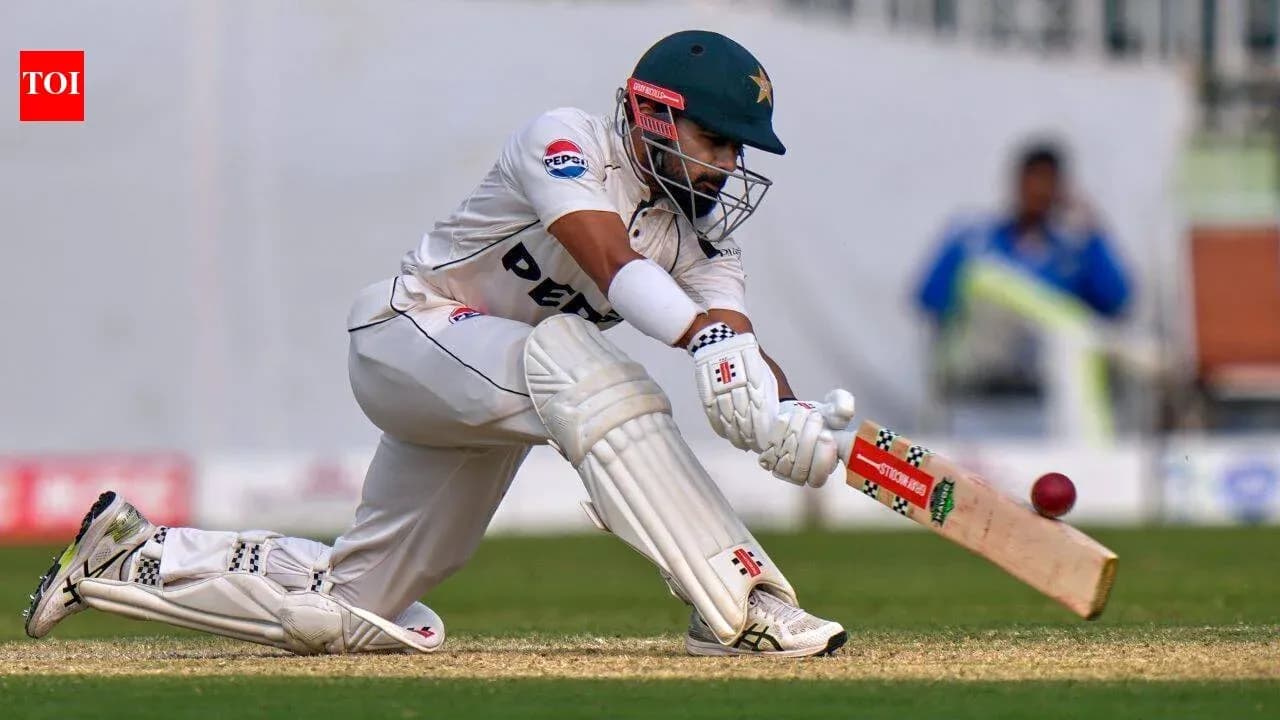
RAWALPINDI – Saud Shakeel walked off to silence first, then applause. Not the roar reserved for a hundred, not the outpouring a home crowd saves for a landmark, but a more complicated sound – respect laced with sympathy. On a flat fifth day at the Rawalpindi Cricket Stadium, he had done almost everything right. Almost.
For the second time in the match, he fell in the 90s. For the second time, he carried Pakistan’s hopes deep into the innings. And this time, his 97 was just enough to drag his team to safety and force a draw against Sri Lanka in the opening Test of the series on Friday.
A Long Vigil, Cut Short
Pakistan began the final day needing resilience more than brilliance. The pitch had slowed, the bowlers had tired, but the scoreboard still carried the threat of collapse. Shakeel settled in and simply refused to leave.
The left-hander occupied the crease for most of the day, soaking up 210 deliveries. He left well, nudged, defended, and occasionally drove, turning what could have been a tense final session into a slow suffocation of Sri Lanka’s hopes.
The pressure finally told – but not on Sri Lanka. On 97, having dragged Pakistan to 284/8 and an overall lead of 272, Shakeel lost his off stump to Lahiru Kumara. The dismissal ended a marathon but effectively ended the contest too. With little time left and no realistic chase on the cards, the captains shook hands. The draw was sealed.
For Pakistan, it was their first draw in the current World Test Championship cycle, a small but important pause in a run that had brought seven defeats and just two wins in their previous nine matches. For Shakeel, it was something stranger: a personal triumph wrapped in statistical cruelty.
Twice in the 90s – and Into History
Shakeel had already scored 93 in Pakistan’s imposing first-innings total of 434/9 declared. That effort set up the game. His 97 in the second innings saved it. Between them, those twin near-misses propelled him into one of Test cricket’s oddest and most painful lists.
- 98 & 97 – Clem Hill vs England, Adelaide, 1902
- 95 & 93 – Frank Woolley vs Australia, Lord’s, 1921
- 91 & 96 – Gordon Greenidge vs Pakistan, Georgetown, 1977
- 91 & 97 – Gordon Greenidge vs New Zealand, Christchurch, 1980
- 92 & 96 – Mahela Jayawardene vs New Zealand, Colombo SSC, 2009
- 93 & 97 – Saud Shakeel vs Sri Lanka, Rawalpindi, 2026
It is a roll call of serious players. Clem Hill, the Australian pioneer, was the first to suffer it in 1902, with scores of 98 and 97 against England in Adelaide. Frank Woolley, England’s elegant left-hander, followed with 95 and 93 against Australia at Lord’s in 1921.
Gordon Greenidge, one of the most feared openers the game has seen, appears twice – 91 and 96 against Pakistan in Georgetown in 1977, then 91 and 97 against New Zealand in Christchurch in 1980. Mahela Jayawardene, Sri Lanka’s master technician, was the last before Shakeel to endure the double heartbreak, with 92 and 96 against New Zealand in Colombo in 2009.
Now Saud Shakeel joins them, the first batter since Jayawardene to be stranded in the nervous nineties in both innings of a Test. It is a quirk, an “unwanted distinction” as statisticians like to call it, but the company he keeps tells its own story.
Pakistan Pause the Slide
Strip away the numbers and one truth remains: without Shakeel, Pakistan were in trouble. His runs in both innings framed the match and blunted Sri Lanka’s push for a famous away win.
For a side stumbling through this World Test Championship cycle, the draw matters. It halts the bleeding, at least temporarily, and gives the dressing room something firmer to stand on than another post-mortem. Seven losses and two wins had painted a bleak picture; this result, while hardly a statement of dominance, offers a reminder that Pakistan can still scrap when it counts.
The second Test will also be played at Rawalpindi, starting next Tuesday, after the venue was moved from Lahore due to rising smog levels. Same ground, same opponents, same stage.
For Saud Shakeel, only one thing needs to change: the number on the scoreboard when he walks off next time.