Sayers Challenges Cummins on Sandpapergate Denial
Chadd Sayers played just one Test for Australia. Eighty overs in Johannesburg, a brief flicker on the international stage, and then back to the grind.
Yet eight years on from that bruising tour of South Africa, the 36-year-old swing bowler has stepped into the fiercest debate in Australian cricket, flatly contradicting captain Pat Cummins’ latest defence over sandpapergate.
Speaking on SEN radio ahead of the second ODI in Adelaide, Sayers said he believes “everyone” in the 2018 Test side knew sandpaper was being used on the ball and recalled a lengthy team meeting in Cape Town where collective responsibility was discussed.
It cuts directly across Cummins’ public stance.
“Everyone knew”
Sayers, part of the squad across that infamous series and 12th man in Port Elizabeth, didn’t equivocate.
"I'm comfortable sitting here right now, and where I stand on the situation, that I believe that everyone in that side knew what was going on and what was being used," he said.
He stressed he wasn’t picking sides in the increasingly public rift between Cummins and Usman Khawaja, whose book has reignited the scandal and prompted Cummins’ 68‑minute press conference on Friday.
"I think I've probably been portrayed in the media as taking Usman's side because I've spoken out and acknowledged that that was probably the truth, but I'm neutral in all this. I'm just trying to tell my side of the story and what I believe happened."
Sayers’ version matches the broad outline of Khawaja’s account: that the use of sandpaper was not the work of just three rogue players, and that the dressing room knew far more than it has ever publicly admitted.
Port Elizabeth: sandpaper and the 12th man
Pressed on when he first knew sandpaper was being used, Sayers pointed to the third Test in Port Elizabeth.
"In Port Elizabeth. As it's known now, it was used in two Test matches and there was discussions in the changing-rooms about how were we going to get the ball to reverse, and what was going to be used."
Those discussions, he suggested, were not vague theories about reverse swing. They were specific.
"I just knew that it was going to be used, as I believe everyone else did. I guess the plan was that Cameron Bancroft was going to take that out, the ball was going to be dropped on the ground by the umpires and he was going to go about his business … [the sandpaper] was given to me to take off, so that wasn't planned or anything, I was just the player who took the drinks out at the time."
In other words, when Bancroft was caught on camera with the yellow strip during that Test, Sayers’ job as 12th man included removing the evidence from the field.
For a scandal that has always turned on who knew what, and when, the detail is stark.
The Cape Town meeting Cummins “doesn’t recall”
The most pointed clash with Cummins’ version of events came when Sayers described the mood in Cape Town after the plan finally exploded in public.
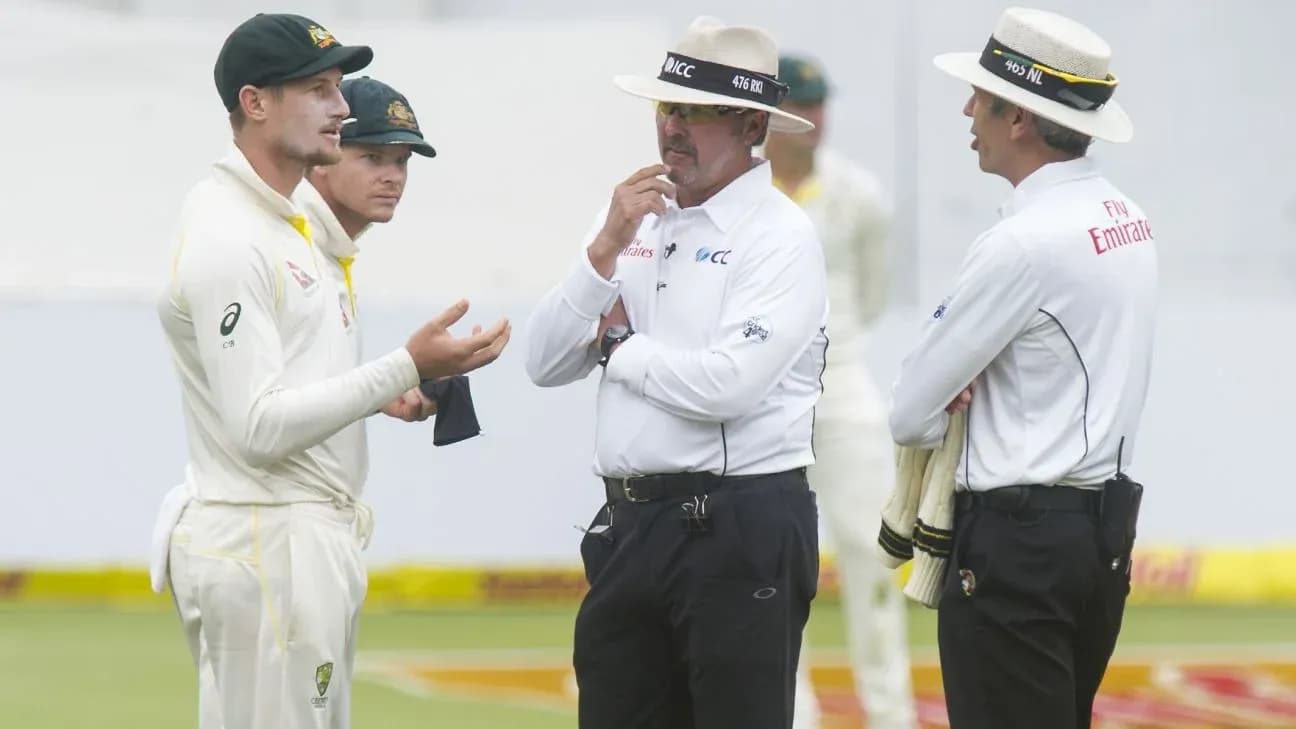
"After the occurrence in Cape Town we all sat in the change-rooms after that day's play, probably for 60 to 90 minutes, and just talked about what had happened and guess where to next," he said.
Cummins said on Friday he did not recall any such team meeting about taking collective responsibility. Khawaja, in his book, wrote that there was a push for a united front, with two players refusing to go along with it.
Sayers said he "vaguely" remembered the pair Khawaja referred to, but made it clear he would not be naming them.
That 60‑90 minute discussion, as Sayers tells it, goes to the heart of the current storm: was there an attempt to share blame, or to limit it?
Could the bowlers really not know?
The question has hovered over the scandal since 2018, and it has never gone away: could the fast bowlers genuinely be in the dark about what was being done to the ball they guarded so obsessively?
Sayers doesn’t think so.
"I would have thought as a team, when you're trying to get the ball to reverse, that everyone would buy in because if one little thing goes wrong in the field to the ball, it stops it from reversing straight away. So, yeah, as I said, I'm pretty confident to say that everyone knew."
Cummins, now the face of the national side, has been adamant. During his extended media appearance he insisted that if Khawaja was claiming everyone knew sandpaper was being used, then he was "100% wrong". He accused his long-time teammate of being "casual with each other's lives and reputations".
Sayers admitted he only watched the start of that press conference, but he didn’t like the tone.
He said he "didn't like how he did go at Usman".
Warner keeps swinging at CA
All this comes as David Warner, one of the three players banned in 2018, again turned his guns on Cricket Australia’s handling of the original investigation.
Warner has repeatedly claimed the process “stinks of a cover-up” and has now sharpened his criticism over who was interviewed and what information he was given at the time.
Having said on Saturday he was not aware that Josh Hazlewood, Nathan Lyon and Mitchell Starc had been interviewed, Warner slightly shifted his wording, arguing that if they were spoken to, that fact was never put in front of him.
"Just to clarify 'As far as I am aware' was the POINT," he wrote on Instagram. "I was never told the bowlers had been interviewed or provided statements. That information would've been pretty useful when I was forced to make decisions back in 2018. Why weren't we given all the evidence by CA?"
He has previously labelled CA’s investigation “botched”. The word still hangs in the air.
Old wounds, fresh fractures
What began as a scandal about sandpaper has morphed into something bigger: a fight over truth, memory and reputation inside one of the most scrutinised dressing rooms in world sport.
Khawaja’s book has reopened the file. Cummins has drawn a hard line. Warner continues to prod at CA’s role. Now Sayers, a one-Test quick with little to gain and even less to lose, has added his voice and his detail.
The official version of 2018 has never looked more fragile.