Spain vs Argentina: World Cup Final Preview
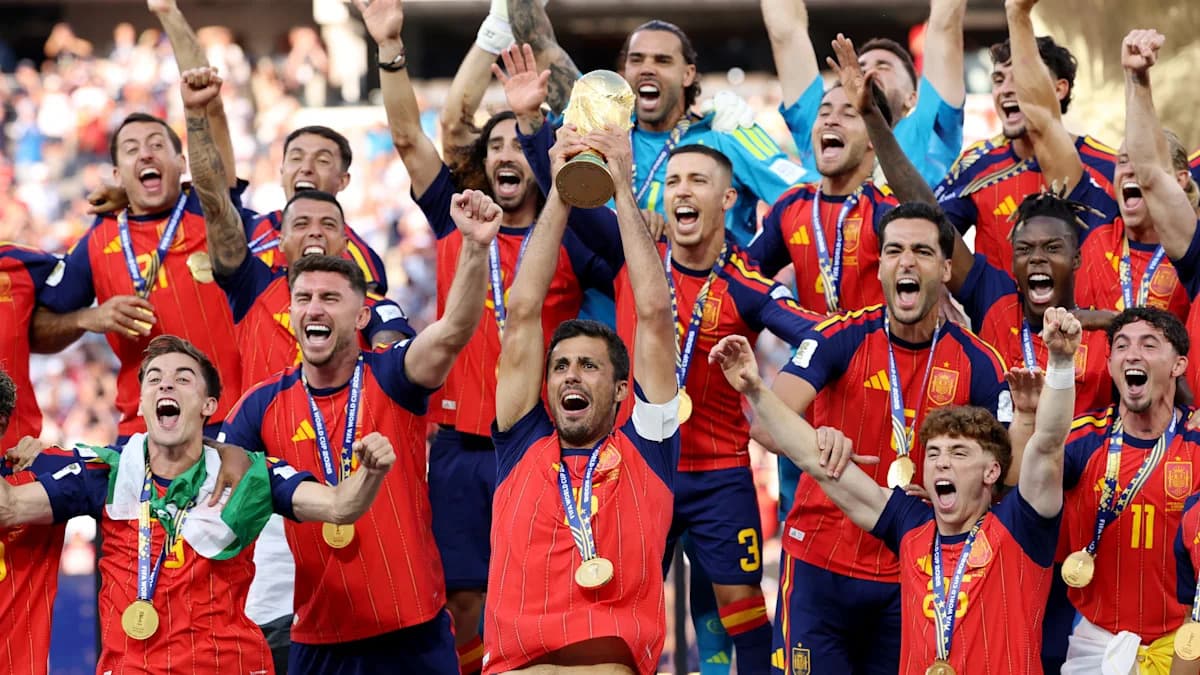
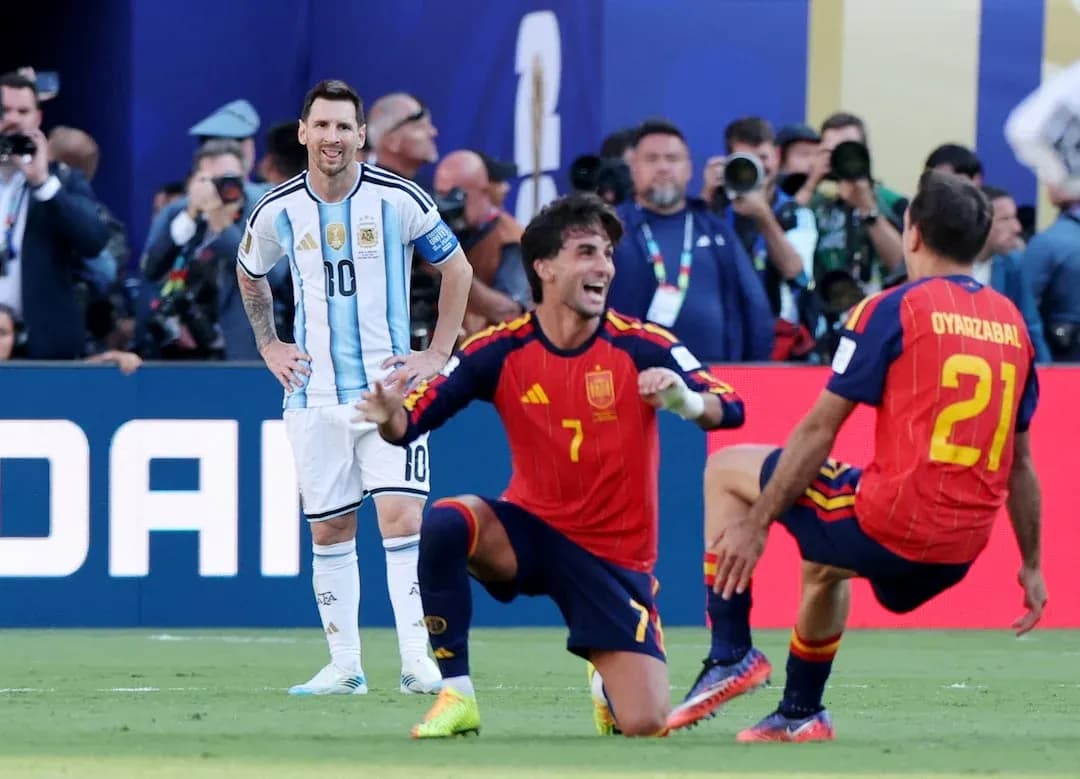
Spain and Argentina meet on 19 July 2026 with the World Cup crown on the line, a final between two giants that feels as inevitable as it is tantalising. The setting is still to be confirmed, but wherever this World Cup Final is staged, it will be remembered as the night an imperious Spain (unbeaten in their group with 7 points and no goals conceded) faces a relentless Argentina (perfect in their group with 9 points and 8 goals scored) for ultimate supremacy.
Season Context
Spain arrive at the World Cup Final as 1st in Group H, having taken 7 points from 3 matches (2 wins, 1 draw) with 5 goals scored and none conceded. That blend of efficiency and control (5 goals for, 0 against across 3 games) underlines a side built on security and balance, strong enough to secure their place in the knockout path from a commanding group position.
Argentina’s route has been even more ruthless in the group phase: 1st in Group J with a perfect 9 points from 3 matches (3 wins, 0 draws, 0 defeats). They have combined attacking power and resilience, scoring 8 goals and conceding just 1 in those 3 games. A goal difference of +7 reflects a team that imposes itself early in tournaments and rarely lets opponents breathe.
Form & Momentum
Both sides come into the final with identical group-stage form strings of “WWWWW”, a flawless run that speaks to their dominance. For Spain, those 5 goals across 3 group matches work out to roughly 1.7 per game, while their defence has been immaculate with 0 conceded (0.0 per game), justifying the label of a defensively rock-solid side. That platform has allowed creative talents like Mikel Oyarzabal, who has 5 goals and 1 assist in this World Cup, to decide matches in the final third.
Argentina’s momentum is even more explosive going forward: 8 goals in 3 group games (about 2.7 per match) with just 1 conceded (around 0.3 per game), a profile that fits a team willing to attack with numbers but still capable of closing the door when required. Lionel Messi has been the tournament’s standout figure with 8 goals and 4 assists in 7 appearances, driving a wider run of “WWWWWWW” in the broader World Cup sample where Argentina have won all 7 matches and scored 19 goals.
Head-to-Head Patterns
Recent history between these two powers is surprisingly sparse in competitive settings and offers more intrigue than clarity. Their scheduled meeting in the CONMEBOL - UEFA Finalissima Final on 27 March 2026 was cancelled before a ball was kicked, denying a valuable dress rehearsal for this World Cup showdown. The last completed clash came in a very different context: a friendly at Estadio Wanda Metropolitano in Madrid, where Spain dismantled Argentina 6-1 (Friendlies, season 2018, March 2018). That result, while emphatic, came in a non-competitive environment and cannot be taken as a direct template for a World Cup Final, but it does hint at Spain’s capacity to exploit space if Argentina overcommit.
Tactical Preview
Spain’s tournament profile points to a side that controls games through structure and ball circulation. Their most used shapes across the wider World Cup sample have been variations of a four-man defence and midfield dominance, with lineups frequently listed in 4-2-3-1 and 4-3-3 structures. The numbers back up their control: across 7 World Cup fixtures in the broader sample, they have scored 13 and conceded just 1, with 6 clean sheets. That suggests a high defensive line protected by a strong midfield screen, likely anchored by Rodri, with creative support from Pedri, Dani Olmo and the wide threat of Lamine Yamal or Nico Williams. The presence of Oyarzabal as a clinical finisher (5 goals from 20 shots, 11 on target) gives Spain a reliable end product to their possession.
Argentina, by contrast, lean into a more direct, vertical style built around Messi’s gravity and the movement of forwards like Lautaro Martínez and Julián Álvarez. Their most common shapes have been 4-4-2 and 4-1-3-2, systems that allow two forwards to pin the back line while Messi drifts between the lines. Over a 7-match World Cup sample they have scored 19 goals (about 2.7 per game) but conceded 7 (around 1.0 per game), indicating a side that is devastating going forward but more open than Spain defensively. Clean sheets have been rarer (2 in 7), and their penalty record is mixed, with 3 penalties awarded but only 1 converted and 2 missed, a small detail that could matter in a tight final.
The key tactical battleground will be midfield. Spain’s capacity to suffocate opponents with short passing and positional play will test Argentina’s central trio or quartet, particularly players like Rodrigo De Paul and Enzo Fernández, who must balance pressing Spain’s pivots with protecting the back four. If Spain can pin Argentina back and limit transition moments, their defensive record (0 goals conceded in the group, 1 across a wider 7-game sample) suggests they can keep the game under control. Conversely, if Argentina can break Spain’s first line of pressure, their attacking metrics (19 goals in 7 World Cup matches in the broader data) and Messi’s individual numbers (28 shots, 18 on target, 26 key passes) make them lethal in broken-field situations.
Statistical Snapshot
- Competition: World Cup, season 2026 — 19 July 2026.
- Venue: null, null.
- Prediction: Win or draw — Double chance : Spain or draw.
- Win Probabilities: Home 45% / Draw 45% / Away 10%.
- Model: Spain 69.2 — Argentina 31.0.
Betting Verdict
The predictive model leans towards Spain, rating them 69.2 against Argentina’s 31.0 and recommending a “Double chance : Spain or draw” with home and draw probabilities both at 45% versus just 10% for an Argentina win. That tilt is grounded in Spain’s extraordinary defensive record (0 goals conceded in the group, 1 in a wider 7-match World Cup sample) and their ability to control rhythm, compared to an Argentina side that, while prolific (19 goals in 7 World Cup games in the broader data), concedes more regularly. The historical 6-1 friendly in Madrid hints at how Spain can punish an aggressive Argentina, even if the competitive context is very different. In such a finely poised final, backing Spain to avoid defeat aligns with both the numbers and the tactical matchup, especially given their balance between defensive security and the scoring threat of Oyarzabal and a gifted supporting cast.