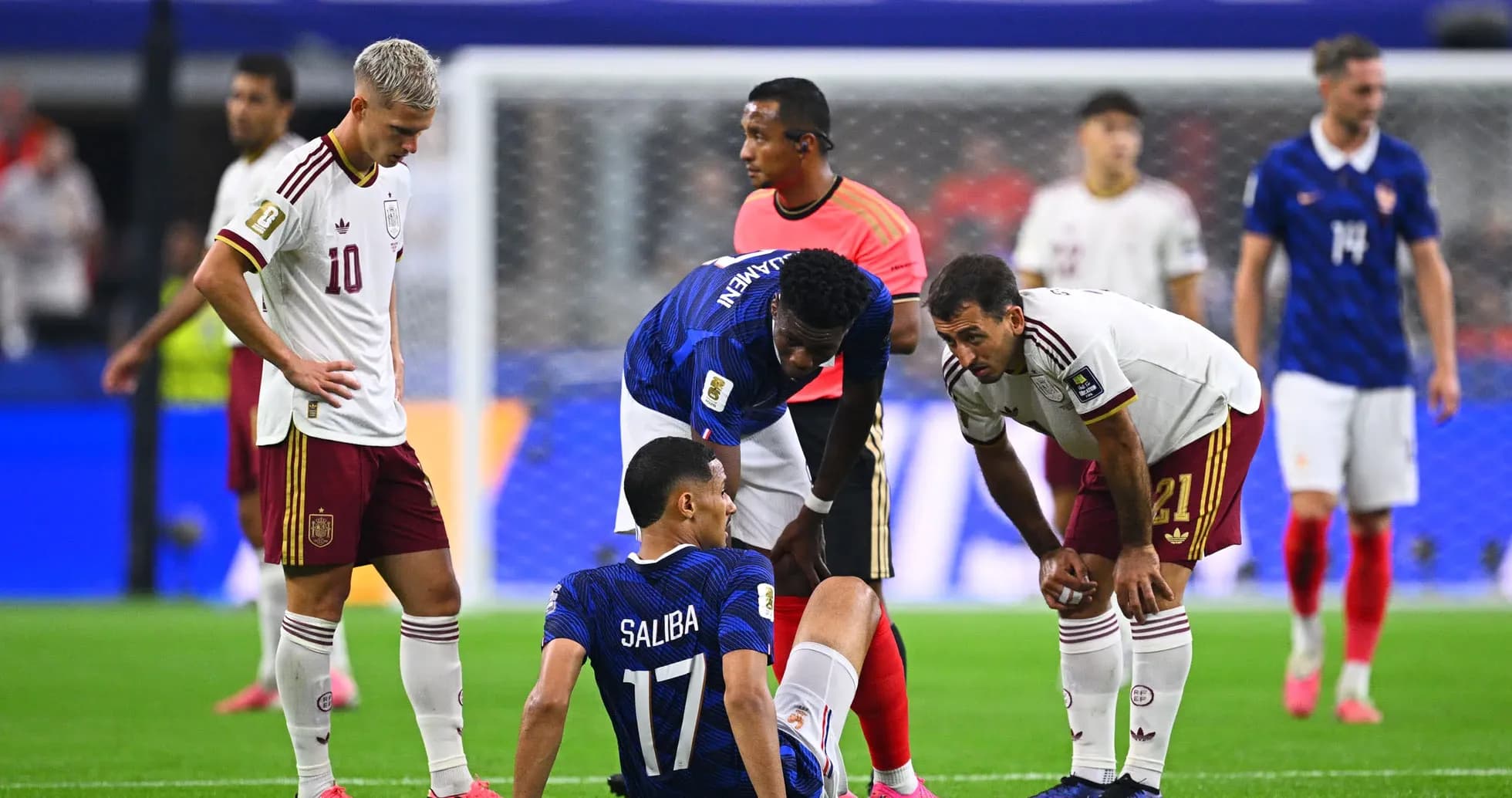
Spain Defeats France 2-0 in World Cup Semi-finals
Under the closed roof of Dallas Stadium in Arlington, the World Cup’s Semi-finals stage brought together two sides whose entire tournament identities seemed to be on a collision course. France arrived as group winners from Group I, top of their section with 9 points and a goal difference of 8 after three wins from three, powered by 10 goals for and only 2 against. Spain mirrored that dominance in Group H: 7 points, first place, unbeaten with 5 goals scored and none conceded. This was not just a meeting of heavyweights; it was a clash of fully formed ideas.
Didier Deschamps stayed loyal to France’s established blueprint: a 4-2-3-1 that has been the team’s default, used in all 7 matches this campaign. Luis de la Fuente responded with Spain’s own signature: a 4-1-2-3 that has underpinned 5 of their 7 lineups, a structure designed to control the centre and suffocate transitions. On the night, Spain’s clarity and defensive perfection across the tournament—only 1 goal conceded in total in 7 matches—told, as they shut out a previously rampant French attack and won 2–0.
I. The Big Picture – Two Perfect Records, One Exit Door
Heading into this game, France’s numbers painted the picture of a side that could overwhelm opponents at will. Across the tournament they had played 7 fixtures: 5 at home, 2 on their travels, winning 6 and losing only once. Overall they had scored 16 goals and conceded 4, an overall average of 2.3 goals for per match and 0.6 against. At home specifically, they averaged 2.2 goals scored and 0.6 conceded; away, they were even more ruthless in attack at 2.5 scored and 0.5 conceded. Four clean sheets in total suggested a team capable of shutting the door as well as blowing it off its hinges.
Spain, though, came in with an even more pristine defensive record. Over 7 matches (4 at home, 3 away), they were unbeaten, with 6 wins and 1 draw. They had scored 13 goals overall and conceded just 1, an overall goals-against average of 0.1. At home they averaged 2.3 goals scored and 0.3 conceded; on their travels, 1.3 scored and 0.0 conceded—three away clean sheets from three away matches. This was a side that travelled without fear and defended with near-total control.
II. Tactical Voids and Disciplinary Undercurrents
There were no listed absences or questionable players, so both managers had full decks to play with. That made the selection choices all the more revealing.
France’s back four of Jules Koundé, Dayot Upamecano, William Saliba and Lucas Digne, in front of Mike Maignan, offered a blend of power and build-up quality. Ahead of them, Aurélien Tchouaméni and Adrien Rabiot formed the double pivot, with Ousmane Dembélé, Michael Olise and Bradley Barcola supporting Kylian Mbappé as the lone striker. It was an aggressive, front-foot selection that signalled Deschamps’ belief that his side could punch through Spain’s structure.
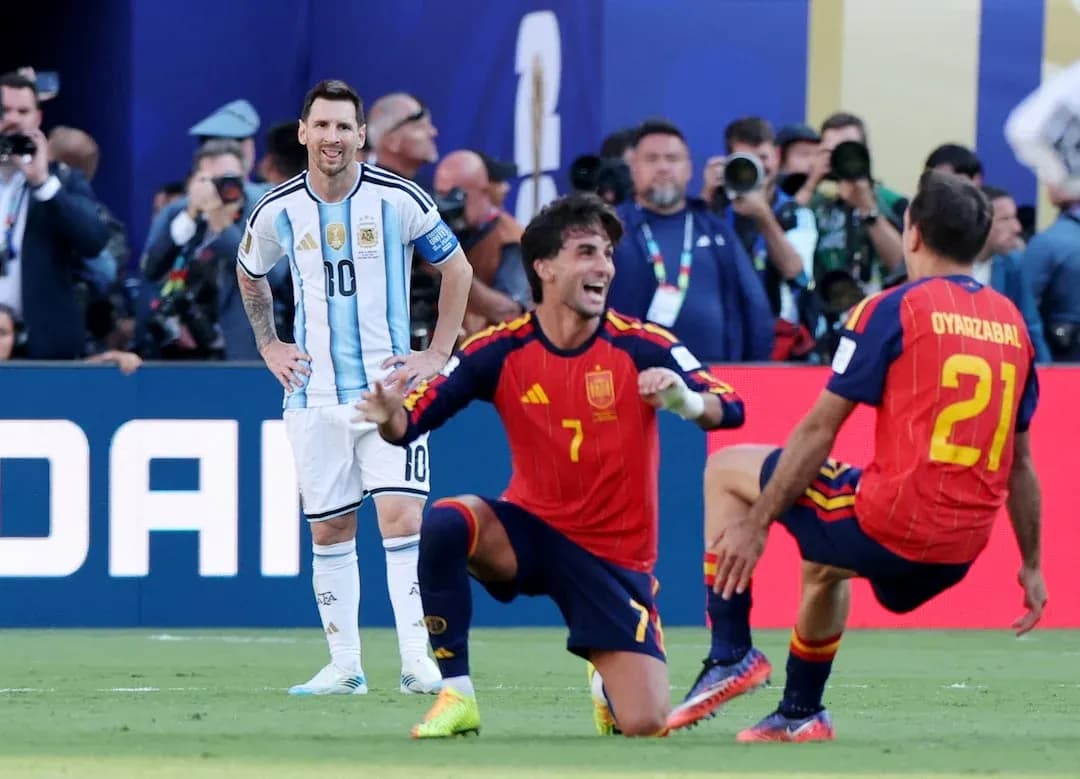
Spain’s 4-1-2-3 was more about control than chaos. Rodri anchored midfield, with Dani Olmo and Fabián Ruiz as the advanced interiors. Marc Cucurella and Pedro Porro flanked Pau Cubarsí Paredes and Aymeric Laporte in defence, protecting Unai Simón. Up front, Lamine Yamal and Mikel Oyarzabal worked around Álex Baena, a slightly asymmetrical front line that allowed Spain to overload pockets rather than simply mirror France’s shape.
Disciplinary trends hinted at where the tension might flare. France’s yellow cards were spread across the match, but with a late spike: 33.33% of their yellows had come between 76–90 minutes, and another 16.67% between 91–105. Spain, by contrast, tended to pick up cautions either just before the break (33.33% between 31–45) or deep into added time (50.00% between 91–105). In a Semi-finals context, that suggested France were more likely to grow ragged as they chased games late, while Spain’s fouls were often tactical, protecting leads in the dying minutes.
III. Key Matchups – Hunter vs Shield, Engine vs Enforcer
The headline duel was obvious: Mbappé, the tournament’s deadliest finisher, against a Spanish defence that had allowed only 1 goal overall in 7 matches.
Mbappé came into the Semi-finals with 8 goals and 3 assists from 7 appearances, backed by 30 shots (19 on target) and 16 key passes. He had drawn 8 fouls and attempted 29 dribbles, succeeding 11 times. He had also won and missed a penalty, his record from the spot split at 1 scored and 1 missed, a reminder that even the sharpest weapon can occasionally misfire.
Spain’s shield was collective rather than individual: Rodri screening, Laporte and Pau Cubarsí Paredes commanding the line, Cucurella and Porro managing the wide channels where Dembélé and Barcola like to isolate defenders. Spain’s defensive record on their travels—0.0 goals conceded away in 3 matches—suggested that once they set their block, they were almost impossible to prise open.
On the French right, Dembélé’s duel with Cucurella had the feel of a game-breaker. Dembélé arrived with 5 goals and 2 assists, 13 shots (8 on target) and 16 key passes, plus 12 dribble attempts with 5 successes. His unpredictability was meant to disorganise Spain’s left side and create lanes for Mbappé to attack the half-spaces. Instead, Spain’s structure pushed him into crowded zones, with Rodri and Fabián Ruiz often sliding across to double up.
In the engine room, Tchouaméni and Rabiot had to solve the triangle of Rodri, Olmo and Fabián Ruiz. France’s entire attacking rhythm depended on Olise receiving between the lines. Olise, the tournament’s top assist provider with 5 assists, had also won 16 fouls and attempted 29 dribbles, succeeding 15 times. His duel with Spain’s interiors was about more than creativity; it was about whether France could ever establish stable possession in the most dangerous zones.
At the other end, Spain’s own finisher, Oyarzabal, entered with 5 goals and 1 assist, 20 shots (11 on target) and 6 key passes. His movement between Saliba and Upamecano, and into the blindside of Digne, was designed to exploit any French overcommitment. With France having conceded only 4 goals overall but sometimes relying on recovery pace rather than compactness, this was a subtle but critical battleground.
IV. Statistical Prognosis – Spain’s Iron Curtain vs France’s Firepower
On paper, this Semi-finals felt balanced: France’s overall attacking average of 2.3 goals per match against Spain’s overall defensive average of 0.1 goals conceded. France had four clean sheets of their own, but Spain’s six, split evenly between home and away, underlined a defensive system that travelled perfectly.
France’s penalty record—2 taken in total, 1 scored and 1 missed—added a layer of volatility. In a match likely to be decided by fine margins, their 50.00% conversion rate from the spot hinted that even if they forced the issue in the box, nothing was guaranteed.
Spain’s discipline without the ball, their ability to keep clean sheets on their travels, and their capacity to manage tempo through Rodri and the midfield triangle suggested that if they could survive the early French surges, the match would bend towards their control. France, whose yellow-card profile spikes late, risked chasing shadows and conceding dangerous set pieces as time wore on.
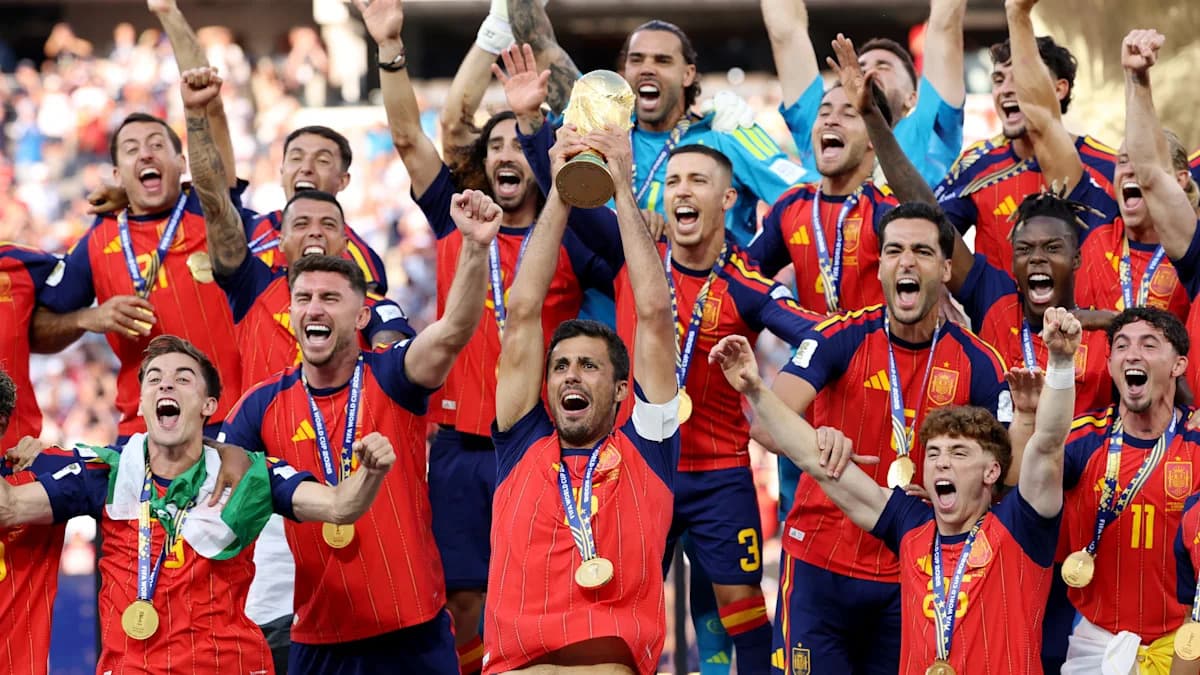
In the end, the 2–0 scoreline in Spain’s favour was the logical extension of the numbers: an iron-clad defence that had conceded just 1 goal in total across the campaign standing firm against the tournament’s most explosive attack, and a front line led by Oyarzabal and Yamal making just enough of their moments to send Spain from Arlington’s bright lights into the World Cup final.