Spain's Dominant Victory Over Saudi Arabia in World Cup 2026
Spain finally arrived at this World Cup with a roar, not a whisper.
Four days after that flat, bewildering stalemate with Cape Verde, La Roja tore into Saudi Arabia in Atlanta, winning 4-0, restoring order in Group H and a little pride in the process. The passing was sharp, the pressing suffocating, the scoreline emphatic. This looked like Spain again.
At the heart of it all, a teenager who watched the last World Cup from a classroom.
Yamal lights the fuse
Lamine Yamal returned to the starting XI after his cameo in the opener and needed barely a minute to announce himself, whipping in a cross that Saudi defender Abdulelah Al Amri had to head clear. Spain immediately played at his tempo: quick combinations, wide overloads, relentless angles.
By the time he scored, Spain had strung together 39 passes. No side at this tournament had built a goal with that many before the finish. It was not one of Yamal’s trademark masterpieces, no curling shot into the top corner, no slaloming run. It was something more ominous for opponents: a poacher’s goal.
On 11 minutes, Oyarzabal drilled a low, fizzing cross through the six-yard box. Yamal had ghosted in at the back post and, from a tight angle, simply stabbed the ball home. First World Cup start, first World Cup goal. A boy who was in school during Qatar 2022 now scoring on the biggest stage, with his family in the stands. He called it “a dream come true” on DAZN. It looked like the start of something larger.
The effect on Spain was instant. The hesitancy of Monday vanished. Every touch had purpose. Every run had bite.
Oyarzabal hammers it home
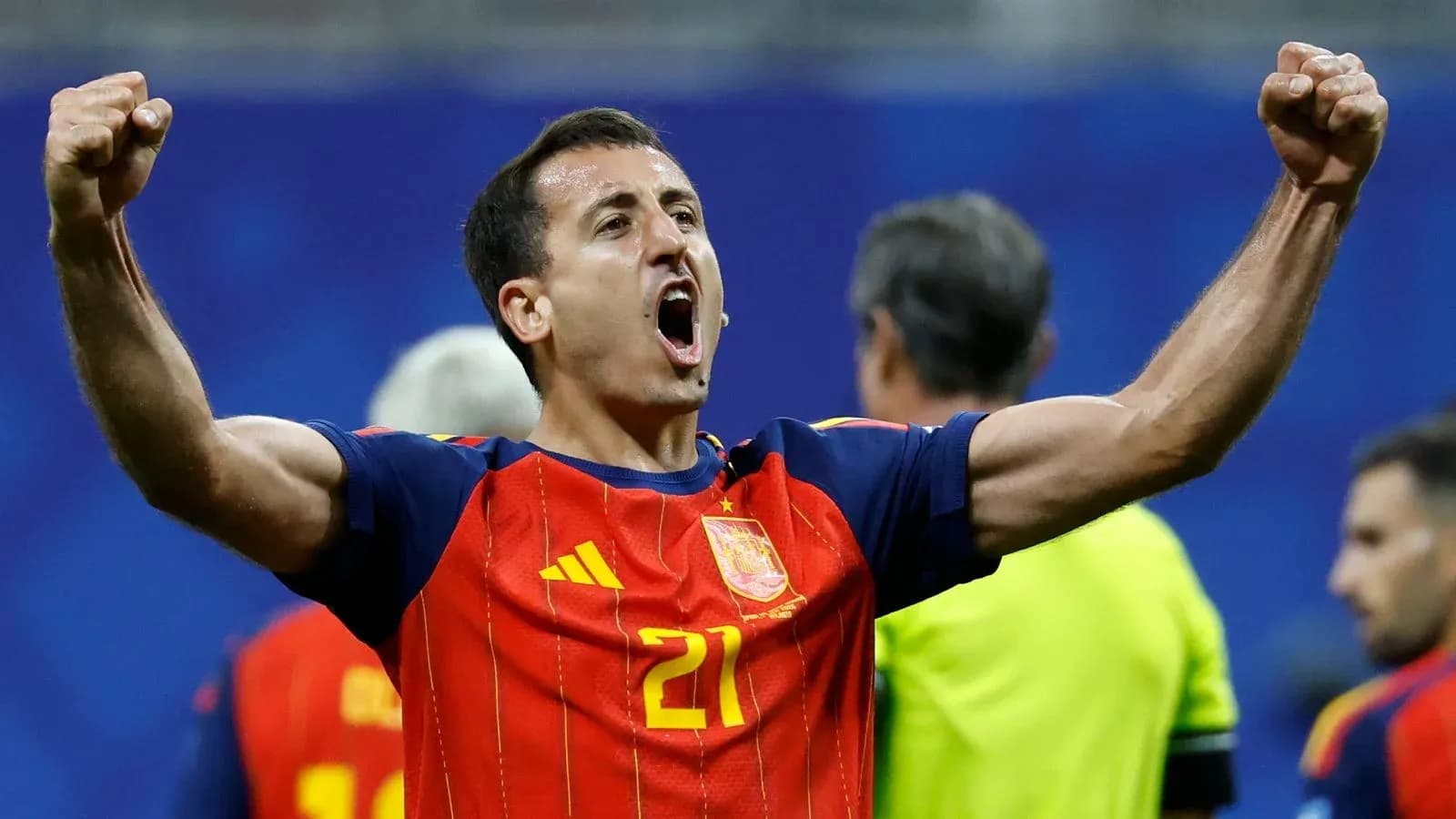
If Yamal lit the fuse, Mikel Oyarzabal drove the explosion.
Spain had Saudi Arabia pinned back, the green shirts trapped in their own box as wave after wave of red shirts swarmed around them. The pressure finally told on 21 minutes. A scrambled ball at the back post, a tangle of legs, and Oyarzabal reacted quickest, prodding in from close range. Scruffy, yes. Crucial, absolutely.
Two minutes later, the game was gone.
Spain sliced through again, Oyarzabal timing his run into the area to perfection. This time the finish matched the build-up, a calm, controlled effort turned past Mohammed Al Owais from close range. 3-0 inside 23 minutes. Spain became the first team since Germany in 2014 to score three times within the first 25 minutes of a World Cup match.
Oyarzabal could have walked off with the match ball before the first-half drinks break. When Al Owais misjudged a back pass, the forward pounced, only for his first-time shot to cannon off the top of the crossbar. It was the one moment that spared Saudi Arabia from complete humiliation before half-time.
Luis de la Fuente, turning 65 on Sunday, saw enough. With Uruguay looming, he made the ruthless but sensible call: both Yamal and Oyarzabal came off at the interval. Job done. Energy saved. Hunger preserved.
De la Fuente gets his response
The Spain head coach had been blunt about what needed to change after Cape Verde. More verticality. More intensity. Fewer safe passes, more risk in the final third.
He got it from the first whistle.
Spain’s press suffocated Saudi Arabia. Every attempt to play out met a red wall. Shots flew from all angles. Crosses rained in. The midfield, passive in the opener, now drove forward with purpose. De la Fuente called the first half “exceptional” on DAZN and he was right. This was the reaction he demanded.
Yamal, he said, is now “in perfect condition to take on full matches” and already the main reference point in attack. Oyarzabal, carrying a minor issue, “always delivers an exceptional performance.” The coach didn’t need to dress it up: his two forwards had ripped the game away inside half an hour.
Spain eased off after the break. The tempo dipped, the risk dropped, but the control never really left them.
Own goal adds to Saudi misery
The fourth goal underlined the gulf in class and the cruel streak running through this tournament for defenders.
On 49 minutes, a flicked-on corner found Marc Cucurella at the far post. His effort forced a smart stop from Al Owais, but the rebound smacked into Hassan Al Tambakti and bounced into his own net. Another unwanted entry in a growing list: this was already the eighth own goal of World Cup 2026, with the group stage barely halfway.
Saudi Arabia rarely threatened at the other end. Spain’s back line, stung by criticism after Cape Verde, enjoyed a largely comfortable evening. The only real late drama came in stoppage time, when Ferran Torres thought he had added a fifth.
Fabian Ruiz bent in a cross, Torres finished, and Spain celebrated. Then came the long, familiar pause. VAR lines, replays, the slow drain of anticipation. After a lengthy check, the goal was ruled out for offside in the 95th minute. No fifth, but no real complaints either. The statement had already been made.
A superstar sets the standard
This Spain squad is deep. Quality runs through every line. Yet nights like this show the difference a genuine superstar can make.
Yamal did not just score. He set the tempo. He dribbled, crossed, and shot with a swagger that dragged everyone up a level. He demanded the ball and demanded more from those around him. At club level he has already embraced that responsibility. Now he is doing it for his country.
When he struck, Spain had already completed those 39 passes. The goal belonged to the team, but the spark came from him. It felt symbolic: the collective identity of Spain, powered by the individual brilliance of a teenager who looks utterly at home under this pressure.
By the time he walked off at half-time, smiling and wrapped in a tracksuit top, the game was over and Spain were top of Group H, at least until Uruguay faced Cape Verde later in the night. Saudi Arabia, beaten and bruised, sank to the bottom.
Spain wanted a reaction. They delivered a message.
The question now is simple: was this a one-night surge, or the moment La Roja truly stepped into this World Cup as contenders again?