Spain's Tactical Superiority Over France in World Cup Semi-finals
France’s 4-2-3-1 at Dallas Stadium was built to control central spaces and release wide runners, but over 90 minutes Spain’s mirror 4-2-3-1 proved more cohesive between structure and execution. The 2-0 Spain win in this World Cup Semi-finals was less about volume of chances and more about who manipulated territory and tempo better around the boxes.
Both sides finished with 10 total shots, yet the quality gap was stark: Spain produced 1.63 xG to France’s 0.3. That differential captures the key tactical story: Spain’s attacks consistently arrived in more dangerous zones, while France’s possession was often sterile and disconnected from Kylian Mbappé.
France’s build-up started from a back four of Jules Koundé, Dayot Upamecano, William Saliba and Lucas Digne, screening Mike Maignan (France) in goal. With Aurélien Tchouaméni and Adrien Rabiot as the double pivot, the idea was clear: progress through the half-spaces to feed Ousmane Dembélé and Bradley Barcola wide, with Michael Olise between the lines and Mbappé as the high reference. The raw numbers, though, show how rarely that plan translated into real threat. France had 49% of the ball, 473 passes and a solid 396 accurate (84%), but only 4 shots inside the box and 3 on goal. The shot map implied by those stats is skewed to the perimeter: 6 efforts from outside the area, many of them hopeful rather than engineered.
Spain’s structure was more balanced. Rodri and Fabián Ruiz anchored midfield, with Lamine Yamal and Alex Baena wide, Dani Olmo as the central creator and Mikel Oyarzabal leading the line. They also used a 4-2-3-1, but the rotations were sharper: Rodri dropping to form a back three in build-up, full-backs Pedro Porro and Marc Cucurella pushing high and wide, and Olmo drifting to overload whichever side needed an extra man. Spain completed 500 passes with 428 accurate (86%), marginally more possession at 51%, but crucially turned that control into 5 shots inside the box and the higher xG.
First Half
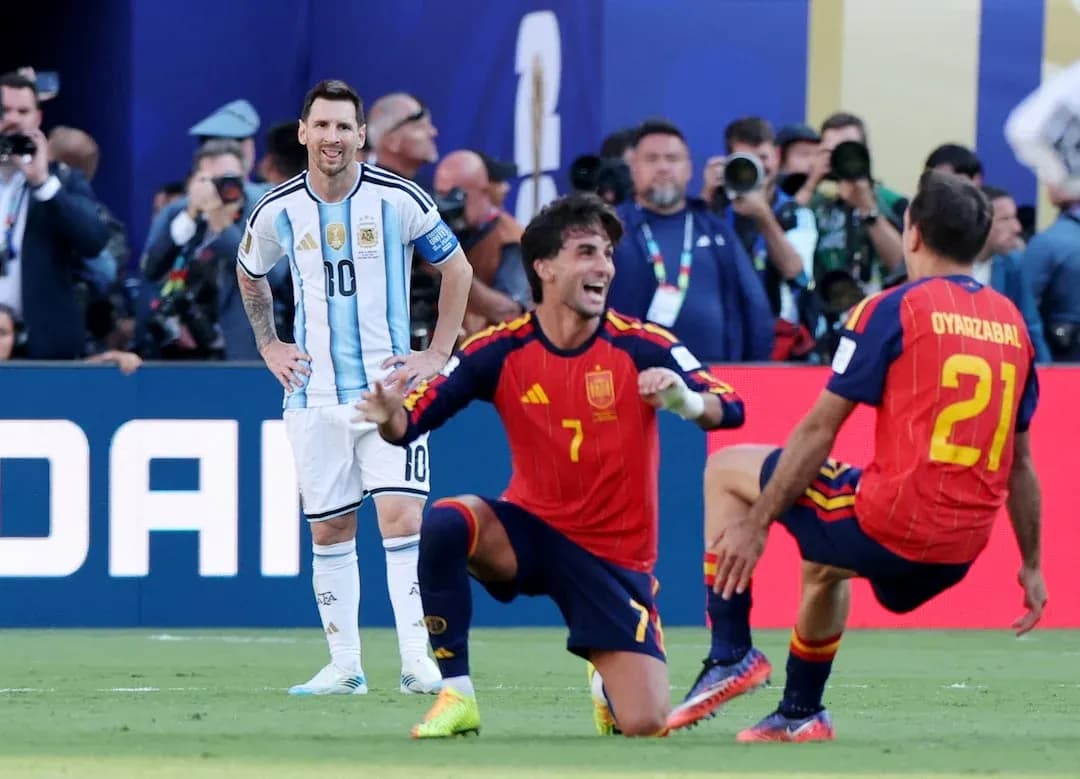
The first-half pattern underlined the contrast. France’s early aggression, with Dembélé and Barcola attacking their full-backs, drew fouls (France finished with 11 to Spain’s 12) but not clear chances. Spain, by contrast, used Oyarzabal’s movement to destabilise France’s centre-backs, and their 22nd-minute penalty came from that constant probing and occupation of the area. From then on, Spain were able to compress the game into zones that suited them: France’s block was forced deeper, Tchouaméni and Rabiot became more reactive, and Mbappé’s touches moved further from goal.
In-Game Adjustments
Deschamps’ in-game adjustments highlighted France’s struggle to find a stable defensive platform and a functional attacking structure at the same time. William Saliba’s early substitution for Maxence Lacroix at 30' hinted at either an issue or a planned change, but tactically it did not alter the basic 4-2-3-1. The more telling shift came after the break: Adrien Rabiot made way for Manu Koné at 46', and later Bradley Barcola for Désiré Doué at 57', plus a double full/attacking reshuffle at 72' with Theo Hernández replacing Lucas Digne and Rayan Cherki coming on for Michael Olise. These changes were clearly aimed at injecting verticality and one‑v‑one threat, yet the underlying problem remained: France could not consistently play through Spain’s midfield screen to get Mbappé into central finishing positions.
Key Moments
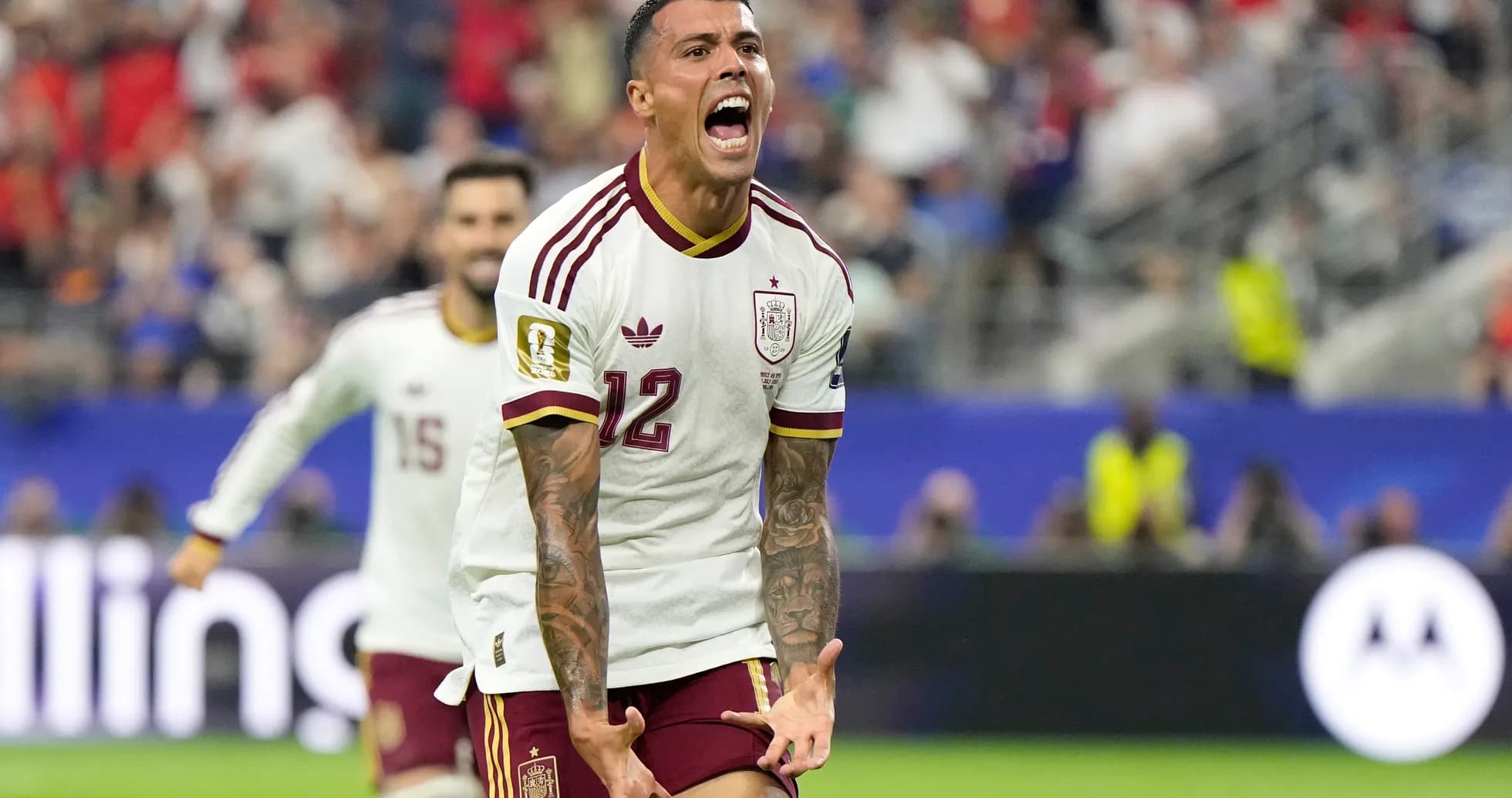
Spain’s second goal at 58' – Pedro Porro finishing after a Dani Olmo assist – was tactically decisive. It came in the phase where France were trying to open up, and Spain exploited the spaces left behind the full-backs and beside the pivots. That goal encapsulated Spain’s superiority in transition moments: even with only 2 shots on target all game, they made those moments count, aligning their best runners and passers in the right channels at the right time.
Out of possession, Spain’s 4-4-2 press (Olmo stepping up alongside Oyarzabal, Yamal and Baena dropping to the flanks) was disciplined. They accepted France having marginally more corners (7 to 1) but protected the central corridor aggressively, forcing crosses from less advantageous zones. France’s 2 blocked shots show Spain’s back line and midfield getting tight at the edge of the box, while Spain’s 3 blocked efforts reflect France’s last-ditch defending more than a sustained control of territory.
Goalkeeper Profiles
Goalkeeper profiles underline how the game state shaped risk. Mike Maignan (France) did not register a single save, which, combined with Spain’s 2 shots on target and 2 goals, suggests that when Spain did break through, they created clean, high-quality looks. His goals prevented figure of 0.07 indicates he had limited scope to change the outcome of those chances. At the other end, Unai Simón (Spain) made 3 saves and also posted 0.07 goals prevented, a sign that while France did test him occasionally, the attempts were generally of low xG and manageable for a top-level keeper within a well-protected structure.
Discipline and Set Pieces
Discipline also had a tactical dimension. France’s two yellow cards – Adrien Rabiot for “Foul” at 9' and Kylian Mbappé for “Violent conduct” at 86' – reflected both early attempts to disrupt Spain’s rhythm and late frustration as the game slipped away. Spain’s single booking, Marc Cucurella for “Foul” at 31', came from defending aggressively in wide areas but did not alter their defensive intensity.
Set pieces offered France a potential route back – 7 corners to Spain’s 1 – yet the lack of payoff there underscored Spain’s aerial organisation and the absence of truly dominant attacking headers in France’s lineup once Saliba departed. Spain were content to defend deep on those situations, trusting Laporte and Pau Cubarsí to clear and Rodri to sweep second balls.
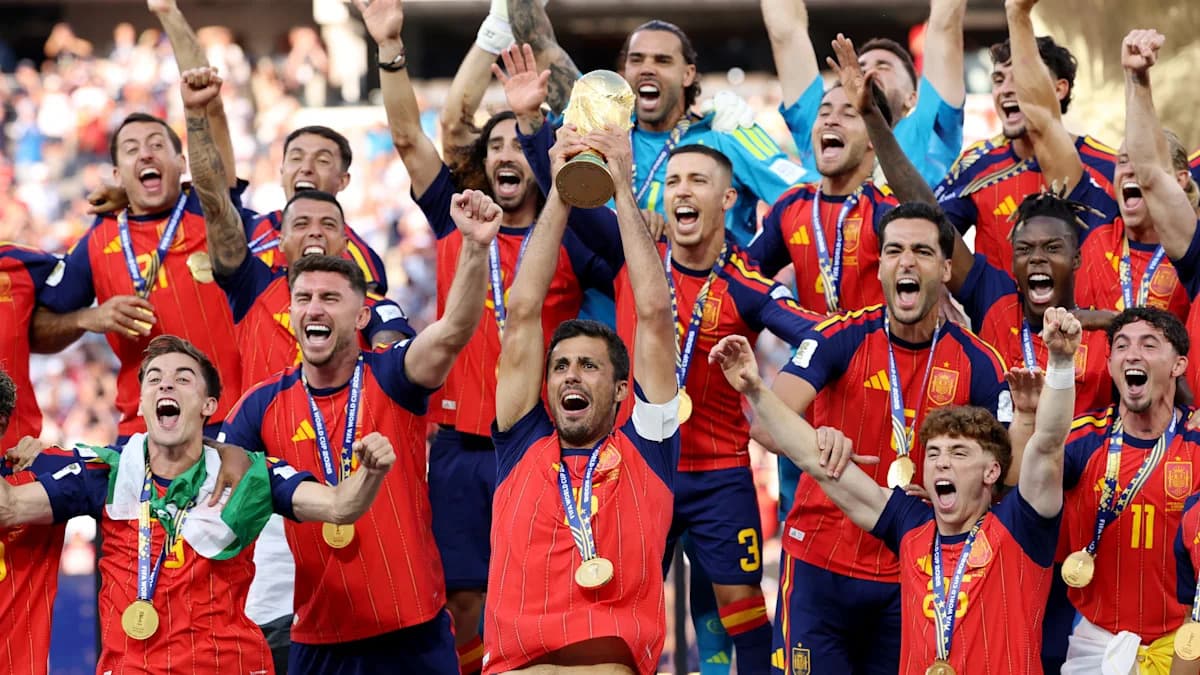
Overall, the statistical verdict aligns cleanly with the tactical picture. Spain edged possession and passing accuracy, but more importantly, transformed that edge into superior chance quality and a 2-0 scoreboard that mirrored their 1.63 to 0.3 xG advantage. France’s structure never fully connected midfield and attack, leaving Mbappé isolated and their wide threats contained, while Spain’s integrated 4-2-3-1 – with clear roles for Rodri, Olmo and the full-backs – controlled both the rhythm and the critical spaces en route to the World Cup final.