Spokane Velocity Triumphs Over Boise in USL League One Cup Clash
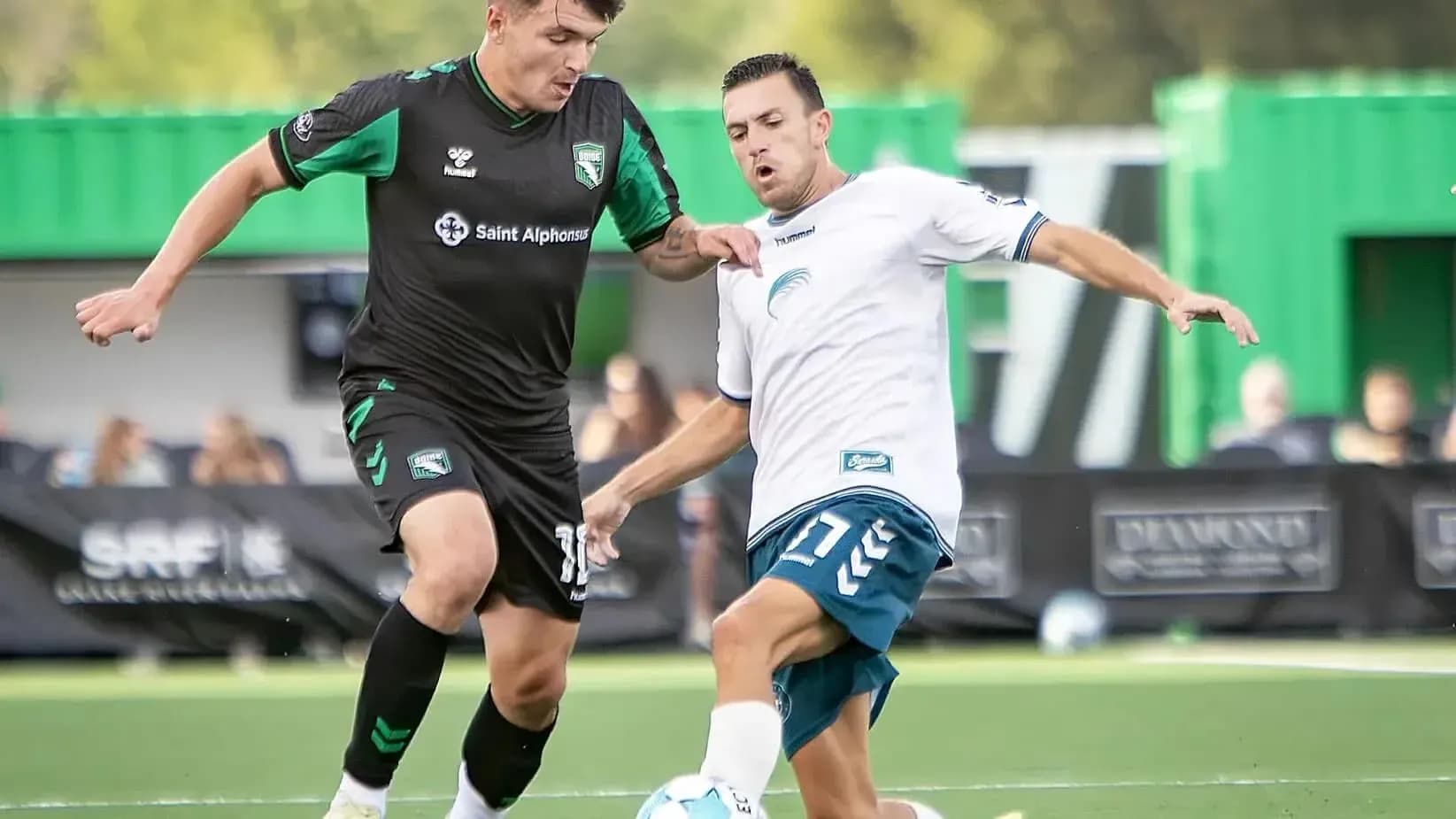
On a cool night at One Spokane Stadium, Spokane Velocity and Boise met in a USL League One Cup group-stage fixture that felt far more like a knockout audition than a routine pool game. The stakes were simple: two sides with sharply contrasting footballing identities, both trying to bend the group table to their will.
Heading into this game, Spokane’s season had been defined by razor-thin margins. Overall they had played 3 matches, winning 2 and losing 1, with a total of 3 goals scored and 5 conceded, leaving them on 6 points and ranked 2nd in Group 1. The numbers sketched a team that was efficient at home and fragile away. At home, Spokane had taken maximum points from 2 games, scoring 3 and conceding just 1; on their travels, they had lost their only match 4-0 and failed to score. Boise, ranked 3rd with 5 points, arrived with a very different profile: 10 goals for and 8 against overall in 3 matches, a wild, open side that had won twice and lost once, never keeping a clean sheet but never failing to score.
The final scoreline – Spokane 2, Boise 1 – confirmed what the early data had hinted: One Spokane Stadium is quickly becoming a fortress. It also sharpened the contrast between Spokane’s controlled aggression and Boise’s high-variance chaos.
I. The Big Picture: Styles in Collision
Spokane’s seasonal DNA is built on defensive structure and home-field authority. Overall, they averaged 1.0 goals for per game and 1.7 against, but that total figure hides a split personality. At home, they averaged 1.5 goals scored and just 0.5 conceded; away, they averaged 0.0 scored and 4.0 conceded. The group table reflected that duality: a goal difference of -2 overall (3 scored, 5 conceded) but a home goal difference of +2 (3 scored, 1 conceded).
Boise, by contrast, brought volatility. Overall they averaged 2.3 goals for and 2.0 against per match, with a home attacking average of 4.0 and an away average of 1.5. Their away defensive average stood at 1.5 goals conceded, matching their away scoring rate. Every Boise match in the group had produced goals at both ends; their goal difference of +2 overall (10 for, 8 against) underscored a side that lives on the edge.
Within that framework, this 2-1 Spokane win felt like a classic meeting of a structured home side and a free-swinging visitor: Spokane trying to compress the game into their preferred rhythm, Boise trying to stretch it into transition chaos.
II. Tactical Voids and Discipline
With no official list of absentees provided, both squads looked close to full strength on paper. Spokane’s starting XI was anchored by goalkeeper S. Lewis behind a defensive core including S. Fitch, G. Margvelashvili, C. Miller and D. Waldeck. Ahead of them, the creative and running power came from the likes of A. Lewis, C. Fernandez, S. John-Brown, L. Gil and J. Gallardo, with N. Brett leading the line.
Boise’s starting group was built around the spine of J. Mazzola in goal, a back line featuring J. Ricketts, J. Yaro, J. Crull and N. Moon, with midfield presence from D. Kostyshyn, M. Ndiaye and P. Mayaka. In the final third, B. Bodily, T. Amang and T. Moshobane offered movement and penetration.
Discipline was always going to be a subplot. Heading into this game, Spokane’s yellow-card profile showed a pronounced late-midgame spike: 42.86% of their cautions arrived between 61-75 minutes, with further cards spread across 16-30, 31-45, 46-60 and 91-105. More starkly, their only red card this season had come in the 46-60 window, a reminder that their intensity after half-time can tip into overreach. Boise’s bookings were more evenly distributed: 16.67% of yellows in each of 0-15, 46-60, 61-75 and 76-90, and a heavier 33.33% in the 31-45 period. Neither side had seen a red in Boise’s case, but the pattern suggested a team that becomes increasingly combative as the first half wears on.
In a tight 2-1, that disciplinary balance matters. Spokane’s tendency to collect cards in the 61-75 window intersected dangerously with Boise’s habit of keeping matches open and high-scoring deep into games. Managing that emotional edge was as important as any tactical tweak.
III. Key Matchups: Hunter vs Shield, Engine Room vs Enforcer
Without explicit top-scorer data, the “Hunter vs Shield” storyline is defined more by collective units than by a single marksman. For Spokane, the attacking trident of S. John-Brown, L. Gil and N. Brett is the natural focal point. John-Brown offers direct running from wide areas, Gil is the natural connector in the No. 10 zone, and Brett provides a penalty-box reference point. Their task was to probe a Boise defence that, overall, conceded 2.0 goals per match and had yet to keep a clean sheet, with 3 goals conceded at home and 3 away.
Boise’s “shield” was built around the central pairing of J. Yaro and J. Crull, supported by full-backs Ricketts and Moon. Away from home, Boise conceded 1.5 goals per game, a figure that ultimately aligned with the 2 they shipped in Spokane. The question was whether that back line could survive prolonged spells under pressure in a venue where the hosts had scored 3 and conceded only 1 heading into the fixture.
In midfield, the “Engine Room” duel pitted Spokane’s ball carriers and link players – Fernandez, Gil and Gallardo – against Boise’s enforcers and controllers, notably M. Ndiaye and P. Mayaka. Spokane needed this trio to slow the game down, deny Boise the broken-field transitions that suit Amang and Moshobane, and protect a defence that, overall, conceded 1.7 goals per match. Boise’s midfield, meanwhile, had to walk the line between aggression and control, especially given their propensity to collect yellows in the 31-45 and 61-90 ranges.
IV. Statistical Prognosis and What the Result Tells Us
From a statistical lens, this fixture always leaned towards goals but with Spokane’s structure giving them a slight edge at home. Spokane’s home attacking average of 1.5 goals and Boise’s away attacking average of 1.5 suggested both sides would likely score. Boise’s overall defensive average of 2.0 goals conceded, combined with Spokane’s home solidity (0.5 conceded per game), pointed to a narrow home win if Spokane could impose their tempo.
A notional xG storyline, based on these patterns, would project Spokane to generate a slightly higher quality of chances, particularly through sustained pressure rather than sheer volume, while Boise would rely on fewer but more transition-heavy opportunities. Boise’s lack of clean sheets and Spokane’s perfect home record heading into the game reinforced that edge.
Following this result, the 2-1 scoreline fits the underlying numbers almost perfectly. Spokane protected their home aura, effectively playing to their identity: compact, controlled, and opportunistic in the final third. Boise, true to form, found a way onto the scoresheet but could not close the defensive gaps that have defined their campaign.
In narrative terms, this match felt like a validation of Spokane’s method. In a group where Boise’s chaos has often overwhelmed opponents, Spokane’s blend of structure, home-field confidence and disciplined aggression – carefully managed around that volatile 61-75 minute window – proved enough to tilt a finely poised contest in their favour.