Strasbourg's Journey to a European Final: From Liquidation to Leipzig
The floodlights at Stade de la Meinau will burn a little brighter on Thursday night. Strasbourg stand 90 minutes – perhaps more – from a first European final, chasing down a 1-0 deficit against Rayo Vallecano in the second leg of their Conference League semi-final. For a club that not so long ago was scrambling around France’s amateur divisions, the stage feels almost surreal.
From liquidation to Leipzig dream
Strasbourg’s journey has been jagged, messy, and at times desperate. Fifteen years ago they were drifting in the regional fourth and fifth tiers, victims of financial collapse and liquidation, a historic club suddenly reduced to survival mode.
They clawed their way back. Promotion by promotion, season by season, until Ligue 1 finally welcomed them back in 2017 after almost a decade away. Stability came first. Respectability followed. But genuine European ambition? That felt distant.
The record books underlined the scale of the climb. One French league title, way back in 1979. A European Cup quarter-final in 1980, ended by Ajax. A famous UEFA Cup win over Liverpool in 1997, yes, but nothing resembling a sustained continental presence.
Now they stand one game from a final in Leipzig on May 27, where Crystal Palace or Shakhtar Donetsk await. For a club whose fans once feared oblivion, the idea of lifting a European trophy is no longer a fantasy. It is a live possibility.
BlueCo’s money, BlueCo’s shadow
That possibility, though, arrives with an asterisk in the eyes of many Strasbourg supporters. The club’s rise back to the European stage has collided with the era of multi-club ownership, and in June 2023 BlueCo – already owners of Chelsea – took control.
President Marc Keller, a former Strasbourg player and the public face of the rebuild, has been clear about why the deal happened. “We needed someone to accompany us to get to this step,” he told RMC radio after the victory over Mainz in the previous round. He knows where the club came from. He also knows the ceiling they hit.
“We were conscious that we had gone as far as we could with our existing model,” he admitted.
BlueCo’s arrival has meant investment. New players. A stronger squad. Strasbourg reached this season’s Conference League via an exhilarating domestic campaign under English coach Liam Rosenior. Some eye-catching talents arrived from Chelsea, many on loan, and the quality on the pitch has risen.
The price has been identity. Or at least the fear of losing it.
Supporters have watched the traffic between Alsace and Stamford Bridge and drawn their own conclusions. If a player or coach shines at Meinau, he looks destined for London. In September, Dutch striker and captain Emmanuel Emegha announced he would join Chelsea next season, a move that cut deep among the fanbase. In January, Chelsea came again, this time for Rosenior himself.
His parting words did little to soothe the anger. He said he hoped fans would feel proud that someone who worked at Strasbourg had been chosen to manage a Champions League-winning club and current club world champions. Many heard something else: confirmation of their status in the new hierarchy.
Silent stands, loud message
Gary O’Neil stepped in to replace Rosenior and has already taken Strasbourg to a French Cup semi-final, where they fell short. Now he leads them into what he calls the defining night of their history.
“Thursday’s game is the biggest in the club’s history. We will need the same support and energy that we got against Mainz,” O’Neil said.
That support, though, comes with a twist. The club’s most fervent fans have been staging silent protests in the opening 15 minutes of matches since last season, a pointed rejection of the ownership model that now shapes their club.
For Ultra Boys 90, a leading supporters’ group, Strasbourg are not an isolated case but a warning. In an open letter earlier this year, they described what is unfolding in Alsace as “what the future could look like for the vast majority of clubs.”
Their fear is stark: teams reduced to feeder status, stripped of their own resources, their soul diluted, their bond with their city weakened. A badge, a stadium, a history – but someone else’s project.
The silence will return on Thursday, even on a night of such magnitude. Ultra Boys 90 have called on fans to mass outside the ground to welcome the team bus, to roar the players into the stadium. Once the whistle goes, the protest will speak in its own way.
A stadium full, a fanbase torn
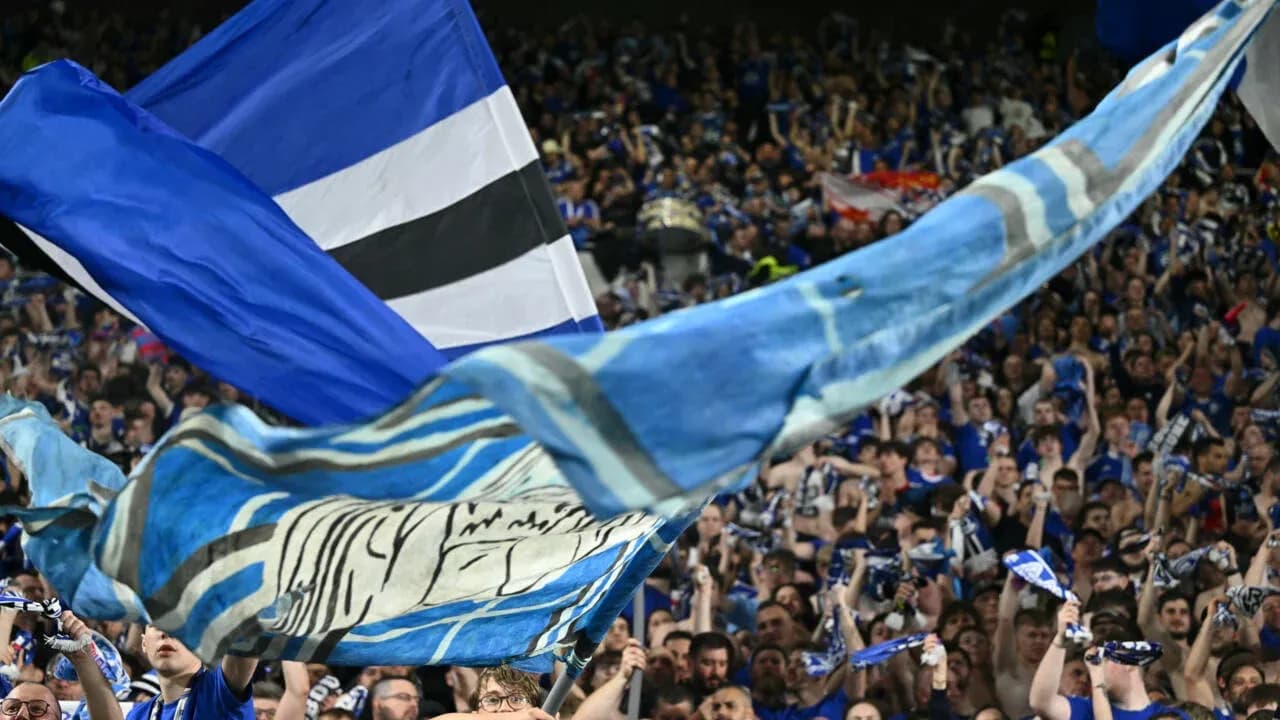
Stade de la Meinau itself tells another part of the story. Recently renovated, its vast new main stand has pushed capacity to around 32,000. It is almost always full now. European nights, domestic cup runs, a team that wins often enough to keep the momentum rolling – all of it has turned tickets into a prized commodity.
The atmosphere, when it erupts, remains one of the most vivid in France. Yet beneath the flags and the noise lies a constant unease. Many of those who pack the stands feel conflicted, proud of what the team is doing but wary of what the club is becoming.
They know that if Strasbourg do complete this comeback against Rayo Vallecano, if they book a place in Leipzig, they will do so in a competition Chelsea themselves lifted last season. They know the irony of chasing a trophy that already sits in the cabinet of their owners’ flagship club.
On Thursday night, the tension between dream and doubt will be impossible to miss. A club that almost disappeared now stands on the brink of a European final, powered by money and a model that many of its own fans reject.
If Strasbourg do find a way past Rayo, the celebrations will be wild. The questions about what, exactly, they are celebrating will not go away.