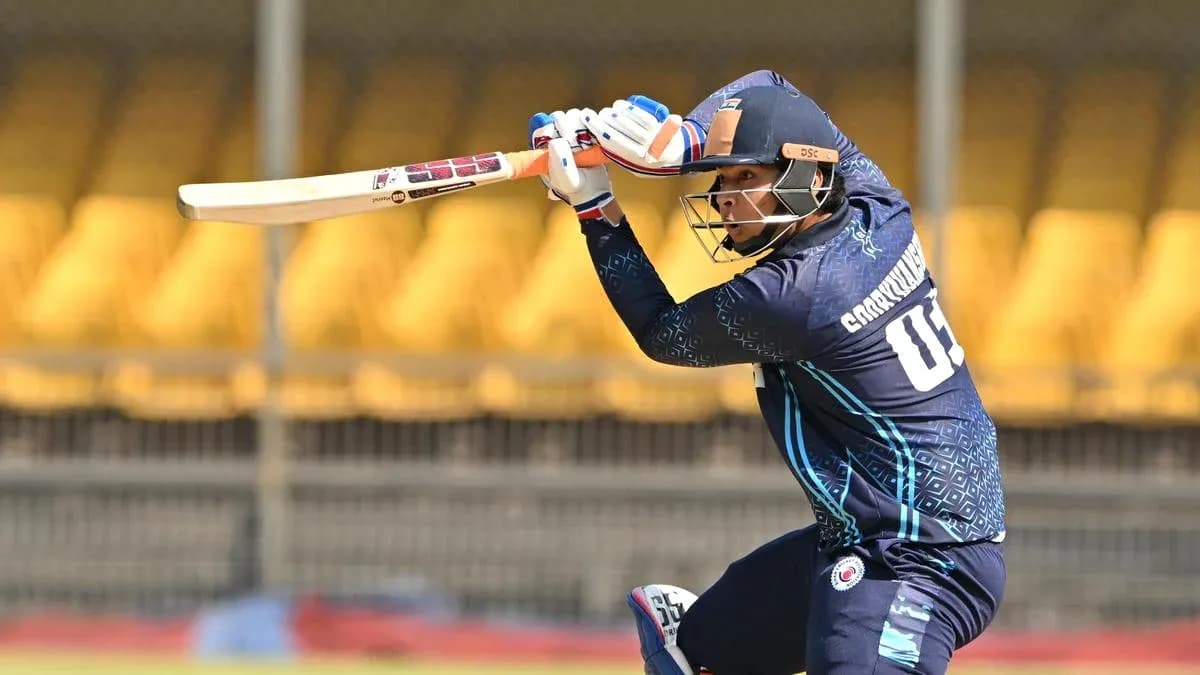
Syed Mushtaq Ali Trophy 2026: Fireworks, Upsets, and Title Defence
The Syed Mushtaq Ali Trophy burst back into life on Saturday, and the first day of SMAT 2026 delivered just about everything this tournament promises – high scores, tight finishes, a teenage captain, and a defending champion that barely broke a sweat.
With the IPL 2027 auction less than a month away, every innings and every spell carried an extra edge. Across India, 38 teams went to work.
Jharkhand’s title defence starts in cruise control
All eyes in the morning were on the defending champion. Jharkhand, carrying the weight of last season’s crown, began its campaign against plate winner Mizoram at Wankhede Stadium and treated the fixture like a net session.
Harsh Raj led the dismantling with the ball, picking three wickets as Mizoram folded for 76. Only Chinmay Sutar, with 19, offered resistance. From there, the chase was a formality. Jharkhand knocked off the target with more than 11 overs to spare, wrapping up a six‑wicket win and sending a sharp reminder: the holders are in no mood to ease into this season.
Big guns and big chases: Punjab, Gujarat and Vidarbha flex
If Jharkhand were ruthless, Punjab were dramatic. Set 191 by Haryana at Daly College Ground, Indore, Punjab’s reply swung repeatedly. Vihaan Malhotra’s 86 set up the chase before his dismissal reopened the contest. With 63 needed off the last six overs and five wickets in hand, the game teetered.
The finish belonged to Uday Saharan. He smashed an unbeaten 42 off just 18 balls, steering Punjab home with five balls to spare and sealing a four‑wicket win. A tense chase, settled with authority.
In Kolkata, Gujarat turned their clash with Odisha into a batting exhibition. Urvil Patel blasted 62 off 30 balls, Khilan Patel hammered 84, and by the time the late surge from Ashutosh Sharma and Vishal Jayswal ended, Gujarat had piled up 250/9. Lalit Yadav and Debabrata Pradhan dragged it back slightly with three wickets each, but the damage was done. Odisha fought hard in response, yet finished 21 runs short. A statement win, and a warning about Gujarat’s batting depth.
Later in the day, Vidarbha made light work of a 147‑run chase against Goa. Half‑centuries from Atharva Taide and R Samarth ensured the target was overhauled with more than three overs in hand. Efficient, clinical, and exactly the sort of performance that keeps scouts scribbling names.
Tamil Nadu survive a Railways scare
The most successful team in SMAT history nearly started this season with a stumble.
Tamil Nadu, up against Railways in Indore, posted 172/7 thanks to a composed, unbeaten 46 off 30 from Shahrukh Khan and a blistering 31 off 13 by Rajkumar Ravichandran. It looked a par score, maybe a touch above.
With the ball, Varun Chakaravarthy tightened the screws. His first two overs cost just five runs and brought two wickets, reducing Railways to 79/6 in a 173‑run chase. The game seemed done.
Then came the twist. Zuber Ali and Toufik Mondal launched a spirited seventh‑wicket stand, dragging Railways back into the contest. At one stage, they needed 46 from six overs; suddenly, Tamil Nadu were under pressure, the chase alive.
The finish went to the wire. Railways entered the final three overs needing only 19, with Kunal Yadav and Zuber Ali still at the crease. But Gurjapneet Singh held his nerve at the death, defending 11 in the final over. Tamil Nadu escaped with a six‑run win – relief more than dominance, but a win all the same.
A 15‑year‑old captain and a harsh welcome
At Holkar Stadium, Indore, history walked out with the toss. Bihar’s Vaibhav Sooryavanshi, the youngest men’s T20 captain ever at just 15, chose to bat against Saurashtra. His intent was clear, and he showed flashes of it with 18 off 12, hitting two fours and a six.
The script, though, belonged to Saurashtra. Bihar’s 137/9 never looked enough, and Saurashtra chased the moderate target comfortably. Sooryavanshi’s captaincy career begins with a defeat, but his presence alone underlined what SMAT can be – a stage where prodigies are thrown straight into the deep end.
Morning movers: Chandigarh, Pondicherry, Mumbai set the tempo
The day’s early games set a brisk standard.
At BKC, Chandigarh chased down Baroda’s 148 in a last‑over thriller. Krunal Pandya had produced a remarkable spell of 2/7 in four overs, strangling the scoring and almost defending a modest total single‑handedly. It wasn’t enough. Chandigarh held their nerve to win by three wickets, snatching the points in the final over.
In Mohali, Pondicherry’s batters shared the load to reach 204/9 against Maharashtra, with Bhanu Anand and S Parameeshwaran top‑scoring with 46 each. That total proved decisive as Pondicherry went on to win by 15 runs, one of several results that underlined the growing strength of smaller centres.
Elsewhere, Mumbai brushed aside Hyderabad by seven wickets, Punjab beat Haryana in that high‑octane chase, and Andhra outclassed Tripura by 43 runs. Saurashtra eased past Bihar, Meghalaya beat Nagaland by 18 runs, Manipur thumped Arunachal Pradesh by 61, Rajasthan chased down 172 against Uttar Pradesh with six wickets in hand, and Vidarbha’s earlier win over Goa completed a commanding set of results for the more established sides.
Evening surge: Delhi ruthless, Karnataka composed, MP grind it out
As the lights came on, the tone hardened.
In Indore, Delhi crushed Jammu & Kashmir. Their batters set the platform: Priyansh Arya’s 58 anchored the innings, and cameos from Ayush Badoni, Tejasvi Dahiya and Himmat Singh kept the scoreboard racing. Delhi thundered to 243/6, one of the day’s biggest totals.
With that cushion, Mayank Yadav tore through J&K’s top order. His figures – four for 12 from just two overs – shredded any hope of a chase. At 79/6 after nine overs, J&K were merely surviving. They did at least bat out the 20 overs, but Delhi walked away with a thumping 103‑run victory to start their campaign in style.
At Wankhede, Karnataka’s clash with Bengal unfolded with more tension but the same outcome for the favourites. Karnataka’s openers, Luvnith Sisodia and Manish Pandey, flew out of the blocks, adding close to 50 in the PowerPlay. Both fell, yet Karun Nair kept the tempo high, guiding them to 100/2 at the halfway mark and eventually to 183.
Bengal’s reply stumbled early. Vijaykumar Vyshak and Abhilash Shetty ripped out two wickets each, leaving Bengal 60/4 after eight overs. The pressure never truly lifted. Karnataka’s bowlers closed the game out, with Vyshak and Shetty holding their nerve at the death to seal a 19‑run win.
In Mohali, Madhya Pradesh were made to sweat. Kerala’s top order crumbled early – 8/2 with Sanju Samson cleaned up for just four – but Salman Nizar and Akhil Scaria stitched together a slow, stubborn recovery, taking Kerala to 88/3 after 14 overs and eventually 138/6.
MP’s chase was far from fluent. They lost wickets, stalled, and repeatedly had to reset. Rajat Patidar provided the calm they needed. His unbeaten 36 off 29 balls anchored the innings, guiding Madhya Pradesh to a five‑wicket win that was more graft than glamour, but invaluable in a long tournament.
Railways’ fightback, Rajasthan’s authority, and a long day’s ledger
Railways’ near‑heist against Tamil Nadu wasn’t the only mid‑table drama. Rajasthan, chasing 172 against Uttar Pradesh at the Sharad Pawar Indoor Academy, Mumbai, made short work of the target. They needed just 17 more with more than five overs left when the result became inevitable, and they duly wrapped up a six‑wicket win, stamping early authority in their group.
Across the day, the results board filled quickly:
- Mumbai beat Hyderabad by 7 wickets
- Chandigarh beat Baroda by 3 wickets
- Pondicherry beat Maharashtra by 15 runs
- Punjab beat Haryana by 4 wickets
- Andhra beat Tripura by 43 runs
- Saurashtra beat Bihar by 5 wickets
- Jharkhand beat Mizoram by 6 wickets
- Gujarat beat Odisha by 21 runs
- Meghalaya beat Nagaland by 18 runs
- Manipur beat Arunachal Pradesh by 61 runs
- Rajasthan beat Uttar Pradesh by 6 wickets
- Vidarbha beat Goa by 7 wickets
By the time the final overs ticked down in Indore, the pattern of this SMAT season had already begun to emerge. The traditional powerhouses still know how to close out games. The smaller teams are no longer content to make up the numbers. Youngsters, from Uday Saharan to Vaibhav Sooryavanshi, are stepping straight into the spotlight.
And somewhere in the stands, IPL scouts were circling names, underlining spells, and replaying cameos in their heads.
Matchday one is done. The question now is simple: who turns one good day into a season that changes their career?