Tottenham’s Survival Fears Deepen After 3–1 Defeat to Crystal Palace
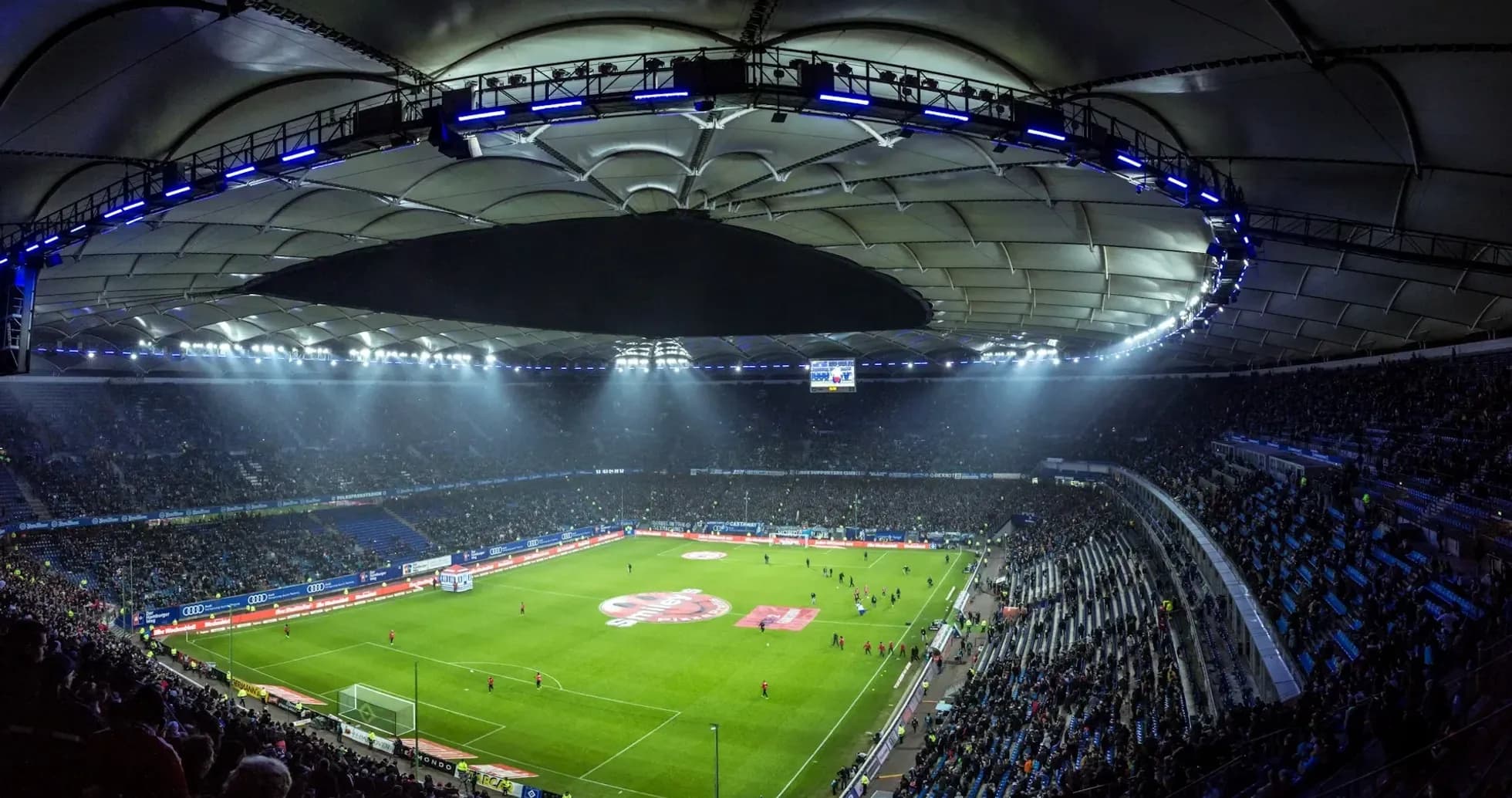
At the Tottenham Hotspur Stadium, under the lights of a Premier League Round 29 clash, Crystal Palace dismantled a fragile Tottenham side 3–1 to underline the growing gulf between the teams’ trajectories. With Tottenham stuck in 16th on 29 points and mired in a five-game losing streak, this was another damaging night in a relegation-threatened season. Palace, 13th with 38 points, arrived with mid-table security and left looking every inch the more composed, coherent outfit as they punished a red card and a series of defensive collapses before half-time.
First Half Analysis
The opening exchanges were scrappy rather than controlled, with Tottenham conceding possession and relying on transitions. Early indiscipline set the tone: at 7', Souza went into the book for a foul, a sign of Spurs’ reactive defending in midfield. Palace’s first major warning came on 14' when Daniel Muñoz was replaced by Nathaniel Clyne, an enforced early reshuffle that did little to disrupt the visitors’ structure.
Palace’s front line probed intelligently and Jørgen Strand Larsen’s aggression brought a yellow card for a foul at 22', but the real flashpoint arrived at 32' when Ismaïla Sarr thought he had opened the scoring, only for VAR to cancel the goal. Tottenham briefly capitalised on that reprieve. On 34', Dominic Solanke finished a move from open play, meeting service from Archie Gray to put the hosts 1–0 up, a rare moment of incision.
But the game turned brutally on 38'. Micky van de Ven was sent off for a professional foul as last man, reducing Spurs to 10 and shredding their defensive shape. Palace equalised almost immediately: at 40', Sarr converted from the spot to make it 1–1. Ange Postecoglou’s side tried to patch the damage with a double change on 43', Yves Bissouma replacing Randal Kolo Muani and Conor Gallagher coming on for Souza, but the reorganisation collapsed in stoppage-time chaos. At 45', Strand Larsen struck a goal from open play, assisted by Adam Wharton, and in the same minute Sarr added another from open play, again teed up by Wharton, sending Palace into the break 3–1 up and in complete command.
Second Half & Tactical Shifts
With a man down and two goals adrift, Tottenham’s second half became a damage-limitation exercise disguised as a comeback attempt. Reduced to 10, they focused on structural control without the ball, trying to compress central spaces while leaving Solanke and Mathys Tel to chase hopeful outlets. Palace, with their 3–4–2–1 mirroring Spurs’ original shape, were now able to dictate tempo through Wharton and Daichi Kamada before further tweaks.
On 67', Palace made their first attacking adjustment of the half, Brennan Johnson replacing Evann Guessand. It was a like-for-like change that maintained their vertical threat rather than a gamble, signalling confidence in the game state rather than urgency. Tottenham, by contrast, had to reach for more creativity. At 74', Pedro Porro made way for Xavi Simons and Solanke was replaced by Richarlison, a double switch that pushed Spurs into a more fluid, risk-heavy structure with Simons drifting inside and Richarlison offering penalty-box presence.
Palace responded with controlled rotation on 81', withdrawing the outstanding Strand Larsen for Christantus Uche and Wharton for Will Hughes. Those changes were about game management: fresh legs in midfield and attack to maintain pressing triggers without over-committing. As Tottenham’s frustration mounted, Bissouma was booked for dissent at 82', underlining a loss of emotional control that mirrored their tactical problems.
Clyne’s late yellow card for a foul at 90+2' was one of the few blemishes on Palace’s night. By then, the visitors were content to circulate possession, slow the tempo and let the clock strangle any faint Tottenham hope. Dean Henderson remained largely untroubled in the second period, protected by a back line that stayed compact and disciplined against a blunt, undermanned Spurs attack.
Statistical Deep Dive
The numbers told the story of a side out-thought and out-passed. Palace enjoyed 60% possession, using their 463 total passes with 402 completed at 87% accuracy to control rhythm and territory. Tottenham, with just 40% of the ball, completed 242 of 311 passes (78%), reflecting their struggle to build sustained phases, especially after going down to 10 men.
In terms of attacking output, Spurs actually attempted more total shots (12 to Palace’s 9), but the quality and context were telling. Both sides registered 4 shots on target, yet Palace’s xG of 1.78 outstripped Tottenham’s 1.09, highlighting the visitors’ superior shot locations and decision-making. Palace’s 3 blocked shots illustrated Spurs’ late desperation, while Tottenham’s 5 blocked efforts showed Palace’s back line repeatedly getting bodies in the way.
Discipline was another decisive factor. Both teams committed 14 fouls, but Tottenham’s 3 yellow cards plus a red card contrasted with Palace’s 2 yellows. The red for van de Ven was the hinge on which the match swung, forcing Tottenham into emergency substitutions and leaving their back three exposed. Palace’s ability to stay just the right side of the referee’s tolerance, under Andy Madley, allowed them to keep pressing without losing control.
Standings & Implications
For Tottenham, remaining 16th on 29 points with a goal difference of -7 and a form line reading “LLLLL” now looks ominous. Home form is particularly alarming: just 2 wins in 15 at the Tottenham Hotspur Stadium, with 25 goals conceded, speaks to a side unable to turn their own ground into any kind of fortress. Crystal Palace, by contrast, consolidate 13th place on 38 points and a -2 goal difference, their “WLWLW” form suggesting an upward, if streaky, trajectory. With seven away wins from 15, this was another statement that Palace are far closer to the top half than the relegation fight that now engulfs Spurs.