Valencia vs Girona: A La Liga Clash of Mid-Table Rivals
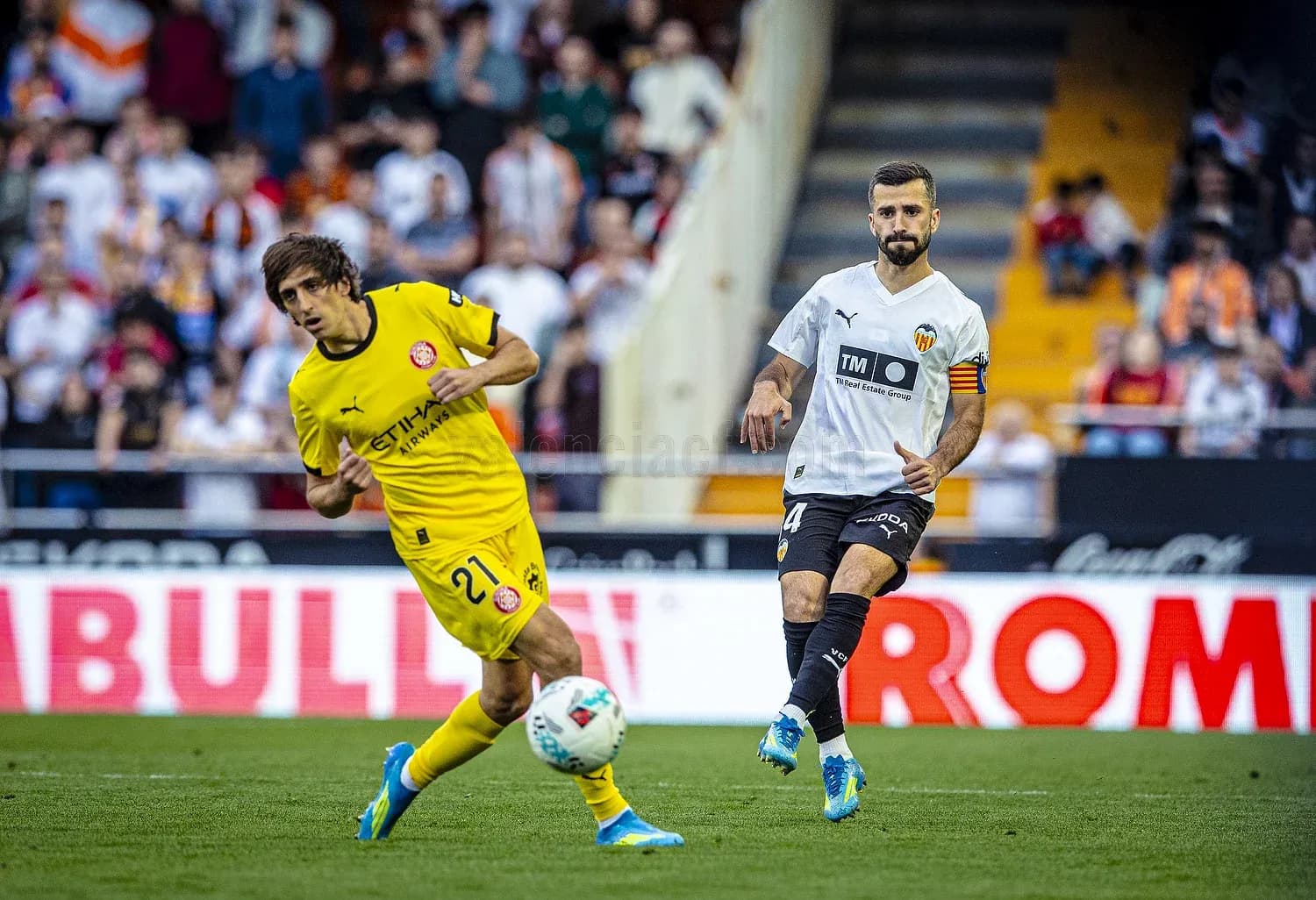
Under the late afternoon light at Estadio de Mestalla, Valencia and Girona met in a La Liga crossroads fixture that felt heavier than its “Regular Season - 32” label suggested. By full time, the scoreboard read 2-1 to Valencia, a result that did more than just tilt the table; it underlined the contrasting identities of two mid-table sides trying to steady themselves in a turbulent campaign.
Following this result, Valencia’s season-long profile remains that of a team defined by narrow margins. They sit 12th with 39 points, their overall goal difference at -11 (37 scored, 48 conceded). The numbers tell of a side that rarely runs away with games but increasingly knows how to manage them, especially at home. At Mestalla they have now played 16 league fixtures, winning 7, drawing 5, and losing only 4, with 23 goals scored and 19 conceded. Girona, by contrast, remain 15th on 38 points, their overall goal difference at -14 (36 for, 50 against), a reflection of a campaign where defensive leaks have undermined promising attacking spells. On their travels they have played 17 times, with 3 wins, 7 draws, and 7 defeats, scoring 17 and conceding 26.
Tactical Setup
Carlos Corberan leaned into Valencia’s seasonal DNA by reverting to his most trusted structure: a 4-4-2 that has been used 20 times in the league. S. Dimitrievski anchored the side from goal, shielded by a back four of Renzo Saravia, C. Tarrega, Pepelu, and José Gayà. In front of them, a balanced but industrious midfield line of Luis Rioja, Javi Guerra, G. Rodriguez, and L. Ramazani supported a front two of L. Beltran and U. Sadiq.
Michel answered with Girona’s staple: a 4-2-3-1, the formation that has framed 17 of their league outings. P. Gazzaniga started in goal, with a back four of A. Martinez, Vitor Reis, Daley Blind, and A. Moreno. The double pivot of I. Martin and A. Witsel sat behind a creative trio of V. Tsygankov, Thomas Lemar, and Azzedine Ounahi, feeding young forward C. Echeverri.
Absences and Disciplinary Trends
The tactical voids on both sides were significant and shaped the tone of the contest. Valencia were without J. Agirrezabala, E. Comert, J. Copete, M. Diakhaby, D. Foulquier, and T. Rendall – a cluster of absences that particularly thinned their defensive depth. That made Pepelu’s deployment in the back line even more telling: a midfielder by trade, asked to bring composure and build-up from deep in the absence of specialist centre-backs.
Girona’s list was equally disruptive. Juan Carlos, Portu, A. Ruiz, V. Vanat, M. ter Stegen, and D. van de Beek all missed out. The absence of Portu removed a vertical, transitional threat from the right, while the loss of D. van de Beek limited Michel’s options between the lines. It forced Girona to lean more heavily on Ounahi’s ball-carrying and Lemar’s drifting playmaking.
Disciplinary trends from the season fed into the match’s underlying tension. Valencia have shown a tendency to collect yellows late: 23.08% of their yellow cards come in the 76-90 minute window, and another 16.92% in added time (91-105). Girona are even more combustible as games stretch; a striking 42.03% of their yellow cards arrive between 76-90, with another 14.49% in 91-105. Both sides also carry red-card risk: Gayà has already seen red this season, and Vitor Reis’s disciplinary record includes 6 yellows and 1 red, underlining how fine the line can be for both full-backs and centre-backs once fatigue sets in.
Key Matchups
Within that context, the key matchups defined the narrative.
In the “Hunter vs Shield” duel, Valencia’s attack – modest overall at 1.1 goals per game in total but stronger at home with 1.4 – confronted a Girona defence that concedes 1.5 goals per game in total, including 1.5 on their travels. Valencia’s scoring pattern is heavily back-loaded: 33.33% of their goals arrive between 76-90, with another 23.08% in the 46-60 window. Girona’s defensive distribution is alarmingly similar in its vulnerability: 28.00% of their goals conceded fall in the 46-60 period and 22.00% in 76-90. That intersection – Valencia’s late surge against Girona’s late-game fragility – always looked decisive, and the 2-1 scoreline fits that script of a home side able to tilt the game as legs tire and spaces open.
The “Engine Room” battle was equally pivotal. For Valencia, Luis Rioja is the creative metronome: 5 assists in the league, 33 key passes, and 60 dribble attempts with 34 successes. His wide-left starting position in the 4-4-2 allowed him to target the channel outside A. Martinez and test Vitor Reis when he stepped across. On the other side, A. Witsel and I. Martin formed Girona’s stabilising axis, tasked with both shielding the back four and progressing play into the feet of Lemar and Ounahi.
Yet it was often Javi Guerra’s energy and G. Rodriguez’s balance that tilted the midfield in Valencia’s favour. Guerra’s willingness to step beyond the first line of Girona’s press created overloads, while Rodriguez’s positional discipline offered cover when Gayà surged forward. For Girona, Lemar’s drifting inside from the left and Ounahi’s ability to carry the ball through pressure were their main tools to unpick Valencia’s mid-block, but too often they found themselves funneled into central congestion where Pepelu and Tarrega could step in.
Defensive Profiles
In the back line, Vitor Reis’s season-long profile as an aggressive defender was on show. He has blocked 37 shots this campaign, a testament to his front-foot defending and willingness to throw himself into danger. But that same aggression, combined with Girona’s systemic vulnerability in the 46-60 and 76-90 windows, left gaps that Valencia’s wide players and forwards could exploit when transitions broke Girona’s rest defence.
Statistical Prognosis
From a statistical prognosis standpoint, the outcome aligns with the underlying trends. Heading into this game, both sides averaged 1.1 goals for per match in total, but Valencia’s home scoring rate and Girona’s away concessions tilted the xG expectation slightly toward the hosts. Valencia concede 1.2 goals per game at home, Girona score 1.0 on their travels; a narrow Girona goal was plausible, but the likelihood of them shutting out a Valencia side that scores late and often was always slim.
Valencia’s clean-sheet profile – 4 at home, 4 away in total – and Girona’s limited away clean sheets (just 1) further reinforced the expectation of a game where both would have chances, but the home side’s late-game punch would prove decisive. The 2-1 final, with its blend of home authority and visiting threat, feels like a faithful expression of who these teams have been all season: Valencia, flawed but increasingly efficient at Mestalla; Girona, brave in structure but too often betrayed by their defensive timing.