Washington Spirit W Dominates Bay FC in 2-0 Victory
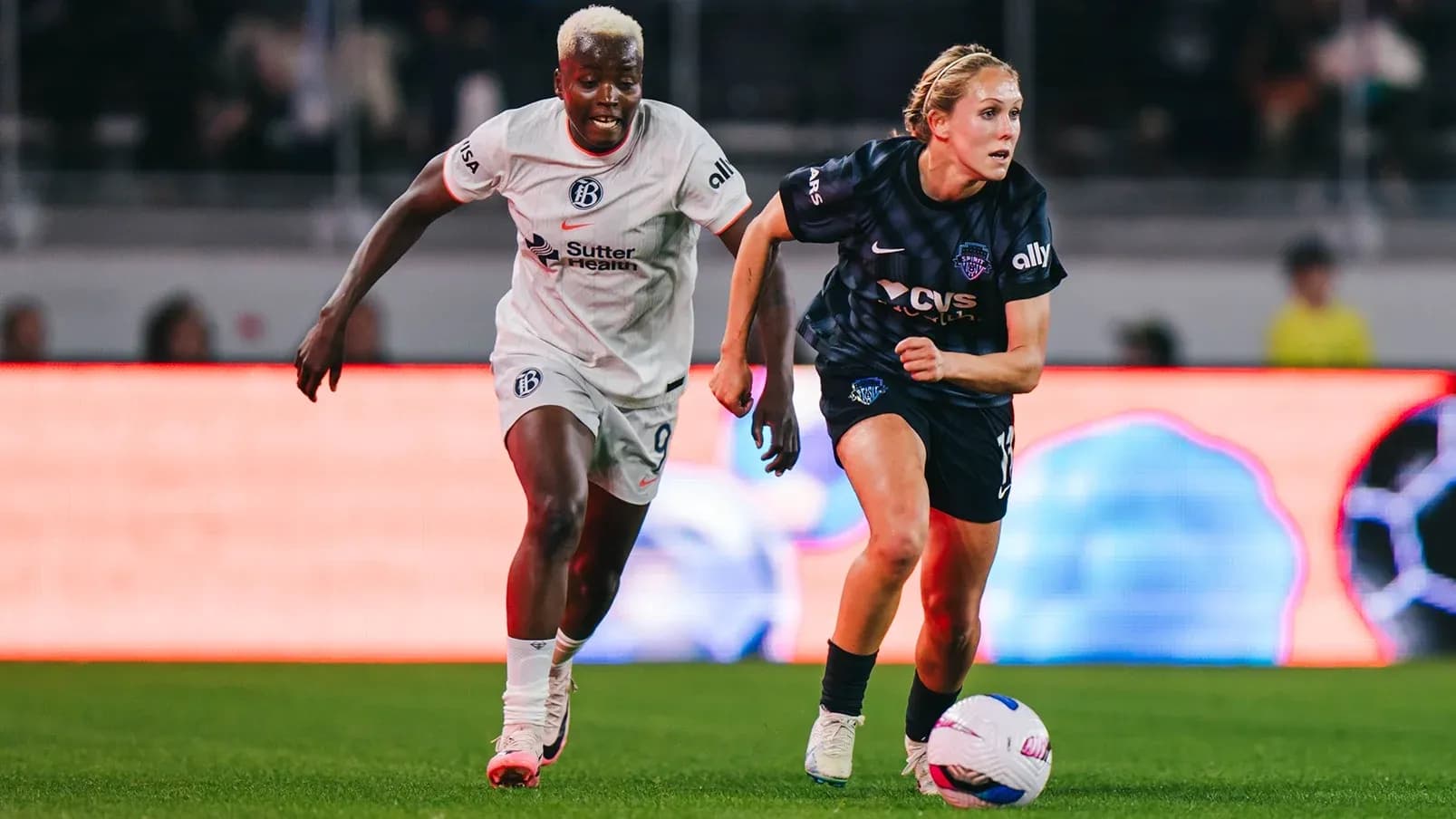
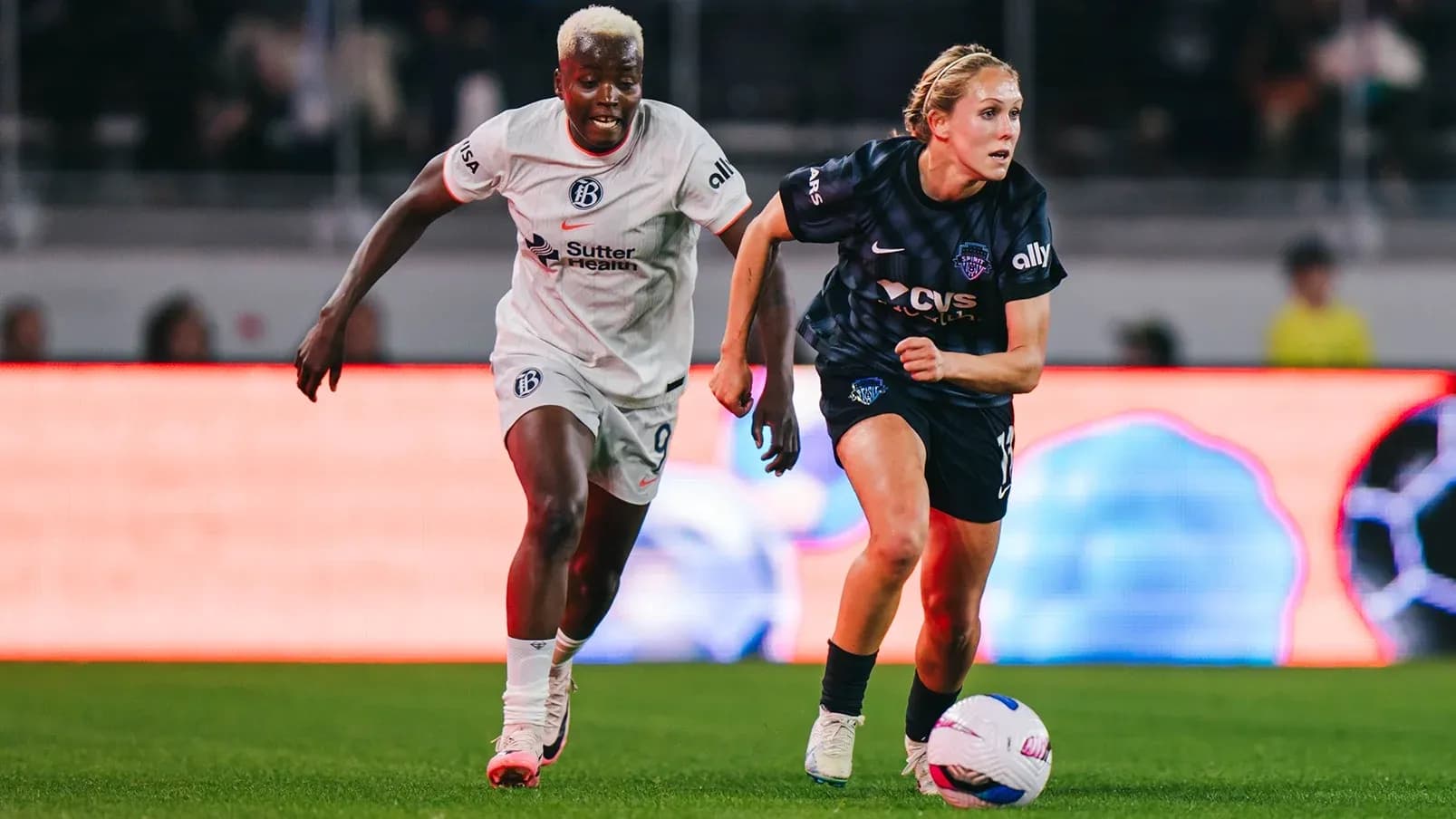
At PayPal Park, Washington Spirit W produced a controlled, territorially dominant 2–0 away win over Bay FC in NWSL Group Stage play. Despite the scoreline, the tactical story was defined by Washington’s sustained pressure and Bay’s defensive resistance. Washington owned 62% possession, generated 20 total shots (10 on target), and forced Bay goalkeeper J. Silkowitz into nine saves, while conceding only one shot on target themselves. Bay’s 4-2-3-1 struggled to progress the ball against Washington’s compact double pivot and aggressive wide press, and the breakthrough came via a 57' own goal from B. Courtnall before substitute G. Monday sealed the result at 86'.
Scoring Sequence & Disciplinary Log
The first half ended goalless, but the pattern was already clear: Washington Spirit W camped in Bay’s half, using their 4-2-3-1 to pin back both Bay full-backs and control central zones. Bay defended deep and narrow, with their front four rarely able to sustain counters.
The deadlock broke on 57' in unfortunate fashion for Bay FC. Under sustained Washington pressure and with the visitors already at 10 shots on goal by match end, defender B. Courtnall diverted the ball into her own net, credited as an own goal for Washington Spirit W. The sequence reflected the territorial imbalance more than a crafted Bay error: Washington’s repeated entries into the box and six blocked shots had Bay’s back line constantly reacting inside their area.
Washington’s second came on 86', when substitute forward G. Monday scored a normal goal to make it 2–0, capitalizing on a Bay side stretched by late chasing and fresh Washington legs in the attacking line.
Disciplinary action was minimal but notable. The only card of the match arrived at 90', when Bay FC defender Brooklyn Jean Courtnall received a yellow card for a foul. That booking capped a difficult evening for Courtnall, who had already been involved in the own goal. Washington finished without a single card, despite committing more fouls overall (11 to Bay’s 5), underscoring their control of tempo and field position rather than reliance on tactical fouling.
Tactical Breakdown & Personnel
Both teams lined up in a 4-2-3-1, but the systems functioned very differently. For Bay FC, coach Emma Coates deployed J. Silkowitz in goal behind a back four of S. Collins, A. Cometti, B. Courtnall, and A. Denton. The double pivot of H. Bebar and C. Hutton sat behind an attacking trio of A. Pfeiffer, T. Huff, and K. Barry, with C. Girelli as the lone striker.
Washington Spirit W, under Adrian Gonzalez, mirrored the shape: Sandy MacIver in goal; a defensive line of L. Di Guglielmo, E. Morgan, T. Rudd, and K. Wiesner; the holding pair of H. Hershfelt and R. Bernal; an advanced line of R. Kouassi, L. Santos, and T. Rodman behind striker S. Cantore. The structure allowed Washington to create a 2v1 on Bay’s lone pivot line whenever one of the advanced midfielders dropped inside, ensuring consistent central superiority.
Washington’s dominance started with their build-up. With 447 total passes at 83% accuracy compared to Bay’s 273 at 75%, they circulated the ball with patience, using Hershfelt and Bernal to draw Bay’s first line out and then playing through the half-spaces to Rodman and Santos. This stretched Bay horizontally, isolating full-backs Collins and Denton and forcing Courtnall and Cometti into repeated emergency defending inside the box.
The shot profile underlines the structural superiority: Washington produced 20 total shots, 12 from inside the box and six blocked, reflecting sustained occupation of Bay’s penalty area and second-ball dominance. Bay managed just six shots (three inside, three outside), with only one on target, illustrating how rarely they could convert defensive stops into meaningful transitions. With just three corners to Washington’s 12, Bay were almost never able to pin Washington back or build set-piece pressure.
Silkowitz’s performance was central to keeping the scoreline respectable. Her nine saves were a direct response to Washington’s 10 shots on target, indicating that almost every on-frame effort required intervention. In contrast, Sandy MacIver faced only one shot on goal, making a single save; Washington’s rest-defense and counter-press in Bay’s half largely neutralized Bay’s attacking midfielders and cut supply to Girelli.
Substitutions did little to change the overall tactical landscape but did refine the dynamics. For Washington, the first change came at 45+3', when P. Metayer (IN) came on for L. Di Guglielmo (OUT), likely to adjust midfield balance or manage a knock, and then at 46' C. Martinez Ovando (IN) replaced S. Cantore (OUT), refreshing the forward line. Later, at 76', A. Sullivan (IN) for R. Bernal (OUT) and Tamara Bolt (IN) for R. Kouassi (OUT) added fresh energy in midfield and wide areas, while at 84' G. Monday (IN) for L. Santos (OUT) directly produced the second goal.
Bay’s changes aimed to inject attacking impetus once they fell behind. At 60', C. Conti (IN) replaced K. Barry (OUT), adding a new profile between the lines. A double change at 71' saw K. Lema (IN) for C. Girelli (OUT) and M. Moreau (IN) for A. Denton (OUT), reshaping the front line and left side. Finally, at 85', D. Bailey (IN) came on for H. Bebar (OUT), an attempt to push an extra body into advanced midfield zones. Yet Washington’s control of possession and strong defensive structure meant these changes translated into little additional threat; Bay’s single shot on target across 90 minutes underscores that their attacking reconfiguration never truly broke Washington’s block.
The Statistical Verdict
The raw numbers frame a one-sided tactical contest. Washington Spirit W’s 62% possession, 447 passes at 83% accuracy, and 20 shots (10 on target, six blocked) point to a side that not only controlled the ball but consistently converted that control into penalty-box presence. Bay FC, with 38% possession, 273 passes at 75%, and just six shots (one on target), operated largely in survival mode.
Defensively, Bay’s five fouls and single yellow card, compared to Washington’s 11 fouls and no cards, show that Bay were not disrupting play aggressively; instead, they were pinned deep, relying on positional defense and, crucially, on Silkowitz’s nine saves. Washington’s lone save reflects how effectively their structure prevented Bay from reaching dangerous zones.
With expected goals and goals prevented not supplied, the best proxy is shot volume and location: 12 Washington shots inside the box versus three for Bay underline that the 2–0 scoreline is fully consistent with the tactical and statistical balance. Washington’s 12 corners to Bay’s three further emphasize territorial dominance. The own goal from B. Courtnall and the late strike from substitute G. Monday were the logical outcomes of a match Washington controlled from first whistle to last.