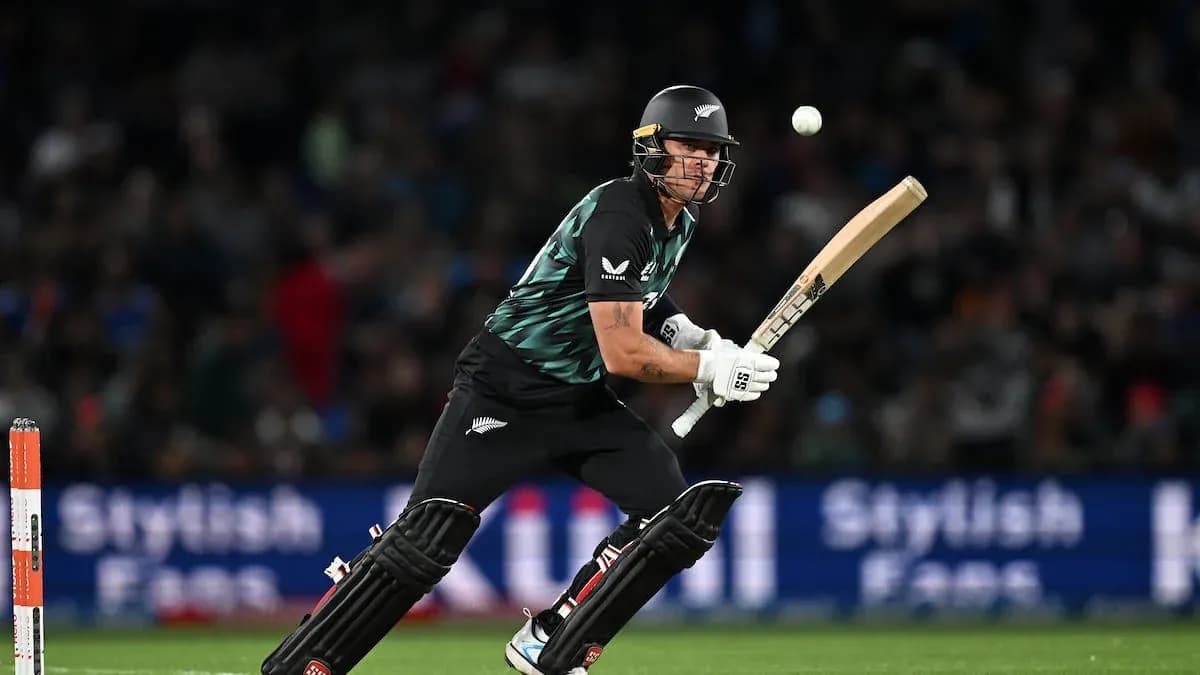
Will Young praises Seifert and Allen's ODI impact
Will Young spent much of the innings with the best view in the ground. From the non-striker’s end, he watched Tim Seifert and Finn Allen tear into the bowling, then quietly stitched their chaos into something substantial.
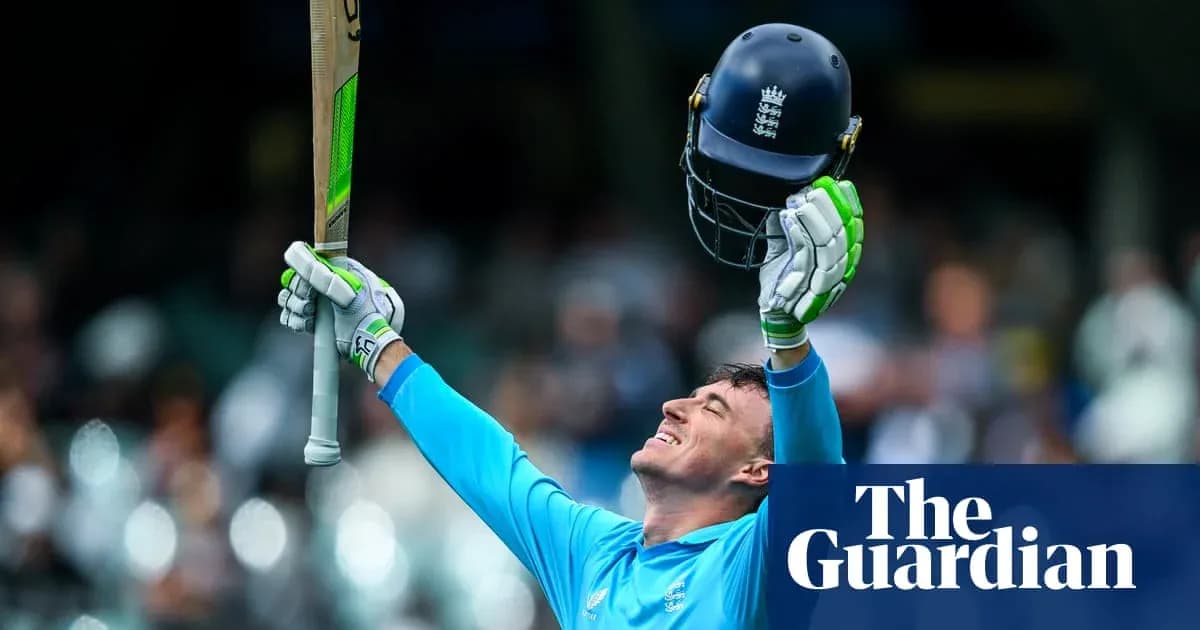
Young added 85 from 73 balls with Seifert, then 90 from 66 with Allen on his way to a fifth ODI century. The partnerships were brisk, calculated and, crucially, match-shaping. They also told a story that runs deeper than the lazy labels often thrown at New Zealand’s white-ball hitters.
Seifert and Allen arrive with T20 reputations that scream “sloggers”. Their highlight reels are full of 360-degree hitting, ramp shots and top edges that somehow clear third man. But in this ODI set-up, Young sees something else.
“It’s brilliant having Tim and Finn in the ODI set-up,” Young said. “You can see the enjoyment and the energy they both bring to the group. It certainly rubbed off on me yesterday. They showed the power that they’ve got, but both of them are better than ‘crash, bash’ players.”
The evidence was there in the way they went about it. They didn’t just swing from the hip and hope. They assessed, adapted and then attacked.
“They showed that yesterday, they adapted to what was in front of them, built some meaningful partnerships, and it contributed to the win,” Young said. “It’s an exciting time having Tim and Finn in the team.”
Allen’s high-risk, high-reward gamble
For Allen in particular, this return to 50-over cricket could prove a decisive call by the selectors.
Since his international debut in 2021, nobody has doubted his talent. He can dominate an attack from ball one, and earlier this year he underlined that with a staggering 33-ball century against South Africa, blasting New Zealand into the T20 World Cup final in India. That innings helped turn him into the most expensive player in Big Bash League history.
The flip side is obvious. A player built to go hard from the start will never be a metronome of consistency. Allen’s critics have had plenty to work with in a record that, on paper, does not leap off the page.
But cricket lives in moments as much as in numbers. In 2022, in New Zealand’s opening game of the T20 World Cup against hosts Australia in Sydney, Allen smashed 42 from just 16 balls, with five fours and three sixes. He didn’t reach fifty. Statisticians filed it away as a cameo. The reality? He ripped the heart out of Australia’s title defence. New Zealand won by 89 runs, and the hosts never recovered.
That is the kind of threat now lurking at No 5 in this ODI side. Even in a depleted line-up, Allen changes the mood the moment he walks out. Bowlers know it. So do his teammates.
“There’s no doubt, he’s got such a high ceiling,” Matt Henry said. “He’s been such a good cricketer. It’s a good place for us to be in, we’ve got guys getting experience in different positions – it’s great for him. He’s hitting the ball cleanly as well, it’s exciting.”
Allen at five is a bold move. Traditionally, that’s been Tom Latham’s territory, the safety net and the finisher rolled into one. Now New Zealand are experimenting with a disruptor in that slot, gambling that his ability to break games open late could be just as valuable as his powerplay mayhem.
Seifert, Allen and a crowded departure lounge
There is, however, a hard edge to all this optimism. Only 15 World Cup spots are available for next October’s tournament in South Africa, Zimbabwe and Namibia. Not everyone will get on that plane.
Seifert, eyeing a place at the top of the order, finds himself up against heavyweight competition: Rachin Ravindra, Devon Conway and Young himself. Allen’s path at No 5 is just as congested, with Latham the established option in that role.
There is also a vacancy that changes the shape of the batting order entirely. Kane Williamson’s retirement has blown open the No 3 position, the anchor role that has underpinned New Zealand’s white-ball batting for a decade. Either Seifert or Allen could be thrown into that slot, but it would be a very different version of No 3 to the one Williamson defined.
The temptation, in an era dominated by T20 leagues and viral clips, is to be seduced by explosiveness alone. The players who specialise in 50-over cricket rarely dominate the headlines in the same way. Yet those are often the ones who keep a campaign on track.
Young, now a fixture in the ODI side, doesn’t see the growing competition as a threat. He sees it as the price of progress.
“The best thing about this team is it’s all about contributing to team success, rather than looking over your shoulder to see who else is doing well,” he said. “But it is an important series, and there’s a couple more as well leading up to the World Cup to try and stake your claim – but the most important thing is being a good team man and trying to contribute in different ways towards the team success that’ll get you on that plane.”
For Seifert and Allen, the message is clear. The power is non-negotiable; it is why they are in the conversation. What will decide their fate is everything wrapped around it – the judgement, the tempo control, the partnerships like the ones Young enjoyed from the other end.
If they keep proving they are far more than “crash, bash” merchants, the selectors’ so-called gamble may soon look like the most obvious call in the world.