World Cup Drama: Storms, Protests, and Historic Wins
The World Cup’s North American leg is only just warming up, but already it feels like a tournament permanently on the brink — of history, of controversy, and on Monday night, of an actual storm.
France v Iraq staring down “apocalyptic” skies
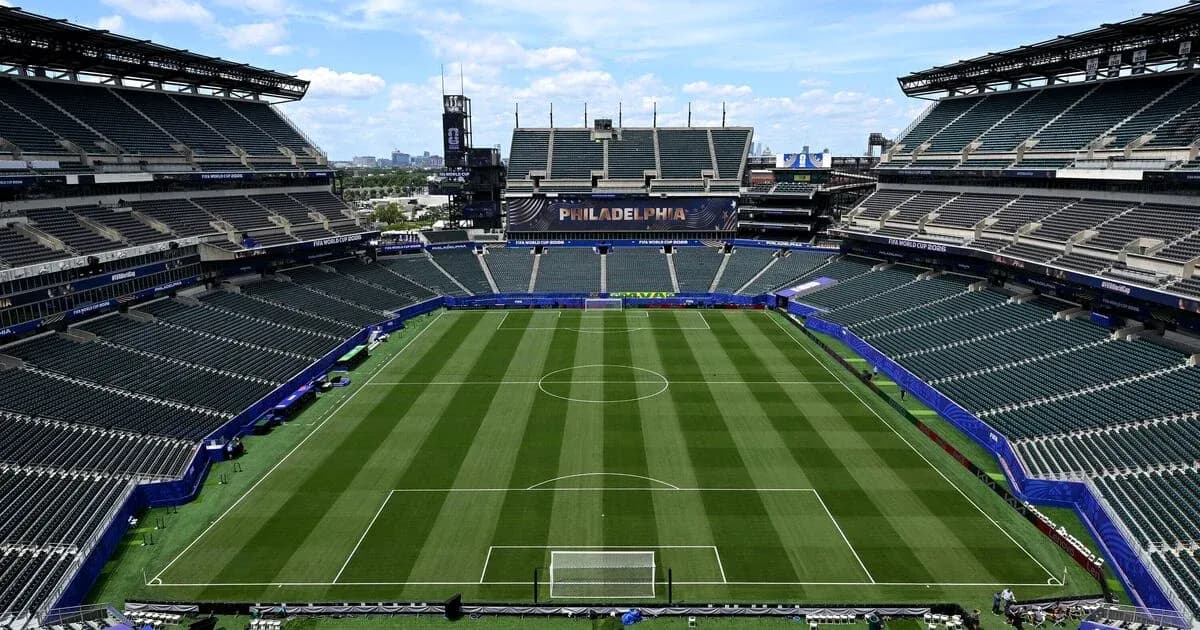
France’s group clash with Iraq in Philadelphia, scheduled for a 10pm kick-off, is staring at serious disruption as extreme weather rolls in over the city.
Local forecasts warn of “apocalyptic” conditions: several severe thunderstorms, damaging winds, intense lightning and even a risk of isolated tornadoes. Under FIFA’s safety protocol, a single lightning strike within eight miles of the stadium is enough to halt play and trigger a full evacuation.
“They'll start to evacuate the stadium to the main concourse and seek emergency shelter,” explained Lauren Lambrugo, chief operating officer of Philadelphia Soccer 2026. “And then it has to wait 30 minutes prior to them bringing everybody back on the field.”
One flash in the wrong place, and thousands of fans and 22 players will be heading for cover, the match clock frozen until the skies calm down.
Egypt’s night of catharsis
While the weather threatened chaos in Philadelphia, Vancouver witnessed a different kind of storm.
Egypt finally claimed their first ever World Cup win, a landmark 3-1 comeback against New Zealand that turned a tense evening into a national catharsis. Finn Surman’s towering first-half header had put New Zealand on course for their own slice of history, but the game flipped after the break.
Egypt tore out of the dressing room. Ziko dragged them level as the pressure mounted, the Pharaohs swarming forward. Mohamed Salah, inevitably, delivered the turning point with his first goal of the tournament, a sharp one-two and a low finish that felt like a dam bursting.
Trezeguet then arrived to slam the door shut at 3-1, Egypt “turning on the style” as New Zealand simply ran out of answers. The wait for a World Cup win goes on for the All Whites. For Egypt, it has only just begun.
In Vancouver, the celebrations spilled far beyond the stadium. Footage emerged of Salah in the streets, singing and dancing in the Canadian night, the face of a footballing nation finally able to exhale.
Cape Verde refuse to blink against Uruguay
Miami delivered its own drama. Uruguay and Cape Verde traded blows in a gripping 2-2 draw that leaves Marcelo Bielsa’s side staring at an anxious final group game.
Cape Verde struck first, and spectacularly. Kevin Pina unleashed a thunderous free-kick from around 30 yards, a laser that ripped into the net and stunned Uruguay. The South Americans responded with a quickfire double: Ronald Araujo nodding in after a rebound off the post, then turning provider with a header across goal for Canobbio to tuck away.
At 2-1, you expected Uruguay to close it out. Instead, they unravelled.
Helio Varela, on the pitch for barely three minutes, pounced on a defensive calamity, firing into an empty net with Fernando Muslera stranded in no man’s land. Cape Verde had their second historic result of the tournament and almost stole all three points at the death.
For Uruguay, the consequences run deeper. Bielsa has already confirmed Giorgian de Arrascaeta and Ronald Araujo will miss the final group game against Spain and remain sidelined until at least a possible round of 32. With two draws on the board, defeat to the European champions, combined with a win for either Cape Verde or Saudi Arabia, could dump Uruguay out as a low-ranked third-place finisher.
Cape Verde, meanwhile, know exactly what they need: beat Saudi Arabia and they are through. Their debut campaign, once a curiosity, now feels like a genuine threat to the established order.
Spain wake up, Yamal arrives
In Atlanta, Spain finally looked like Spain again.
After a flat, goalless opener against Cape Verde, the European champions dismantled Saudi Arabia 4-0, with the damage done early and done decisively. The tone changed the moment Lamine Yamal returned to the starting XI.
The Barcelona prodigy tapped home the opener from a Mikel Oyarzabal cross, his first World Cup goal in his first start. Oyarzabal, heavily criticised for his display in the opener, then flipped the narrative with a ruthless double before the first drinks break, turning 1-0 into 3-0 and the contest into a procession.
Spain eased off the throttle after half-time but still found a fourth, Marc Cucurella’s effort diverted into his own net by Hassan Al Tambakti — the eighth own goal of these finals.
Yamal, speaking afterwards, captured the scale of the moment. He called the goal “special”, admitting he had watched the last World Cup in class at school. Now he is bending this one to his will.
Spain even had a fifth ruled out in stoppage time after VAR spotted Ferran Torres offside. It hardly mattered. One foot is already in the knockouts.
Belgium and Iran serve up frustration
Los Angeles saw far less sparkle. Belgium and Iran played out a scrappy, goalless draw that left both sides stuck on two points from two Group G games.
Iran thought they had struck first when Mehdi Taremi found the net, only for VAR to rule the effort out for offside. Belgium’s best chance came late, Maxim De Cuyper shooting straight at Alireza Beiranvand when he should have scored.
The game’s key flashpoint came with Nathan Ngoy’s red card. The Belgian defender hauled down Taremi just beyond the halfway line, with no cover behind him. The referee showed red for denying a clear goalscoring opportunity and VAR backed the decision. Even with the extra man, Iran never really seized control.
Roy Keane, watching on ITV, did not hold back. He labelled the standard “rubbish”, slamming the passing, movement and decision-making from both sides. It was hard to argue.
Belgium now face New Zealand in their final group match. Iran meet an Egypt side suddenly alive with belief.
Anthem boos and protests follow Iran
Iran’s matches continue to carry a weight far beyond the football. Their national anthem was booed for a second consecutive game, the soundtrack to a team caught in the crossfire of a divided nation.
Captain Alireza Jahanbakhsh refused to be drawn into a direct confrontation over the protests but spoke of unity and responsibility.
“We play for all the Iranians in Iran, outside Iran, with whatever ideology, whatever preferences they have,” he said. “The most important thing we can do as a team is to perform well, to make sure we put our heart on the pitch, and to do everything to make them happy.”
Outside the stadiums, dissenting voices remain loud. Iranian fans in Los Angeles have used the World Cup as a stage, calling for the fall of the Islamic Republic and insisting the national team does not represent them. For them, every anthem, every match, is political — whether the players like it or not.
England: flags, fitness and a Tuchel iron grip
England’s World Cup story is currently being written off the pitch as much as on it.
An England flag featuring a submarine was blocked from entering the stadium for the opener against Croatia, falling foul of FIFA’s strict ban on military imagery. The incident prompted a tongue-in-cheek response from Barrow FC, who posted an image with the submarine comically blurred out, but the message from organisers is clear: no grey areas, no exceptions.
On the football side, Thomas Tuchel is juggling injuries and discipline.
Bukayo Saka has handed the manager a major boost by training fully at England’s base in Kansas City ahead of Tuesday’s clash with Ghana in Boston. The Arsenal winger, managing an ongoing Achilles issue, had been on an individual programme and was initially earmarked for a cautious return later in the group stage. Saka insists the problem has not deteriorated and that he is fit.
Tuchel, who had suggested he might hold Saka back until the final group game against Panama, now has a genuine selection dilemma. Risk his most dynamic wide threat against Ghana to seal qualification early, or hold him back and trust the squad depth?
Declan Rice remains a doubt after hobbling off against Croatia, adding another layer of concern before a match that could secure progression — and possibly top spot — with a win.
Away from the training pitch, Tuchel has imposed a strict curfew on the squad. Defender Dan Burn revealed that players even had to abandon a concert early to make it back in time, despite the evening being billed as a friends-and-family day. The message is unmistakable: this is a tournament, not a holiday.
Doku at the centre of a World Cup culture clash
One of the most emotive storylines of the day sits with Belgium’s Jeremy Doku, who missed the Iran match due to a chest infection but remains in the headlines for a very different reason.
The Manchester City winger has been open about wanting to leave the World Cup camp to be present for the birth of his first child in early July.
“It's my first child, so I would definitely want to be there,” he said. “If you ask me what I want, my answer is that nobody wants to miss the birth of their first child. But I also know that football involves many other considerations.”
He added that he expects support from the federation and that a solution will be sought.
That stance sparked a fierce backlash from L'Equipe presenter France Pierron, who described leaving a World Cup for a birth as walking away from a “childhood dream” and even called the moment of birth “disgusting”, claiming the father is “just an extra”. Her comments prompted outrage and she has since been suspended and apologised.
Inside the game, sympathy lies more with the player. England striker Ollie Watkins, himself a father of two, publicly backed Doku’s position.
“It only happens once, your first child,” Watkins said. “Welcoming them into the world is a blessing, and you don't get that opportunity (again)… I don't think it's anyone else's business. If he goes back and does that, that's fair enough.”
The clash exposes a generational fault line: between an older idea of footballers as single-minded servants of the shirt and a newer reality where family comes first, even on the sport’s biggest stage.
Brazil’s respect, Scotland’s opportunity
In Group C, Brazil know a point against Scotland will be enough to reach the last 32. They are not interested in playing for one.
Lucas Paqueta made that clear, stressing both respect and ambition ahead of the meeting.
“All the teams at the World Cup deserve respect,” he said. “We have great respect for Scotland, but we also know we need to play our game and follow what the coach asks of us. Regardless of the opponent, our goal in every match is to win.”
A draw might suit both sides on paper. On the pitch, Brazil are promising nothing of the sort.
A World Cup on edge
From lightning protocols in Philadelphia to anthem protests in Los Angeles, from Cape Verde’s defiance in Miami to Egypt’s eruption in Vancouver, this World Cup feels permanently stretched between celebration and crisis.
Flags are being turned away at the gates. Players are weighing family against country. Managers are juggling injuries, storms and politics.
And somewhere in the middle of it all, a teenager who once watched the tournament in a school classroom is scoring for Spain, while a tiny island nation stares down Uruguay without blinking.
The football is only part of the story. The rest of it is what will define this World Cup when the final whistle eventually blows.