World Cup Final: Messi, Mbappé, and the Politics of Football
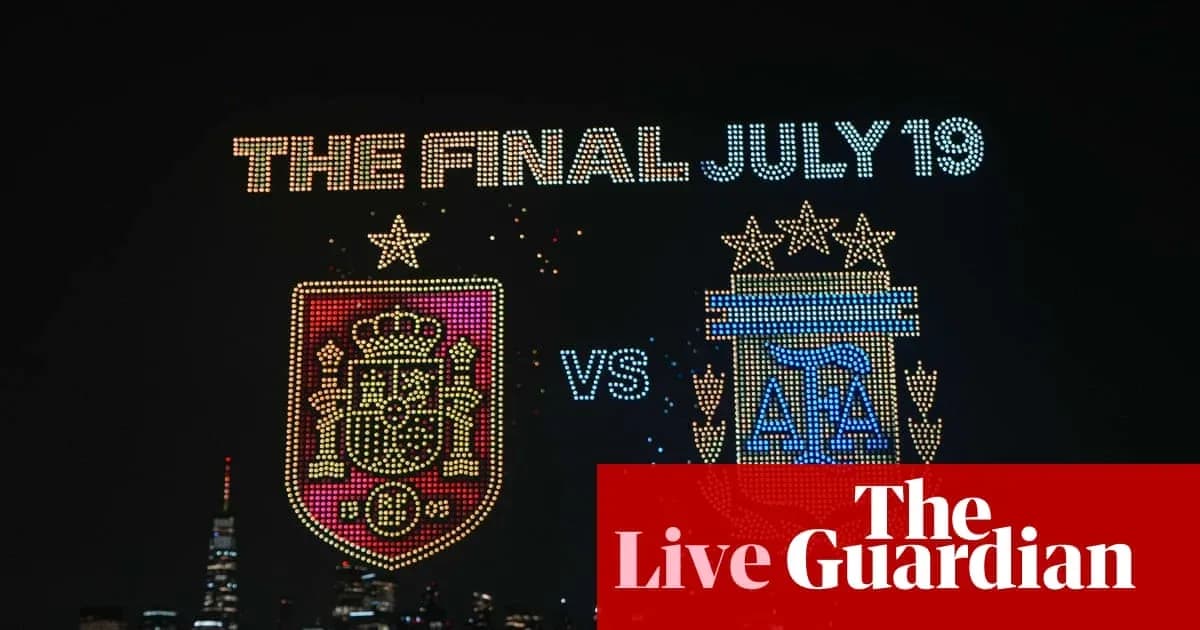
The World Cup is drifting towards its final act, but the noise around it is only getting louder. On one side of the Atlantic, England are still dissecting their own collapse. On the other, Spain and Argentina are preparing for a final that feels as much like a cultural event as a football match. And in the middle of it all stands Gianni Infantino, endorsed, entrenched and utterly unbothered.
This is the tournament’s late‑stage chaos: golden boots, geopolitical banners, managerial angst and a president who looks untouchable.
Messi v Mbappé: the numbers, and the nagging question
Kylian Mbappé and Lionel Messi go into the final level on goals in the Golden Boot race. Messi edges it, for now, by virtue of one extra assist. It is a neat little statistical quirk, the kind that data departments love and strikers loathe.
But a familiar argument has resurfaced: should goals in the final count more than those in the third‑place game? While Mbappé eyes the grandest stage, someone else could quietly help themselves to a hat‑trick in a game half the world ignores and still walk away with the prize.
The numbers say all goals are equal. The stage insists they are not.
Rodri’s renaissance and a Manchester City question
One of the most compelling stories of this World Cup has been Rodri’s resurgence. After his ACL injury, there were serious doubts over whether he would ever again trust his body enough to dominate games the way he once did. That kind of injury doesn’t just tear at ligaments; it gnaws at confidence.
Here, though, he has looked liberated. Composed on the ball, relentless without it, he has quietly become one of the tournament’s standout midfielders. Every controlled touch and well‑timed interception has felt like another step away from the fear that he might not get back to this level.
There is a suspicion, whispered more than shouted, that this may have been his last act as a Manchester City player. If so, he has chosen a grand stage on which to remind Europe exactly what he is.
England’s autopsy: Tuchel, tactics and the illusion of control
Back home, England are still picking at the bones of their exit. Thomas Tuchel remains in charge, his job apparently safe despite the bizarre substitutions that helped send them out. The players, unsurprisingly, are said to have been bewildered by the tactical lurches on the night it all fell apart.
Tuchel had been widely praised earlier in the tournament for his “game‑changing” substitutions. The flipside is uncomfortable: if the bench keeps rescuing you, perhaps you got the starting XI wrong in the first place. In an era of five substitutions, managers can plan for “finishers”, but England seemed to be relying on them as a crutch rather than a weapon.
They were, as one observer put it, staggeringly fortunate to reach the semi‑finals and clearly the weakest of the last four. The idea of being taken apart by Spain in the final has been quietly shelved by reality. Now comes the consolation game, a match that feels like a chore for everyone involved.
What should Tuchel do with it? Some argue he should treat it as a reward for the squad players: a half each for the goalkeepers, minutes for Ollie Watkins, Ivan Toney, and a proper run‑out for Kobbie Mainoo. Others insist that if you’re there, you may as well try to win the thing. Bronze is still a medal, even if it glints a little less brightly.
Politics in the stands and on the pitch
The final in New Jersey will not just be about football. Spanish Prime Minister Pedro Sánchez will be there to watch his country face Argentina. So too will Donald Trump, eager to present the match as a glossy advert for American hosting power.
On the turf, Argentina are already under scrutiny. Keir Starmer has backed calls for Fifa to investigate Albiceleste players who displayed a banner asserting their country’s claim to the Falkland Islands after their semi‑final win over England. It was a reminder that, for all the talk of “just football”, the World Cup never really escapes politics.
Infantino’s iron grip
While the games provide the drama, the boardroom offers something closer to inevitability. Gianni Infantino has secured the formal endorsement of more than 200 of Fifa’s 211 member associations for a fourth term as president. Only a small cluster of countries, including Germany, are yet to submit letters of support.
He will be re‑elected in March by a landslide. That much is clear. The scandals, the unrest, the rows over governance and ethics – none of it has come close to shaking his position.
“Football survived Sepp Blatter. It survived Jack Warner. It survived Chuck Blazer. And it will survive Gianni Infantino,” writes Mel Brennan. The sport, as ever, endures its leaders rather than depends on them.
Argentina’s edge of steel
If Argentina do lift the trophy again, it will not just be because of Messi. Cristian Romero has turned into a symbol of their edge. In club football he can look rash, occasionally wild. In the white and blue of La Albiceleste, he becomes something else entirely: one of 11 players prepared to bleed for the shirt.
Alongside Lisandro Martínez, Romero has been the hardman in front of Emiliano Martínez, the last barrier between chaos and calamity. Strip away the romance and you are left with this: Messi’s magic, Martínez’s goalkeeping and Romero’s ferocity have underpinned Argentina’s march to a third final in four tournaments.
Club football waits, but the World Cup still grips
Beyond the World Cup, the club game is already stirring. Trent Alexander‑Arnold has spoken of the “pleasure” of working under Jose Mourinho at Real Madrid, praising the intensity and high demands of his new‑old manager. With Dani Carvajal gone, the path is clear for Alexander‑Arnold to nail down the right‑back spot after an injury‑hit first season in Spain.
He talks about laying “a solid foundation” for a successful year. Mourinho will expect more than that. He always does.
Back in Europe, the qualifiers have already delivered their own little dose of chaos. In Malta, NSÍ Runavík knocked out Hamrun Spartans with a 94th‑minute penalty that sparked such fury the police had to intervene. A red card, a crowd on edge, and a reminder that even in July, football rarely does quiet.
The final stretch
As the last weekend looms, there is a strange dread among fans whose body clocks have bent around late‑night kick‑offs and early‑morning alarms. When the final whistle blows on Spain v Argentina, the silence will feel abrupt. Some will drift towards South American leagues or MLS to fill the gap. Others will reluctantly reacquaint themselves with sleep.
But before that, there is still a final to be played, a Golden Boot to be settled, a third‑place game to endure, and a president to be coronated again.
Messi against a new generation, Spain against history, Infantino against no one at all.
The World Cup is almost over. The arguments it leaves behind are only just beginning.