World Test Championship Stays at Nine Teams Amid Expansion Talks
The World Test Championship is on course to look exactly the same for the rest of the decade, with the ICC board expected to shut the door on expansion and keep the competition at nine teams through to 2031.
A long, tense Sunday in Bali now shapes as the final stand for those pushing to open the WTC to all 12 Full Members. The mood music, though, is clear: the existing structure for the 2027-29 and 2029-31 cycles is likely to be rubber-stamped.
This is the back end of the WTC’s fourth cycle, a tournament that has survived tinkering, criticism and periodic calls for a radical reset, including a two-tier league model that has already been shelved. The latest battle has centred on a simple question: should every Test nation be at the same table?
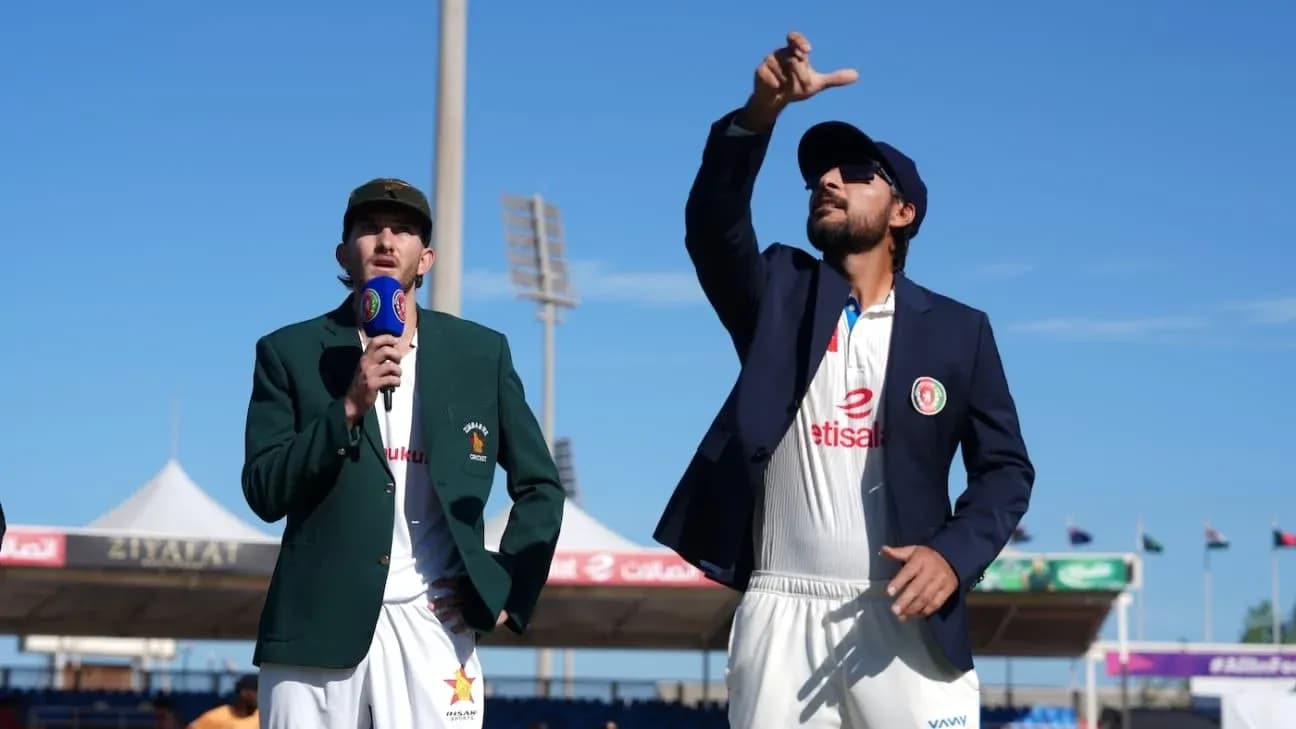
An ICC working group chaired by former New Zealand batter Roger Twose thought so. Its recommendation – a single-division WTC featuring all 12 Full Members – had gathered real momentum over the past year. Zimbabwe, Ireland and Afghanistan, the three Full Members currently outside the WTC, lined up firmly behind it.
They have done more than lobby quietly. On Saturday in Bali, during a Chief Executives’ Committee meeting that ran for more than four hours, representatives from those boards delivered impassioned arguments that their Test ambitions are being throttled. Without WTC status, they say, their development stalls. Without promotion and relegation, they have no pathway into the top nine.
The plea is as much about opportunity as prestige.
Yet the numbers still rule the room. Doubts persist among several members over whether adding more teams actually deepens the WTC’s commercial value. The league is, after all, still built on bilateral scheduling controlled by boards, with only the final sitting under the ICC’s direct umbrella. More teams mean more fixtures to juggle, more travel, and potentially more strain on already crowded calendars.
That tension has left the ICC leaning towards the status quo.
Not everyone is content with that. Cricket South Africa has emerged as one of the loudest voices for expansion, with chief executive Pholetsi Moseki delivering what was described as a rallying cry during the CEC session. For a board trying to protect its own Test footprint in a franchise-heavy era, a broader, more inclusive WTC offers both competition and context.
The heavyweights remain harder to read. The positions of the BCCI and Cricket Australia have not been nailed down publicly, but their influence looms over any decision. England, meanwhile, have taken Zimbabwe and Ireland on in one-off Tests in recent years, a nod towards inclusivity, yet the ECB is understood to be wary of formal expansion, citing travel and financial pressures.
The relationship between England and Zimbabwe carries its own symbolism. The two boards are close to finalising England’s first tour to Zimbabwe in three decades. Initially pencilled in for 2028, it is now expected to take place in 2030 and to include a Test at Victoria Falls – a historic fixture, but still a standalone event rather than part of the WTC fabric.
For expansion advocates, Sunday’s board meeting has the feel of a last throw of the dice. Some cling to the faint possibility of a compromise: a 10-team WTC instead of 12. Zimbabwe’s appetite for Test cricket underpins that hope. They played 10 Tests in 2025, a robust schedule for a side outside the main competition, but have managed only two this year. It is a pattern that underlines their argument: without WTC status, consistency is fragile.
While the WTC structure dominates the politics, it is not the only big-ticket item on the Bali agenda. A sweeping strategic review into the future of international cricket, covering all three formats, is also being presented to the board. Global consulting firm McKinsey, commissioned to undertake the review, outlined its findings to ICC stakeholders on Saturday night.
Those recommendations will shape how Test, ODI and T20 cricket coexist in an era of expanding domestic leagues and shifting broadcast priorities. They may yet influence how much space there is for a competition like the WTC to grow.
For now, though, the immediate question is narrower and more brutal: does the World Test Championship remain a closed club of nine, or does the door finally open for the three Full Members left waiting in the corridor? The answer in Bali looks set to define Test cricket’s pecking order for the rest of this decade.