Alexander Zverev: From Cautionary Tale to Two-Time Grand Slam Champion
Alexander Zverev used to be the cautionary tale. The guy with the gifts, the ranking, the titles, but not the one thing that defines a men’s tennis career.
He ends 2026 as a two-time Grand Slam champion and the world number one.
At 29, he has become the oldest man in more than half a century to climb to the top of the rankings for the first time. His coronation has been driven by a season that finally matched his long-trumpeted potential: titles at Roland Garros and the US Open, plus a run to the Wimbledon final. The numbers now fit the narrative his supporters have pushed for years.
Yet nothing about Zverev is simple. On court, his story is one of perseverance, reinvention and a belated embrace of risk. Off it, his rise runs alongside serious allegations of abuse, investigations, a high-profile court case and an uneasy relationship with parts of the crowd that watches him.
Both realities sit side by side. They are impossible to separate.
From nearly man to major winner
For a long time, Zverev was the best player of his generation without a major. Olympic gold, two ATP Finals titles, a spell as world number two and three previous Grand Slam finals decorated his résumé, but the sport’s biggest prizes remained locked away.
The most painful chapter came in New York in 2020. Two sets up on Dominic Thiem in the US Open final, Zverev froze. The serve that usually anchors his game deserted him. Two double faults in the decisive tie-break, Thiem cramping across the net, and still he could not close. He walked off that court with the image of a man who did not quite trust himself when the air got thin.
That doubt lingered. In best-of-five, he often retreated into caution, rolling in second serves, pushing instead of striking. His baseline aggression from the ATP Tour, where he could bully opponents over three sets, too often dissolved when a major was on the line.
He decided that had to change.
A Mallorcan reset
The turning point came far from the roars of a stadium. In July 2025, Zverev spent 10 days in Mallorca with Rafael Nadal and Toni Nadal, searching not for a new forehand or serve tweak, but a new way to think.
"I wanted to see and then hear a new vision of what tennis in their mind looks like – and how my tennis, in their mind, looks like," he said. Nadal had spent a decade across the net from him. Now, as a retired great and a spectator, he could dissect Zverev’s game with brutal clarity.
The message filtered through in the way Zverev began to play. More speed through the ball. More risk. More variety in rallies. Less fear of the scoreboard.
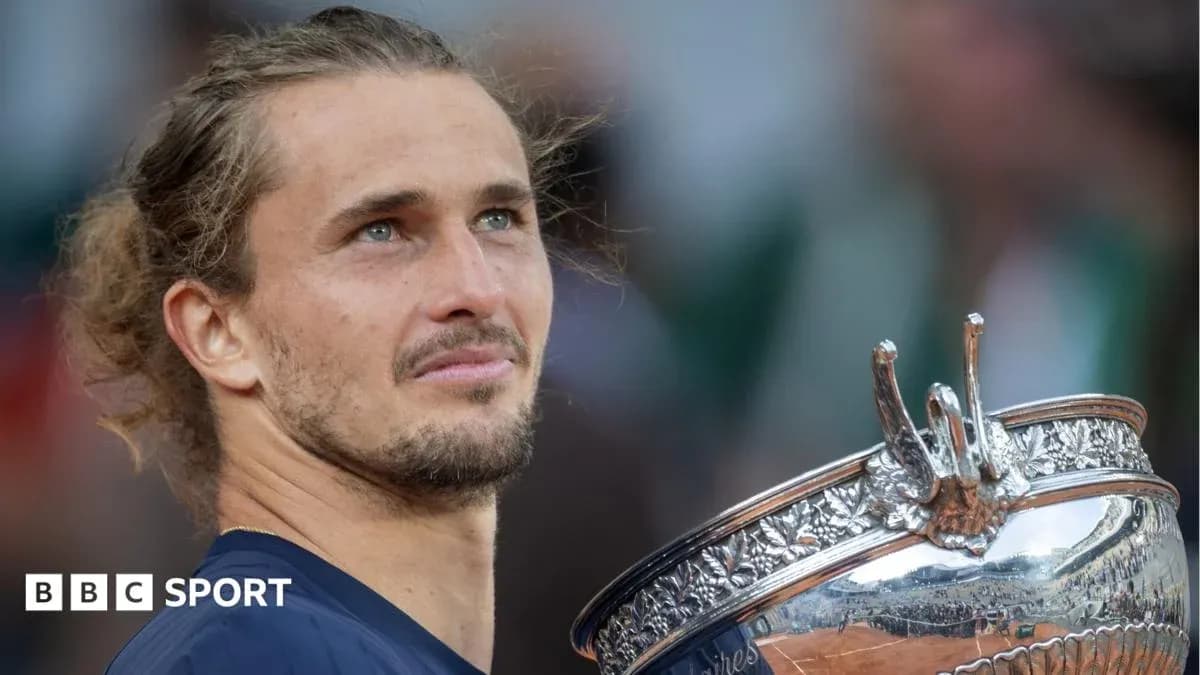
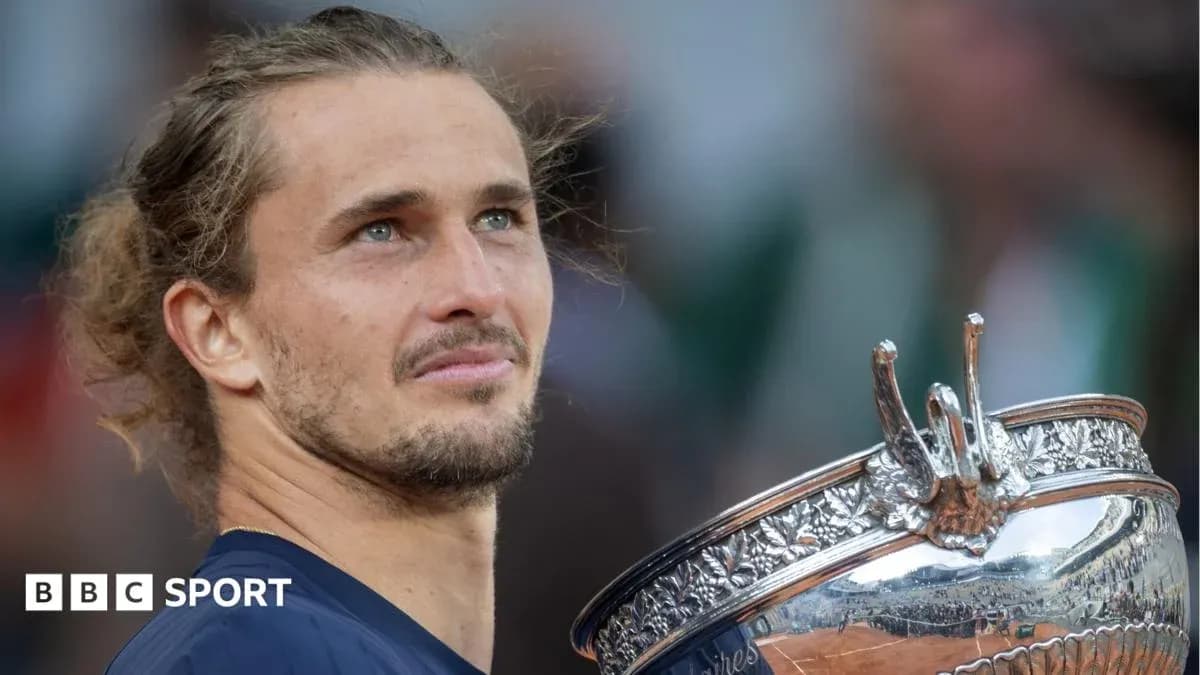
The change did not magically erase the nerves. In the 2026 French Open final against Flavio Cobolli, he cramped again, his body flashing back to the trauma of New York. This time, though, he did not crumble. He tore through the deciding set 6-1, finally lifting the Coupe des Mousquetaires and with it the weight of a decade’s expectation.
From there, the dam burst. He added the US Open title later in the year and reached the Wimbledon final, losing in four sets to Jannik Sinner after playing, by his own admission, some of the most daring tennis of his life on Centre Court.
A family business
Zverev’s tennis life has always been a family project. His father, Alex Sr, a former professional, has been a near-permanent figure in his coaching box. His older brother Mischa, who once practised as a junior with Andy Murray while a toddler Alexander watched from the side of the court, has now joined the team since retiring.
The dynamic is unusual, and Zverev has never pretended otherwise. He has said his relationship with his father works because they spend "zero time together" away from tournaments. The boundaries are clear: tennis is shared, life is largely separate.
What his parents did not share, he insists, was pressure. They nudged him towards other sports – football, field hockey – anything that meant they would not have to coach him. Both had lived the grind of the tour. Both understood its cost.
Their son, diagnosed with type 1 diabetes at four, grew up managing a chronic condition in a sport that demands physical extremes. His rise to the top of the game has been held up as a testament to discipline and relentless work.
The trophies of 2026 now sit as the most visible evidence of that.
The rivalry still to come
On court, the next challenge is clear. Zverev has climbed to number one, but the road ahead is blocked by two younger men who have beaten him often and brutally.
He has lost 10 straight matches to Sinner. Carlos Alcaraz, with his explosive all-court game, has already reshaped the sport’s tactical map. Zverev’s run to the Wimbledon final showed he can meet that level when he trusts his aggression. The question for 2027 is whether he can turn this season into a genuine three-way rivalry at the majors.
If Sinner and Alcaraz stay fit, Zverev’s margin for error will be slim. The days when a big serve and a safe baseline game could grind out deep runs are gone. The new number one will have to keep living with the risk he once shied away from.
Allegations, investigations and an uneasy spotlight
While his tennis has peaked, the scrutiny around Zverev has never been confined to forehands and rankings.
In October 2020, former partner Olga Sharypova accused him of physical violence and controlling behaviour. Zverev denied the allegations, calling them baseless. There were no legal proceedings, but the ATP commissioned a major independent investigation, handled by third-party investigators.
In January 2023, the ATP announced its findings: "insufficient evidence to substantiate published allegations of abuse". The governing body cited a lack of reliable evidence and eyewitness reports, and conflicting statements from Sharypova, Zverev and other interviewees. The case did not lead to sanctions, but it did prompt structural change. The ATP appointed a director of safeguarding and this year launched a new safeguarding programme, setting out a global framework for preventing and responding to abuse, harassment, bullying, domestic violence and other misconduct.
The legal spotlight returned in Germany. In October 2023, a court issued Zverev with a penalty order and a €450,000 fine for bodily harm against another ex-partner, Brenda Patea. Zverev denied the claims and contested the order, triggering a public trial in Berlin in May 2024.
A week into the proceedings, the court terminated the case before reaching a verdict, saying there had been a settlement between Zverev and Patea. "The decision is not a verdict and it is not a decision about guilt or innocence," the court said. A decisive factor, it added, was Patea’s wish to end the trial. She has not publicly commented on the settlement.
On the day the settlement was announced, Zverev reached the French Open final. Earlier in the tournament he had described the trial as a chance to prove his innocence. Asked afterwards if he regretted settling before a verdict, he replied: "That's what dropping the case is. That is innocence. They're not going to drop the case if you're guilty at the end of the day. I don't know what translations you have, but that's what it means. Done. We move on. I never ever want to hear another question about the subject again. That goes out to everybody."
Crowds have not always obliged. At the 2025 Australian Open and in Munich, he was heckled over the allegations. The soundtrack to his matches has included not just applause and groans, but pointed jeers.
A volatile edge
Zverev’s record also includes moments of raw, public anger. In Acapulco in 2022, he smashed his racquet into the umpire’s chair four times after losing a doubles match at the Mexican Open, one swing coming close to the umpire’s foot. Furious over a line call that went against him and partner Marcelo Melo in a deciding tie-break, he swore at umpire Alessandro Germani and accused him of "destroying the whole match".
The ATP found him guilty of a "major offence" and handed him an eight-week suspended ban. The suspension would only be enforced if he committed further acts of disrespectful or aggressive behaviour, or verbal or physical abuse, within the next 12 months. It never was. Zverev stayed clear of similar sanctions over the following year.
He later apologised, saying it was "difficult to put into words" how much he regretted the outburst. The clip of him hammering the chair still circulates, a reminder of the volatility that lurks beneath the controlled exterior.
A complicated number one
So where does that leave the sport’s new standard-bearer?
On the court, the picture is straightforward. Zverev has finally matched his talent with major titles, added layers to his game and climbed to number one in an era that refuses to grant easy dominance. He has turned a reputation for fragility into one of resilience.
Off it, the questions are more jagged. He has twice faced serious allegations of abuse from former partners. One set of claims led to an ATP investigation that did not substantiate the accusations. Another led to a German court case that ended in a settlement before any verdict, with the court stressing it was not ruling on guilt or innocence. The governing bodies have responded by tightening their safeguarding structures. The public response remains split.
Men’s tennis has its new champion. Whether it has found a figure the whole sport can rally around is a very different contest, and one that will not be settled by a scoreline.