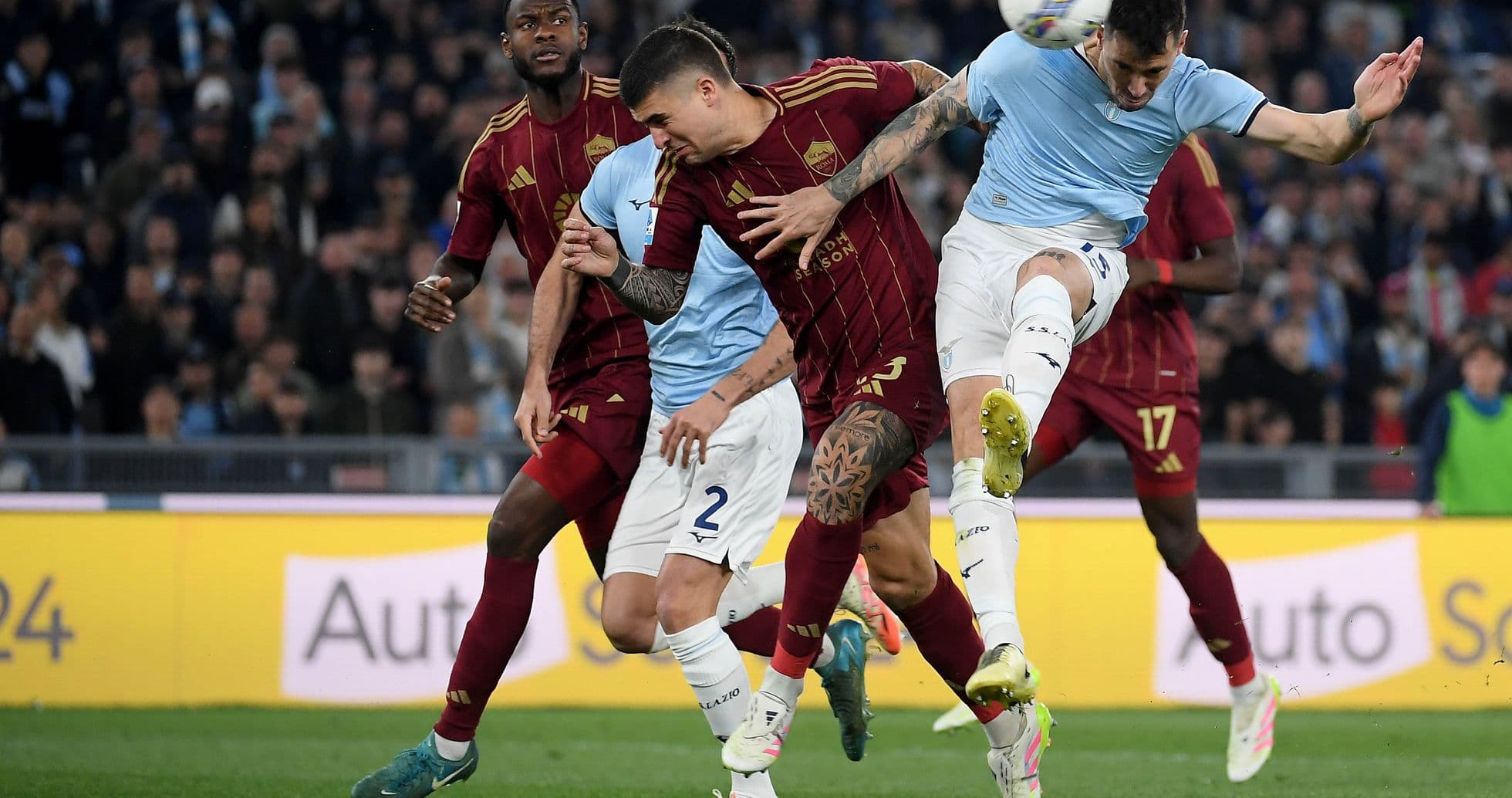
AS Roma vs Lazio: A Tactical Analysis of the Derby della Capitale
The Derby della Capitale returned to a sun‑washed Stadio Olimpico with a familiar edge but a new hierarchy. Following this result, AS Roma sit 4th in Serie A on 70 points, their goal difference a commanding +26 after scoring 57 and conceding 31 in total. Lazio, beaten 2‑0, remain 9th with 51 points and a flat goal difference of 0, their 39 goals for cancelled out by 39 against overall. On paper it was a meeting of a Champions League‑bound side and a mid‑table drifter; on the pitch, the gap felt even wider.
Roma’s season‑long identity under Piero Gasperini Gian has been clear: aggressive, front‑foot football built on a three‑man defence and relentless wing pressure. Heading into this game they had won 22 of 37 league matches in total, with a formidable home record of 13 wins from 19 and just 10 goals conceded at the Olimpico. A goals‑for average of 1.7 at home and goals‑against of only 0.5 framed the derby as an opportunity to impose rather than react.
Maurizio Sarri’s Lazio arrived as a paradox: structurally solid but often toothless. Across the campaign they had 13 wins, 12 draws and 12 defeats in total, with a modest away goals‑for average of 0.7 and goals‑against of 0.8 on their travels. Nine away clean sheets pointed to a side that could dig in, but 11 away games without scoring told its own story. In a stadium split in colours but not in momentum, that imbalance became decisive.
Tactical Overview
Tactically, Roma’s 3‑4‑2‑1 was a statement of continuity. M. Svilar anchored a back three of G. Mancini, E. Ndicka and M. Hermoso, a trio comfortable defending large spaces and building from deep. Wide, Z. Celik and Wesley Franca formed the engines of the system as nominal midfielders but practical wing‑backs, while B. Cristante and N. El Aynaoui patrolled the central lane. Ahead of them, P. Dybala and N. Pisilli floated between lines behind lone striker D. Malen.
Lazio’s 4‑3‑3 was more orthodox but also more compromised. With I. Provedel missing through a shoulder injury and A. Romagnoli suspended after a red card, A. Furlanetto started in goal behind a reshuffled back four of A. Marusic, M. Gila, O. Provstgaard and N. Tavares. The midfield trio of T. Basic, N. Rovella and K. Taylor was tasked with screening and recycling, while a front three of M. Cancellieri, B. Dia and T. Noslin sought to stretch Roma vertically.
The tactical voids were significant. For Roma, the absence of E. Ferguson (ankle injury) and B. Zaragoza (knee injury) trimmed depth but not the core structure; the XI remained close to their statistical best. For Lazio, losing Romagnoli and M. Zaccagni (knee injury) stripped Sarri of two emotional leaders: one the organiser of the back line, the other a wide outlet who had combined 3 goals with relentless duels and dribbles this season. Without them, Lazio’s spine felt lighter, their transitions slower.
Discipline and Tactics
Discipline was always going to be a sub‑plot. Across the season Roma’s yellow cards cluster late, with 23.88% of bookings arriving between 76‑90 minutes and a further 22.39% between 61‑75. Lazio’s profile is even more combustible: 26.32% of their yellows come in the final 15 minutes, and 55.56% of their reds have been shown in that same 76‑90 window. In a derby context, that late‑game volatility was a tactical factor as much as a psychological one; Roma could trust their structure, Lazio had to trust their nerve.
On the pitch, the “Hunter vs Shield” duel centred on D. Malen against a Lazio defence stripped of its natural leader. Malen entered the fixture with 13 league goals in total from 17 appearances, scoring at a rate that has made him one of Serie A’s most ruthless finishers. His movement across the front line asked constant questions of Gila and Provstgaard. Gila’s season has been impressive – 30 appearances, 17 successful blocks and 46 tackles, plus a passing accuracy of 90% – but without Romagnoli beside him, his positioning had to be both proactive and conservative. Roma’s opener before half‑time crystallised that tension: Malen’s presence pinned the back line, Dybala and Pisilli exploited the half‑spaces, and Lazio’s rearguard never quite reset.
Engine Room Battle
The “Engine Room” battle was no less decisive. Cristante and El Aynaoui formed a double pivot that mirrored Roma’s season‑long balance: one part destroyer, one part distributor. Behind them, the back three could hold a high line because Mancini and Hermoso are both aggressive readers of the game; across the campaign Mancini has 51 tackles and 14 blocked shots, Hermoso 36 tackles and 6 blocked shots, numbers that underwrite Roma’s courage in compressing the field. For Lazio, Rovella’s metronomic passing was often forced sideways, Basic’s runs rarely broke Roma’s compact 3‑4‑2‑1 shell, and Taylor struggled to receive between the lines with his back to goal.
Wesley Franca embodied Roma’s edge. His season has been one of high intensity and high risk: 53 tackles, 5 blocked shots and 23 interceptions, but also 6 yellow cards and a straight red. His card history explains why Gasperini’s side can tilt towards chaos in the middle third, yet his energy was vital in suffocating Lazio’s attempts to build from Tavares and Taylor down the left. Lazio’s own disciplinary scars were visible in their absentees: Romagnoli’s red‑card suspension and Zaccagni’s season‑defining dismissal, which included a missed penalty, had already shaped Sarri’s selection.
Statistical Confirmation
By the time Roma’s second goal went in after the interval, the statistical prognosis of their season had simply been confirmed on derby day. A home attack averaging 1.7 goals per game met an away attack averaging only 0.7, and a defence that concedes 0.5 at home faced a side that fails to score in 11 away matches in total. Roma’s clean‑sheet record – 11 at home and 17 overall – intersected perfectly with Lazio’s chronic away bluntness.
Following this result, Roma’s Champions League trajectory looks less like an ambition and more like a logical endpoint of their numbers: a high‑pressing side with a clear structure, a prolific spearhead in Malen, and a defensive core that thrives in duels. Lazio, by contrast, are left as a team whose xG and defensive solidity may still be respectable, but whose squad gaps and disciplinary turbulence keep dragging them back into the pack. In the cauldron of the Olimpico, the derby became less about emotion and more about a season’s worth of data playing out in 90 measured, ruthless minutes.