Como Secures Tactical Victory Over Parma in Serie A
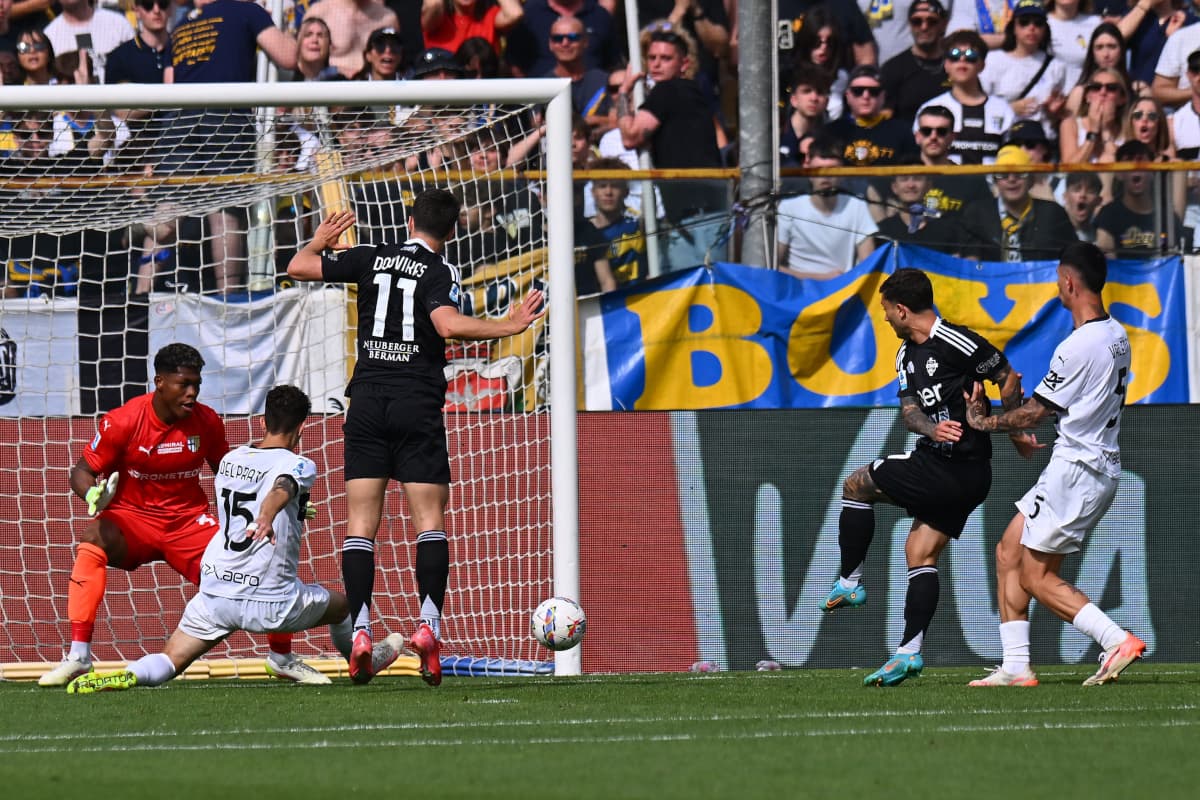
Under a bright Como sky at Stadio Giuseppe Sinigaglia, this felt less like a dead-rubber in Round 37 and more like a statement of intent. Como, already carving out a new identity under Cesc Fabregas, edged Parma 1–0 and tightened their grip on 5th place in Serie A. Following this result they stand on 68 points, with a formidable overall goal difference of +33 (61 scored, 28 conceded), while Parma remain 13th on 42 points, their total goal difference a stark -19 (27 for, 46 against).
The scoreline was narrow, but the structural contrast between the sides was clear. Fabregas doubled down on his preferred 4-2-3-1, a shape that has been Como’s tactical backbone, used in 33 league games. Carlos Cuesta’s Parma arrived in their habitual 3-5-2, a system designed to compress the middle and protect a side that, overall, concedes 1.2 goals per game and scores only 0.7.
For Como, the seasonal DNA is obvious: controlled possession, high technical quality in midfield and a quietly ruthless defensive base. At home they average 1.8 goals for and only 0.8 against, with 10 clean sheets in 19 games. This match fit that pattern almost perfectly: patient probing, a single decisive breakthrough, and then a calm defensive lockdown.
The back four of I. Van der Brempt, Jacobo Ramon, M. O. Kempf and A. Moreno formed a compact, almost position-perfect line in front of J. Butez. Ramon, one of Serie A’s most carded players with 11 yellows and 1 red in the campaign, has built a reputation as a physically assertive defender, but here his aggression was mostly channelled into timing and anticipation. Across the season he has blocked 17 shots and intercepted 36 passes; against Parma he again played the role of enforcer and organiser, stepping out to challenge G. Strefezza and tracking the runs of Mateo Pellegrino when Parma tried to break.
In midfield, the double pivot of M. Perrone and L. Da Cunha was the quiet engine that allowed Como’s more creative players to flourish. Perrone’s season numbers – 2,111 completed passes at 91% accuracy and 56 tackles – tell you everything about his role: tempo-setter with bite. He anchored the circulation, dropping between centre-backs to help build against Parma’s front two and then stepping in front of H. Nicolussi Caviglia to break any attempt at vertical progression.
Ahead of them, the trio of M. Caqueret, M. Baturina and A. Diao gave Como layers between the lines. Caqueret, with 24 key passes and 5 assists overall, drifted into the right half-space, constantly asking questions of F. Carboni and E. Delprato. Baturina linked cleverly with A. Douvikas, while Diao stretched Parma’s left side, forcing A. Circati and L. Valenti to defend wider than they would have liked.
The tactical voids on both sides added another layer of intrigue. Como were without J. Addai (Achilles tendon), N. Paz (knee) and A. Valle, all officially listed as missing. Paz’s absence was especially significant: 12 league goals, 6 assists, and a creative output of 51 key passes. His penalty record – 0 scored and 2 missed from the spot – has been a blemish, but his ability to carry the ball and link midfield to attack normally gives Como an extra gear. Here, Fabregas had to redistribute that responsibility across Caqueret and Baturina, and the team responded with a more collective, less star-driven attacking pattern.
Parma’s list of absentees was even longer and arguably more damaging structurally. A. Bernabe (muscle injury) and B. Cremaschi, M. Frigan, J. Ondrejka and G. Oristanio (all knee or leg issues) stripped Cuesta of ball-progressors and secondary scorers. The suspension of S. Britschgi after a red card further narrowed his defensive options. In a side that already struggles to score – only 27 goals overall, 12 of them on their travels at an average of 0.6 per away game – losing creative and rotational pieces meant the 3-5-2 became more of a 5-3-2 under pressure.
Yet Parma’s starting XI still carried threat. Pellegrino, with 8 goals this season, has been their focal point, winning 224 duels and drawing 67 fouls. The “Hunter vs Shield” duel between Pellegrino and Como’s defence was central to the narrative. Como’s overall record of conceding just 0.8 goals per game, with 19 clean sheets in total, framed this as a clash between a lone spear and an organised wall. Over 90 minutes, the wall won: Butez was rarely exposed, and Pellegrino was forced to drop deeper and wider, away from the zones where he is most dangerous.
In the “Engine Room” battle, Nicolussi Caviglia tried to orchestrate Parma’s transitions, flanked by M. Keita and C. Ordonez. But they were consistently outnumbered and outmanoeuvred by Como’s central trio. Caqueret’s press resistance and Perrone’s reading of second balls smothered Parma’s attempts to break out, leaving G. Strefezza isolated and often forced into low-percentage dribbles.
Disciplinary trends also shaped the tone. Como’s season-long yellow-card distribution peaks late: 20.25% of their cautions arrive between 61–75 minutes and another 20.25% between 76–90. Parma, too, show a late-game spike, with 21.88% of their yellows in both the 46–60 and 76–90 windows. That statistical profile foreshadowed a tense, fragmented final half-hour in which fouls and stoppages broke the rhythm and suited the leading side. Como, with the advantage, were happy to manage the tempo, while Parma’s frustration simmered as space disappeared.
From a statistical prognosis standpoint, this 1–0 feels like the logical expression of the underlying numbers. Como, with an overall scoring average of 1.6 and defensive average of 0.8, tend to edge games on xG and control. Their 19 clean sheets and only 7 total defeats show a team that rarely collapses. Parma’s away profile – 0.6 goals scored, 1.1 conceded – points to low-scoring, marginal fixtures in which they often fall just short.
The decisive moment, when it came, was less about chaos and more about accumulated pressure. Como’s structured possession, rotations in the half-spaces and persistent probing of the channels eventually cracked a Parma block that had been forced ever deeper. Once ahead, Fabregas’ side retreated into their comfort zone: compact lines, controlled aggression, and a refusal to give Pellegrino or Strefezza the kind of transition they crave.
Following this result, the story is of a Como side that has grown into a mature, European-calibre outfit, capable of winning tight, tactical contests without relying on individual brilliance from the likes of Paz. Parma, by contrast, remain a side whose 3-5-2 can keep them competitive but not yet clinical, especially when stripped of key creative pieces. The numbers, the shapes and the narrative all converged on the same conclusion: this was Como’s kind of game, and they played it on their terms.