AS Roma vs Lecce: Tactical Insights from Serie A Round 2
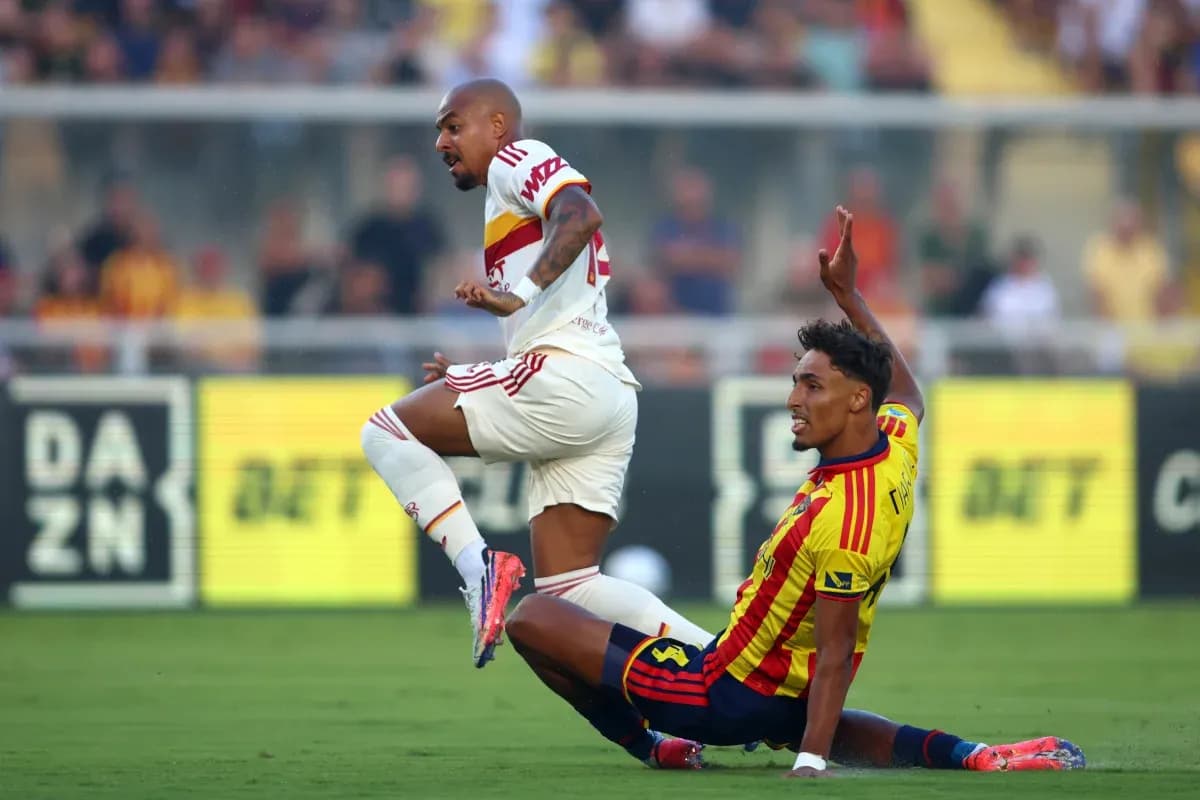
The lights have already gone out on this one at Stadio Via del Mare, but the 4–0 scoreline in favour of AS Roma offers a sharp lens through which to judge both squads’ early-season identities in Serie A’s 2026 campaign.
I. The Big Picture – contrasting trajectories after Round 2
This was Round 2 of the Regular Season, a meeting between a Lecce side still finding its feet and an AS Roma outfit that already looks fully formed. Heading into this game, Lecce’s overall record showed 1 win and 1 loss from 2 matches, with 2 goals scored and 4 conceded overall. That produced an overall goal difference of -2, rooted in a 0–4 defeat at home and a 2–0 win on their travels. AS Roma, by contrast, arrived perfect: 2 wins from 2 overall, 8 goals scored and none conceded overall for an overall goal difference of +8, split evenly between a 4–0 win at home and a 4–0 win away.
The formations told the story of intent. Eusebio Di Francesco set Lecce in a 3-5-2, a shape that can be both brave and brittle: three centre-backs, a packed midfield line, and two forwards asked to stretch Roma’s back three. Opposite him, Piero Gasperini Gian kept faith with Roma’s now-standard 3-4-2-1, the same structure they have used in both league outings so far. It is a system built on verticality, wing pressure, and aggressive occupation of the half-spaces.
By half-time, with Roma leading 3–0, the tactical battle was already decided. Lecce’s lines were too stretched, Roma’s rotations too clean, and the visitors’ superiority between the lines overwhelming.
II. Tactical voids and absences – where the squads bent
Roma’s dominance is even more striking when set against their absentees. They travelled without three notable pieces: M. Bah (knee injury), L. Pellegrini (thigh injury), and D. Rensch (muscle injury), all officially listed as missing this fixture. That removed a potential ball-carrying full-back in Rensch, a midfield tempo-setter and set-piece specialist in Pellegrini, and additional defensive cover in Bah. Yet the structure held, and the depth stepped in seamlessly.
The starting back three of D. Ghilardi, G. Mancini, and M. Hermoso provided a stable base that never looked close to conceding. Ahead of them, the double axis of M. Kone and B. Cristante, flanked by E. Lulli and Wesley Franca, controlled central and wide channels with a blend of physicality and technical security. The fact that Roma’s defensive statistics for the season still show 0 goals conceded overall, with clean sheets both at home and on their travels, underlines how well this unit is functioning despite the injuries.
For Lecce, the voids were more structural than personnel-based. The back three of J. Siebert, K. Gaspar, and Tiago Gabriel was repeatedly pulled into wide areas by Roma’s wing-backs and wide forwards, leaving pockets in front of W. Falcone that Cristante and Kone were able to exploit with vertical passes. The five-man midfield line – D. Veiga, L. Coulibaly, O. Ngom, O. Gorter, and C. Ndaba – never quite established a pressing trigger or a clear reference point on Roma’s creators.
Disciplinary patterns across the season hint at another issue. Lecce’s yellow cards are spread evenly, with 25.00% of their cautions arriving in each of the 0–15, 46–60, 61–75, and 76–90 minute windows. That suggests a side that often ends up firefighting in every phase rather than controlling the tempo. Roma’s bookings, by contrast, are front-loaded: 33.33% in each of 0–15, 31–45, and 46–60. They start aggressively, impose themselves early, and then manage the game.
III. Key matchups – Hunter vs Shield, and the engine room
The headline duel in this fixture – and in Roma’s season so far – is the “Hunter vs Shield” dynamic centred on D. Malen. As Serie A’s leading scorer to this point, Malen has 5 goals overall from 2 appearances, with 9 total shots and 6 on target. He is not just prolific but efficient, combining 8.75 average rating with meaningful involvement in build-up: 36 passes overall at 80% accuracy and 2 key passes.
Lecce’s “shield” against that threat was a back line in flux. Tiago Gabriel, intriguingly, has been one of their early bright spots, with 1 goal overall, 2 tackles and 2 interceptions, and 4 duels won from 5. Yet in a three-man defence asked to cover width against Roma’s 3-4-2-1, even a promising individual cannot compensate for collective disorganisation. Malen’s movement across the front, supported by the inside pockets occupied by P. Dybala and M. Soule, repeatedly dragged Lecce’s back three into uncomfortable zones.
In the “engine room” battle, Roma’s superiority was even clearer. Kone has quietly become a fulcrum: 110 passes overall at 92% accuracy, 4 key passes, 4 tackles, and 14 duels contested with 8 won. He carries a yellow card to his name already, but that edge is part of Roma’s midfield bite. Alongside him, Cristante provides positional discipline, while Wesley Franca adds dynamism – 74 passes at 81% accuracy, 4 key passes, 6 tackles, and 21 duels contested with 12 won overall. That trio, with Dybala dropping in from the right half-space, overwhelmed Lecce’s central five.
Dybala himself, top of the assists chart with 3 overall, is the creative conductor. Across 2 league appearances he has 115 passes at 84% accuracy, 7 key passes, and 6 shots total. Even without scoring, he dictates Roma’s attacking rhythm, often receiving between Lecce’s midfield and defence where no clear marker had been assigned.
IV. Statistical prognosis – Roma’s iron spine, Lecce’s narrow path
From a statistical perspective, Roma’s profile after this match is that of a ruthless, structurally sound contender. They have 2 wins from 2 overall, 8 goals scored and 0 conceded overall, and clean sheets both at home and away. Their biggest wins so far – 4–0 at home and 4–0 on their travels – are mirrored in this result at Via del Mare. There are no penalties taken or missed for either side so far this season, so the numbers are driven entirely by open play and standard attacking patterns, not spot-kick variance.
Lecce, conversely, look like a team whose margin for error is tiny. Overall, they have scored 2 and conceded 4, with all 4 goals conceded at home and none on their travels. Their only win so far came in a 2–0 away display; at home, they have now failed to score and shipped 4. The clean-sheet and failed-to-score metrics underline the polarity: 1 clean sheet overall, but also 1 match overall where they have failed to find the net.
In tactical terms, Lecce’s path forward will likely require Di Francesco to decide whether the 3-5-2 can be tightened – perhaps by dropping one midfielder closer to the back line – or whether a return to the 4-3-3, which they have also used once this season, can offer more stability against elite pressing sides.
Roma, meanwhile, leave Lecce top of the table, with their 3-4-2-1 fully bedded in and their stars in form. Malen’s finishing, Dybala’s orchestration, and a back three yet to concede suggest that, on this evidence, any side facing them must prepare for ninety minutes where the margin for error is almost non-existent.