Atalanta's 3-0 Defeat: A Tactical Breakdown of Parma's Victory
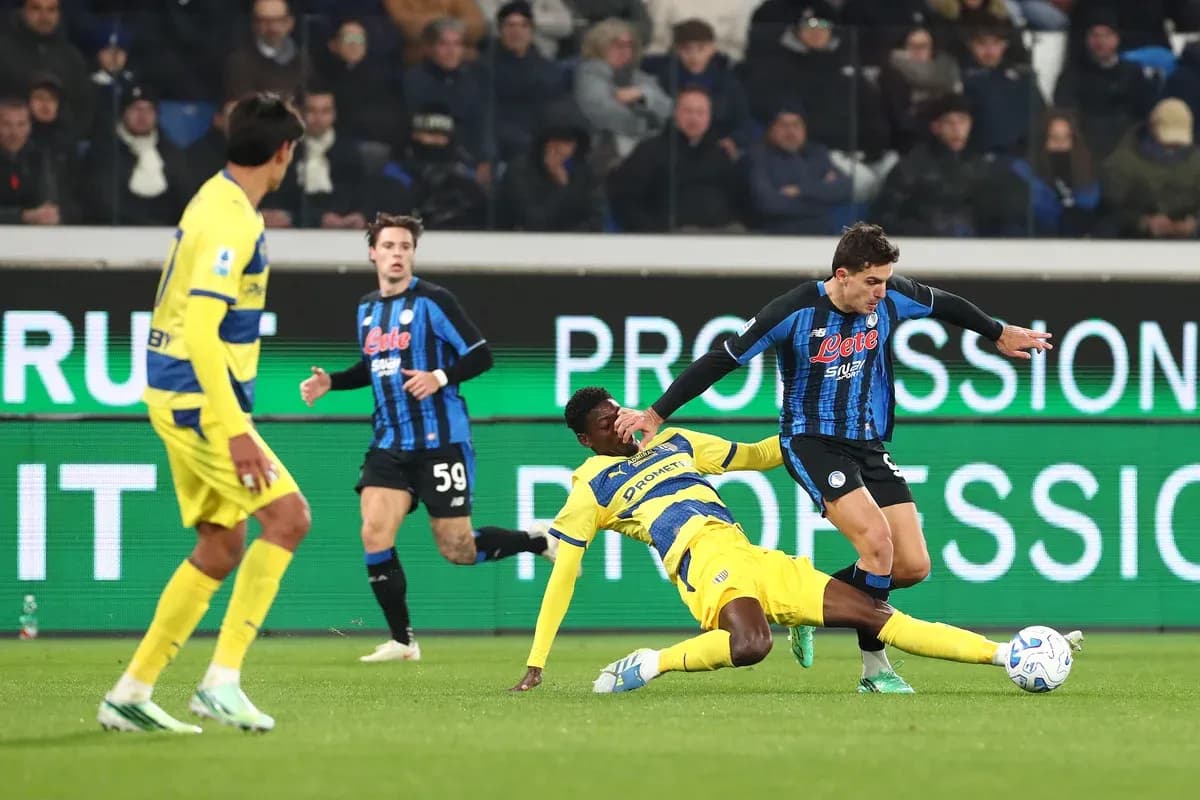
Under the Bergamo lights at the New Balance Arena, a 3-0 defeat to Parma felt less like a single bad night for Atalanta and more like a sharp diagnosis of where this squad stands ten rounds into the Serie A season. The table says 13th place with 11 points, a goal difference of -4 from 16 scored and 20 conceded overall; the pitch, on this night, said something harsher: a side stretched by injuries, tactically reshaped, and still searching for a coherent identity under M. Sarri.
Parma arrived 15th with 8 points and a goal difference of -7 (8 for, 15 against overall), hardly a juggernaut, but they left Bergamo with a statement win and a clean sheet that will echo through their dressing room. For Atalanta, who had taken 10 of their 11 points at home (3 wins, 1 draw, 2 defeats at the New Balance Arena, 11 scored and 11 conceded at home), this was a rupture of what little fortress they had managed to build.
I. The Big Picture: Systems Under Stress
The tactical story began with the formations. Atalanta lined up in a 4-2-3-1, one of two shapes they have leaned on this season, having used a 4-3-3 in 6 matches and this 4-2-3-1 in 4. M. Carnesecchi stood behind a back four of D. Zappacosta, G. Scalvini, R. Obrić and L. Bernasconi. In front, Éderson and Mario Pasalic formed a double pivot, with a fluid three of N. Zalewski, C. De Ketelaere and J. Rowe supporting lone striker N. Krstović.
Across from them, A. Gilardino chose a 3-5-2 for Parma, a departure from their more common 3-4-2-1 but one that made perfect sense against this Atalanta shape. G. Daffara was shielded by a back three of E. Del Prato, M. Troilo and D. Drobnic. The midfield line of five—S. Britschgi, G. Fabbian, V. Sierro, M. Keita and E. Valeri—gave Parma width and density, while E. Touré and S. Lontani led the line.
Heading into this game, the numbers already warned of fragility on both sides. Atalanta’s attack at home had been lively, averaging 1.8 goals scored at the New Balance Arena and 1.6 overall, but they conceded 1.8 at home and 2.0 overall. Parma, by contrast, had struggled to score—just 0.8 goals per match overall, 0.6 at home and 1.0 on their travels—but were conceding 1.5 overall, including 1.8 away. This was supposed to be a night where Atalanta’s home firepower overwhelmed a brittle visitor. Instead, Parma’s structure and ruthlessness flipped the script.
II. Tactical Voids: The Weight of Absence and Discipline
The team sheet told its own story before kick-off. Atalanta were shorn of an entire spine of experience and physicality: R. Bellanova (thigh), G. Gaetano (muscle), I. Hien (muscle), F. Kessie (calf), S. Kolasinac (thigh), O. Kossounou (thigh), T. Kristensen (muscle), G. Raspadori (thigh) and G. Scamacca (thigh) all listed as missing. That is a complete defensive rotation plus two natural centre-forwards and a key midfield presence stripped out of the matchday picture.
The consequence was a back four that looked talented but green in its collective understanding. Scalvini’s leadership and reading of the game were stretched thin trying to cover both the channel runs of Lontani and the physical presence of Touré, while Bernasconi and Obrić were asked to play high and aggressive without the safety net of a more experienced left-sided enforcer like Kolasinac.
Further ahead, the absence of Kessie and Gaetano removed two players capable of setting the tempo and winning duels in the middle third. Atalanta’s disciplinary profile this season already hinted at late-game stress: 33.33% of their yellow cards arriving between 61-75 minutes and another 33.33% between 76-90, plus red cards in the 76-90 and 91-105 ranges. That pattern suggests a side that often ends games chasing, stretched, and emotional. On this night, with so many leaders missing, those tendencies were only likely to be amplified.
Parma, by contrast, had a far lighter absence list: A. Bernabe (inactive) and L. Valenti (coach’s decision). Their core defensive unit, including Troilo—already among the league’s most carded defenders with 3 yellows—was intact. Gilardino could afford to be bold with his structure, trusting Troilo’s aggression and reading of the game without having to reshuffle his back line.
III. Key Matchups: Hunter vs Shield, Engine Room vs Enforcer
The marquee duel was clear: N. Krstović, one of Serie A’s most efficient forwards this season, against a Parma defence that had leaked 9 goals away from home. Krstović arrived with 6 goals and 2 assists in 10 appearances, a 7.13 average rating, 27 shots with 13 on target, and a duel profile (75 contested, 34 won) that speaks to a forward who relishes contact. He had also blocked 4 shots defensively, underlining his work rate.
On paper, this should have been a nightmare for Parma’s back three, especially with their away average of 1.8 goals conceded. Yet the presence of M. Troilo at the heart of that line changed the balance. Troilo had played every league minute so far, with 14 tackles, 8 successful blocks and 18 interceptions, plus 554 passes at 86% accuracy. His 3 yellow cards show a defender unafraid to step in aggressively, but his positional metrics point to someone who knows when to engage and when to delay.
In practice, Troilo and his partners narrowed the spaces Krstović loves to attack. With Atalanta’s wide supply line blunted—Zappacosta forced deeper by Valeri’s runs and Zalewski often dropping to help build—Krstović was frequently isolated, receiving with his back to goal against multiple bodies. Parma’s wing-backs, Britschgi and Valeri, were key in this: they pushed high enough to pin Atalanta’s full-backs, yet dropped quickly into a back five when the ball was lost, creating a cage around the Montenegrin striker.
Behind Krstović, the creative burden fell heavily on C. De Ketelaere and N. Zalewski. De Ketelaere’s season numbers—3 assists, 1 goal, 24 key passes, 322 total passes at 74% accuracy—paint him as Atalanta’s primary conduit between lines. Zalewski, with 3 assists, 1 goal, 8 key passes and an 84% pass accuracy, offers incision from the half-spaces. Yet without a true penalty-box partner like Scamacca or Raspadori to distract and divide Parma’s central defenders, both found themselves funneled into traffic, their passing lanes clogged by Sierro and Fabbian stepping out from midfield.
In the engine room, Éderson and Pasalic faced a numerical and structural overload. Parma’s trio of Sierro, Fabbian and Keita, backed by Britschgi and Valeri tucking in, often created a five-versus-two central superiority in transition moments. Atalanta’s double pivot, already missing Kessie’s physical presence and Gaetano’s press resistance, were repeatedly forced into lateral passes or risk-laden vertical balls that Parma’s midfield could pounce on.
On the other side, E. Touré and S. Lontani thrived on the spaces behind Atalanta’s full-backs. Every time Zappacosta or Bernasconi advanced, Parma’s forwards peeled into the channels, asking Scalvini and Obrić to defend wider and higher than they would like. With Atalanta’s season-long tendency to concede 2.0 goals per match overall and 2.3 on their travels (reflecting an open, aggressive style), Parma simply transplanted that chaos into Bergamo: quick, vertical attacks into the gaps of a high line.
IV. Statistical Prognosis: Trajectories and Adjustments
Following this result, the underlying trends for both squads harden rather than shift. Atalanta’s season already contained warning signs: only 1 clean sheet at home, 1 overall; an average of 1.8 goals conceded at the New Balance Arena; and a disciplinary pattern that spikes late. Their attack remains their best weapon—1.8 goals scored at home, 1.6 overall—but it is too often asked to rescue games tilted by defensive instability and the weight of absences.
Parma, despite their low scoring average of 0.8 overall and 1.0 on their travels, showed here that structure can compensate for modest firepower. They have kept 2 clean sheets this season, 1 at home and 1 away, and while their defensive record (1.5 goals conceded per match overall, 1.8 away) is far from elite, this performance in Bergamo hints at a template: compact back three, industrious wing-backs, and a midfield that compresses central spaces before springing forward.
From a tactical forecasting standpoint, if we map Atalanta’s offensive strengths against Parma’s vulnerabilities, the logic for the night still reads paradoxical. A home side averaging 1.8 goals scored in Bergamo should, on most evenings, find a way through an away defence conceding 1.8. But football is rarely linear. With Atalanta’s penalty record showing 1 taken and 1 scored (no misses), they have not had the cushion of spot-kicks to inflate their numbers. Parma, by contrast, had missed their only penalty of the season, underlining how little margin for error they usually enjoy in front of goal—yet they did not need that crutch here.
The deeper reading is squad architecture. Atalanta’s reliance on Krstović, De Ketelaere and Zalewski as simultaneous creator-finishers is sustainable only if the defensive platform behind them is stable and the injury list shortens. The red-card history of E. Elmas and G. Gaetano this season, combined with the late-card distribution pattern, suggests that when this team chases games, it does so on the edge.
Parma’s spine, anchored by Troilo and a rotating cast of hard-running midfielders, looks more modest but more reproducible. Troilo’s 8 blocked shots and 18 interceptions speak to a defender who thrives in low-block and mid-block scenarios, exactly the environment Gilardino created at the New Balance Arena.
In narrative terms, this 3-0 is less an upset than a crystallisation. Atalanta, 13th with a negative goal difference and a home record that flatters to deceive, are a high-ceiling, low-floor side whose injuries have dragged them towards volatility. Parma, 15th and still with a negative goal difference of -7 overall, have found a way to make their structure greater than the sum of their parts on nights like this.
The tactical verdict, then, is clear: unless Atalanta can restore key absentees, stabilise their back line and rebalance the engine room, their attacking jewels will continue to shine in isolation rather than in concert. Parma, meanwhile, leave Bergamo with a blueprint—Troilo as the shield, Touré and Lontani as the hunters, and a five-man midfield as the hinge—that can turn survival into something more ambitious if repeated with the same discipline and clarity.