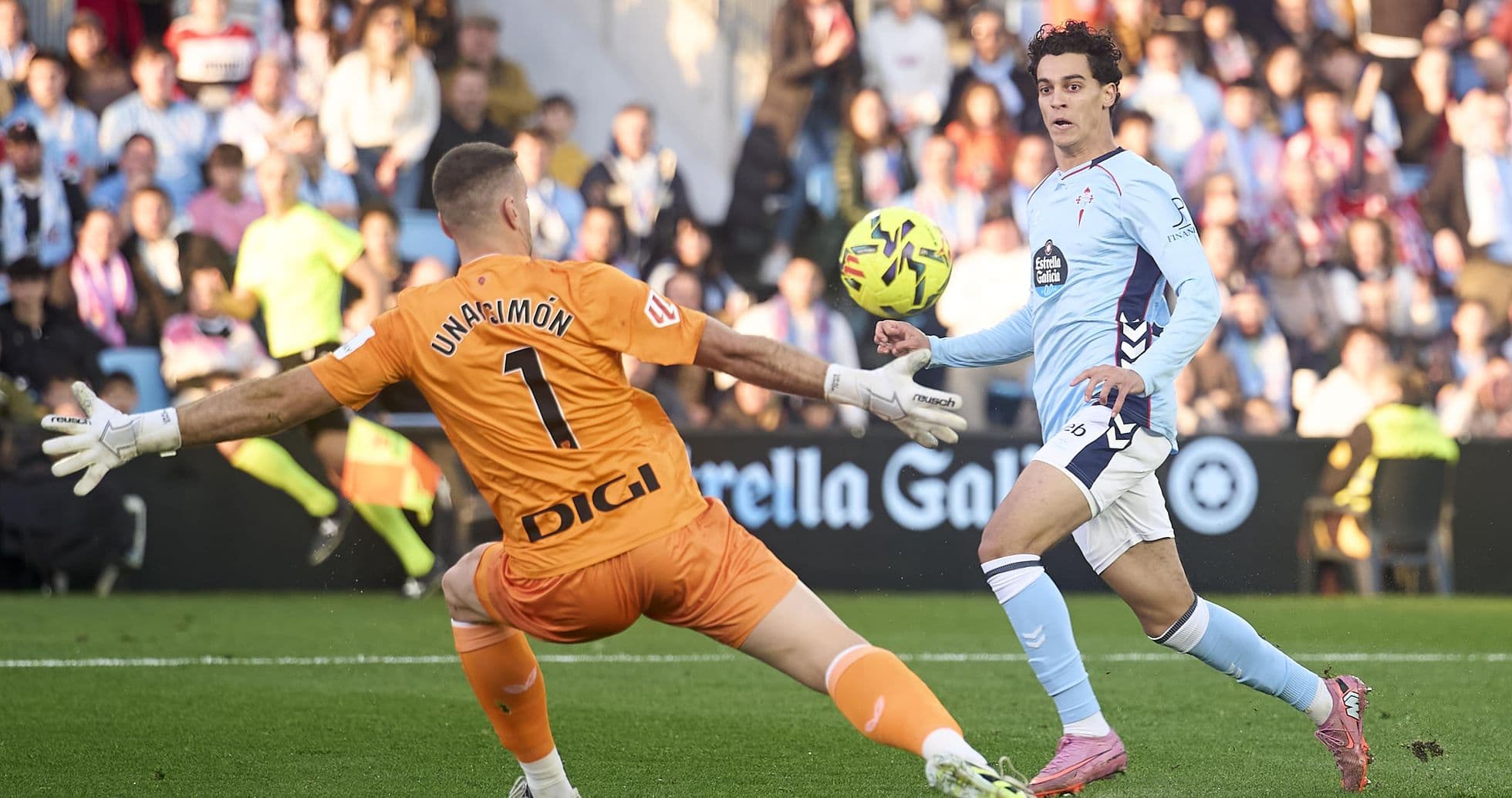
Athletic Club vs Celta Vigo: A Balanced 1-1 Draw in La Liga
San Mamés under a late-spring sky, Round 37 of La Liga, and two clubs whose seasons have taken very different shapes met in a game that finished finely balanced on the scoreboard and in narrative terms. Athletic Club, 12th in the table with 45 points and a goal difference of -13 (41 scored, 54 conceded in total this campaign), hosted a Celta Vigo side sitting 6th on 51 points, with a goal difference of 4 (52 for, 48 against overall) and a Europa League phase in their sights. Following this result, the 1-1 draw felt like a neat encapsulation of both teams’ seasonal DNA: Athletic solid but blunt, Celta daring and occasionally fragile.
I. The Big Picture – Structures and Season Identities
Ernesto Valverde stayed faithful to the club’s 2025 blueprint, sending Athletic out in a 4-2-3-1 – the same shape they have used in 36 of their 37 league fixtures. At home this season they have been respectable: 9 wins, 3 draws and 7 defeats from 19, scoring 22 and conceding 21. The averages tell the story of narrow margins: 1.2 goals for and 1.1 against at San Mamés, a team living in the fine print of one-goal games.
Claudio Giráldez mirrored that consistency on the other bench. Celta lined up in their now-standard 3-4-3, a structure they have used 27 times this campaign. On their travels they have been one of La Liga’s more reliable away sides: 8 wins, 7 draws and only 4 defeats from 19, with 24 goals scored and 20 conceded – an away average of 1.3 goals for and 1.1 against. Heading into this game, they looked like a side comfortable in transition, hardened by tight contests.
The match itself, with Celta leading 1-0 at the break and Athletic clawing back to 1-1 by full time, followed those season-long patterns: Celta sharp early, Athletic gradually imposing their structure and San Mamés’ pressure.
II. Tactical Voids – Absences and Discipline
Athletic came into the fixture shorn of several core pieces. O. Sancet (muscle injury) and N. Williams (injury) removed two of Valverde’s most direct and inventive weapons between the lines and in wide channels. At the back, D. Vivian (ankle injury) – usually a physical pillar who has blocked 13 shots this season – and U. Egiluz (knee injury) were also unavailable, forcing Aymeric Laporte and Yeray Álvarez to shoulder leadership in the back four. B. Prados Díaz was another midfield option lost to a knee injury.
For Celta, C. Starfelt (back injury) and M. Román (foot injury) were missing, nudging Giráldez towards a younger, more mobile back line built around J. Rodríguez, Y. Lago and M. Alonso. It gave Celta legs and aggression, but less top-level experience against San Mamés’ emotional surges.
Disciplinary trends framed how the second half would be managed. Across the season, Athletic’s yellow-card profile spikes between 61-75 minutes (23.08%) and 46-60 (17.95%), while Celta’s bookings peak between 46-60 (20.83%) and 76-90 (19.44%). That shared tendency to accumulate cards in the middle and late phases made game management – and the referee’s control – a tactical factor in itself.
Athletic’s red-card history is also notable: they have seen dismissals in the 46-60, 61-75 and 91-105 windows, while Celta’s only red has come between 46-60. The latent risk of a numerical swing hovered over the contest, particularly as intensity rose after the break.
III. Key Matchups – Hunter vs Shield, Engine Room Battles
The headline duel was always going to be Celta’s cutting edge against Athletic’s home defensive record. Borja Iglesias arrived as one of La Liga’s most efficient strikers this season: 14 league goals and 2 assists, from 38 shots with 26 on target. His penalty record is flawless – 4 scored from 4, no misses – and he thrives on minimal space, clever movement and penalty-box duels (172 contested, 66 won).
Up against him, Laporte and Yeray formed a partnership built on reading of the game rather than raw pace. Yeray, who has blocked 5 shots this season, and Laporte had to manage both Borja’s physical presence and the drifting of F. Jutglà and W. Swedberg from the flanks of Celta’s front three. In a 3-4-3, those wide forwards often pin full-backs and create interior lanes for the central striker; here, A. Gorosabel and Yuri Berchiche were repeatedly asked to choose between stepping out to wide threats or tucking in to protect the half-spaces.
Behind Borja, Javi Rueda – listed as a defender but deployed as a wing-back in the 3-4-3 – has quietly become one of the league’s most productive wide creators: 6 assists and 2 goals, with 13 key passes and 497 total passes at 75% accuracy. His duel with Yuri down Athletic’s left was a key “Hunter vs Shield” subplot: Rueda’s overlaps and early crosses against Yuri’s positional nous and recovery speed.
In the “Engine Room”, Iñigo Ruiz de Galarreta anchored Athletic’s rhythm. Across the season he has completed 1216 passes at 82% accuracy, with 31 key passes and 60 tackles, plus 5 blocked shots. He is also a disciplinary time-bomb: 10 yellow cards, 52 fouls committed. His job was to control Celta’s transitions, especially against the athletic, vertical pairing of I. Moriba and F. López, and to feed the attacking trio of Iñaki Williams, U. Gómez and Álex Berenguer behind Gorka Guruzeta.
Celta’s midfield four – Rueda and S. Carreira wide, Moriba and López central – sought to compress space around Galarreta, forcing Athletic to build via the full-backs and inviting risky vertical passes that could be turned into counters. When it worked, Celta’s front three had open grass to attack; when it failed, Athletic could pin them back and circulate.
IV. Statistical Prognosis – xG Logic and Defensive Solidity
Even without explicit xG values, the season data sketches the expected balance. Athletic at home average 1.2 goals for and 1.1 against; Celta away average 1.3 for and 1.1 against. Layered together, the underlying expectation is a tight contest hovering around one goal each – exactly what unfolded.
Athletic’s overall goals against average of 1.5 per game, compared to Celta’s 1.3, suggests that over a long sample the Galicians are marginally more solid, particularly given their 9 clean sheets (6 away) versus Athletic’s 6 in total (4 at home). However, Athletic’s home defensive record is stronger than their overall numbers, and San Mamés historically adds an intangible layer of resistance.
On the attacking side, Celta’s total scoring rate of 1.4 goals per game (52 in 37) edges Athletic’s 1.1 (41 in 37), and they have failed to score only 6 times all season, compared to Athletic’s 13. That offensive reliability, combined with Borja Iglesias’ penalty perfection and the creative output of Rueda, tilts any xG-based prognosis slightly in Celta’s favour in neutral conditions.
Yet context matters. Heading into this game, Athletic’s form line was erratic (DLLWL), but their home comfort and the emotional charge of a late-season fixture at San Mamés tend to inflate shot volume and territory, even if not always clinical finishing. Celta, with an away record of 8-7-4 and 24-20 in goals, are built to absorb and counter, often turning limited chances into high-value opportunities.
Following this result, the 1-1 feels almost mathematically inevitable: Celta’s sharper cutting edge meeting Athletic’s improved home structure, each side’s defensive averages converging, and both managers leaning into their season-long identities. From an xG and solidity standpoint, a narrow, low-scoring draw was always the most logical outcome – and the pitch at San Mamés duly obeyed the numbers.