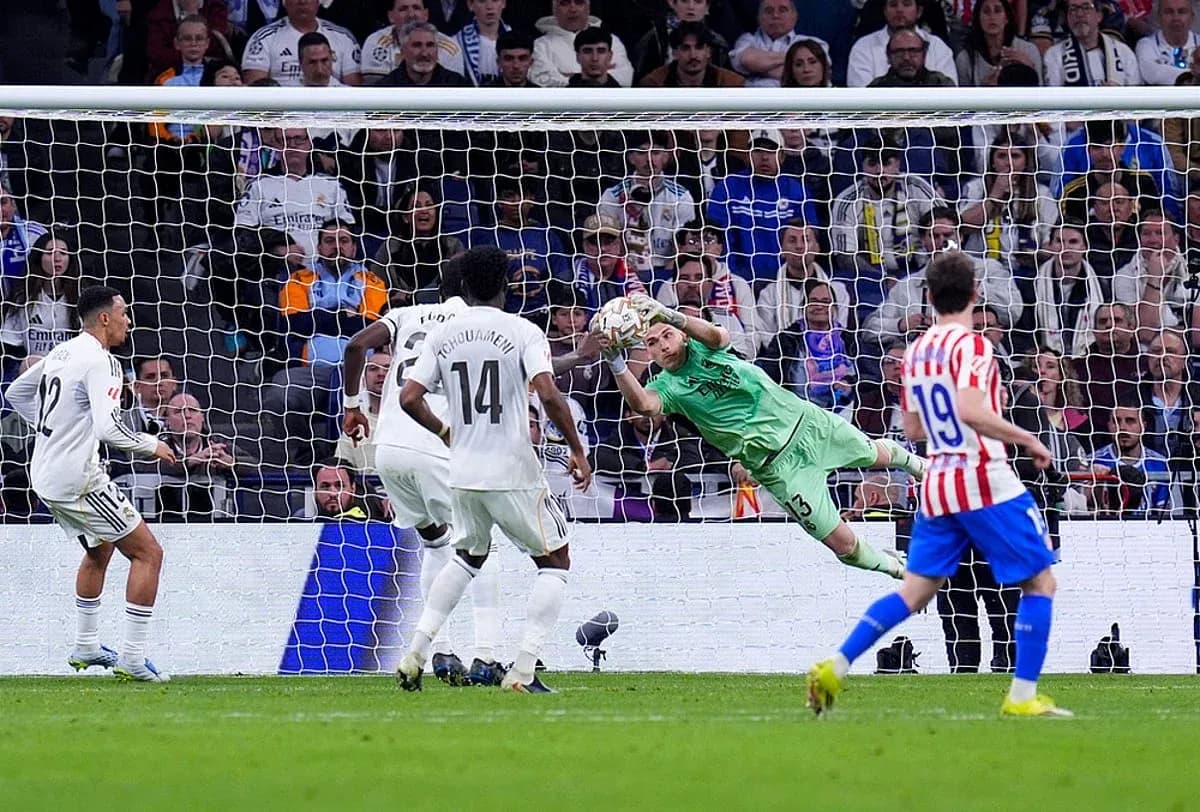
Barcelona Overcomes Atletico Madrid in Thrilling Clash
The Riyadh Air Metropolitano under lights staged a clash of clear identities: Atletico Madrid’s calibrated control against Barcelona’s relentless attacking machine. By full time, the league leaders had imposed their version of the game, overturning a 1-1 half‑time scoreline into a 2-1 away win that underlined why they sit top with 76 points and an 80:29 goal record after 30 rounds.
Atletico arrived as one of La Liga’s most formidable home sides. Thirteen wins from 16 in Madrid, 35 goals scored at 2.2 per home game and only 14 conceded had turned this ground into a fortress. Across the campaign, they had balanced a 1.7 goals‑per‑game attack with a defence allowing just 1.0 per match, backed by 12 clean sheets and a flawless 2-from-2 penalty record. Yet against Barcelona’s travelling juggernaut — 33 away goals at 2.2 per game and 10 wins from 15 — that margin for error shrank to almost nothing.
Barcelona’s season-long profile is that of a front-foot side that simply overwhelms opponents. Eighty league goals in 30 matches, 2.7 per game, and not a single match without scoring. Their defensive numbers are more nuanced: only 8 conceded at home but 21 away, 1.4 per road fixture. This was always going to be decided by whether Atletico’s structured 4-4-2 could neutralize the league’s most explosive attack long enough to dictate tempo.
The lineups told the story of adaptation, particularly for the hosts. With Jan Oblak out through a muscle injury, Juan Musso took the gloves behind a back four of Nahuel Molina, Robin Le Normand, Clément Lenglet and Nicolás González. Further forward, the absences bit harder. Pablo Barrios (muscle), Johnny Cardoso and Marcos Llorente (both suspended for yellow cards), plus R. Mendoza and M. Pubill, stripped Atletico of energy and ball-winning in midfield. Koke and Obed Vargas anchored the centre, with Giuliano Simeone and Thiago Almada asked to shuttle and create from wide, supporting a front pairing of Antoine Griezmann and Alejandro Baena.
For Barcelona, the injury list was shorter but high profile. Andreas Christensen (knee), Raphinha (thigh) and Frenkie de Jong (hamstring) all missed out, but the visitors still fielded a side that looked like a league leader’s statement: Joan García in goal; a back four of João Cancelo, Gerard Martín, Pau Cubarsí and Ronald Araújo; Eric García and Pedri as the double pivot; and a fluid band of three — Lamine Yamal, Fermín López and Marcus Rashford — behind Dani Olmo as a roaming forward.
Atletico’s disciplinary profile this season hinted at a potential fault line. Their yellow cards spike between 31-45 minutes (21.31%), 16-30 (18.03%), 46-60 (16.39%) and 76-90 (also 16.39%), showing repeated surges of aggression around both halves. Barcelona, by contrast, hit their yellow peak immediately after the break (46-60, 25.00%), with another surge late on (76-90, 22.92%) and significant numbers in 31-45 and 91-105. In a match of such fine margins, those windows were always likely to shape the rhythm: Atletico risking disruption as they tried to wrestle back control, Barcelona flirting with danger as they accelerated after half-time.
The headline individual duel was clear: “The Hunter vs. The Shield.” Lamine Yamal, fourth in the league scoring charts with 14 goals and nine assists, arrived as both Barcelona’s most dangerous finisher and La Liga’s top assist provider. His 68 key passes, 231 dribble attempts with 127 successful, and 50 fouls drawn define him as the league’s most complete wide threat. Up against an Atletico back line missing its first-choice goalkeeper and some of its usual screening midfielders, Yamal’s capacity to isolate full-backs and dictate one‑v‑one situations was always going to test the hosts’ defensive structure.
Behind him, the “Engine Room Duel” tilted heavily blaugrana. Pedri, with seven assists, 50 key passes and a 90% pass accuracy, orchestrates at a tempo few can match, while also contributing 39 tackles and 19 interceptions. Alongside him, Fermín López adds verticality — eight assists, five goals and 30 key passes — and a willingness to contest duels (178, winning 88). Against that pairing, Koke and Vargas were asked to both shield and build, a demanding task without Llorente’s running or Cardoso’s ball-winning. Atletico’s plan depended on Koke’s ability to slow the game and Vargas’ discipline in lanes where Barcelona’s interior runners like Olmo and Fermín love to appear between the lines.
Further forward, Giuliano Simeone embodied Atletico’s hybrid identity. Nine league assists contributions (four goals, six assists), 30 key passes, 36 tackles and 17 interceptions make him both creator and disruptor from midfield. His role on the right side of the four was to help Molina double up on Rashford or Yamal depending on Barcelona’s rotations, while still offering an outlet in transition. But the visitors’ depth of creative options — Olmo with seven goals and seven assists, Rashford with five and six — meant Atletico’s wide midfielders were constantly dragged into defensive decisions.
On the bench, the contrast in game‑changers was stark. Atletico had Alexander Sørloth, their leading scorer with 10 league goals, as a towering Plan B. His 44 shots (28 on target), aerial presence and 239 duels (112 won) make him the classic late‑game reference point. Barcelona, meanwhile, could turn to Robert Lewandowski (12 goals) and Ferran Torres (12 goals), plus the mercurial Roony Bardghji. In a tight contest, the ability to introduce a double‑digit scorer from the bench is a luxury few sides enjoy.
The statistical prognosis before a ball was kicked pointed towards a narrow Barcelona edge. Their attack, averaging 2.7 goals per game, against an Atletico defence conceding 1.0, suggested the visitors would still carve out chances, particularly in the post‑interval window where their yellow cards — and by extension their intensity — spike. Atletico’s 2.2 goals per home game and 13 home wins hinted they would land blows of their own, especially if they could drag Barcelona into extended spells of set‑piece defending.
In the end, Barcelona’s attacking variety and Yamal’s star power tilted the balance. The league leaders found a way to dismantle one of Spain’s toughest home records, while Atletico’s absences in midfield and in goal narrowed their margin for error at precisely the wrong time. The decisive factor was not just Barcelona’s firepower, but their capacity to dictate the match in those critical middle phases, where their engine room and wide threats repeatedly exploited the spaces Atletico’s patched‑up structure could not fully protect.