Mallorca's Tactical Triumph Over Real Madrid
The Estadi Mallorca Son Moix has seen its share of survival scraps, but a 2–1 win over title-chasing Real Madrid in Round 30 felt like something else entirely: a clash of identities in which a relegation-threatened side imposed its script on a 3.0-goals-per-game juggernaut.
On paper, this was a mismatch. Mallorca arrived 16th with 31 points from 30 games, averaging just 1.2 goals per match and conceding 1.6. Real Madrid, second with 69 points, had scored 64 times across the campaign, their 2.1 goals per game underpinned by a defensive record of only 28 conceded (0.9 per match). Yet the league table already includes this result — the standings and team stats both list 30 matches played — so the numbers tell us this upset has been fully absorbed into the season’s story, not sitting outside it as an anomaly.
The pattern is clear: Mallorca survive by turning Palma into a trench. Seven of their eight league wins have come at home, where they now have 23 goals for and 19 against across 15 matches. Real Madrid, by contrast, have been ruthless travellers — nine away wins, 28 goals scored, only 16 conceded — and they arrived as the division’s most explosive attack, powered by Kylian Mbappé’s league-leading 23 goals and 4 assists.
Demichelis’s answer was structural and unapologetic. Mallorca abandoned their more common 4-2-3-1 for a 4-3-1-2 that condensed the middle and forced Madrid into traffic. Léo Roman started behind a back four of Pablo Maffeo, Martin Valjent, Omar Mascarell and Johan Mojica, with Samu Costa, Sergi Darder and Manu Morlanes forming a combative, narrow trio. Pablo Torre operated as the link, feeding a front two of Vedat Muriqi and Zito Luvumbo.
This shape suited Mallorca’s statistical DNA. They are not a pressing machine or a possession side; they are a team that embraces the grind. Their season-long card profile underlines that: yellow cards spike between 46–60 minutes (21.13%) and again from 91–105 (16.90%), with significant volume also in the 16–30, 31–45 and 76–90 windows (each over 11%). They live on the disciplinary edge, and Demichelis leaned into that identity, trusting Costa and Maffeo — both among La Liga’s most-booked players with nine yellows apiece — to disrupt Real’s rhythm without tipping into chaos.
The absences only sharpened that plan. Mallorca were without L. Bergstrom, A. Raíllo and J. Salas, stripping depth from their defensive core. Real Madrid, meanwhile, travelled without Thibaut Courtois, Ferland Mendy, Dani Ceballos and Rodrygo, and crucially were missing Federico Valverde through suspension. That last absence was a tactical void: Valverde is among the league’s leading assisters (7) and a key two-way presence, with 37 tackles, 6 blocked opponent attempts and 20 interceptions. Without him, Alvaro Arbeloa’s 4-4-2 lost its most natural enforcer-runner in midfield.
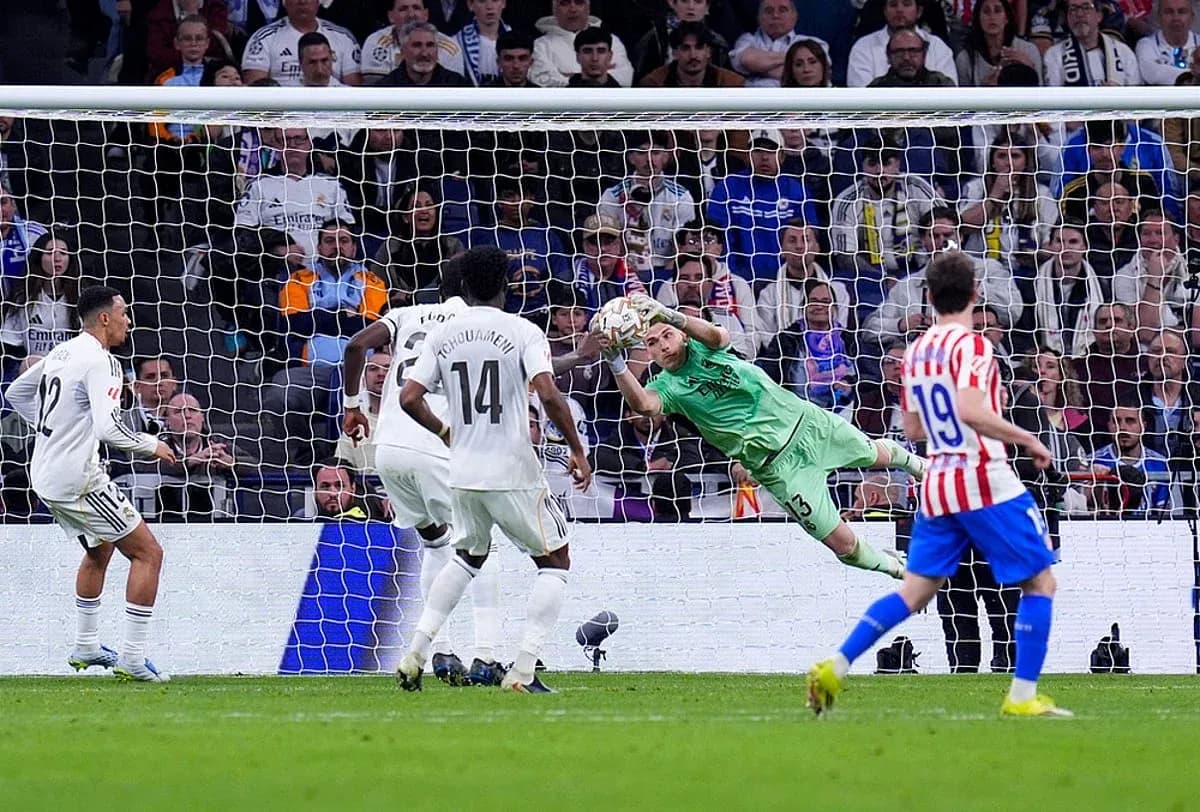
Instead, Madrid lined up with Andriy Lunin in goal, a back four of Trent Alexander-Arnold, Antonio Rüdiger, Dean Huijsen and Álvaro Carreras, and a midfield line of Mario Martín, Aurélien Tchouameni, Eduardo Camavinga and Arda Güler behind Brahim Díaz and Mbappé. It is a technically gifted unit, but one that leans more towards control and creativity than pure ball-winning.
That imbalance framed the key matchups.
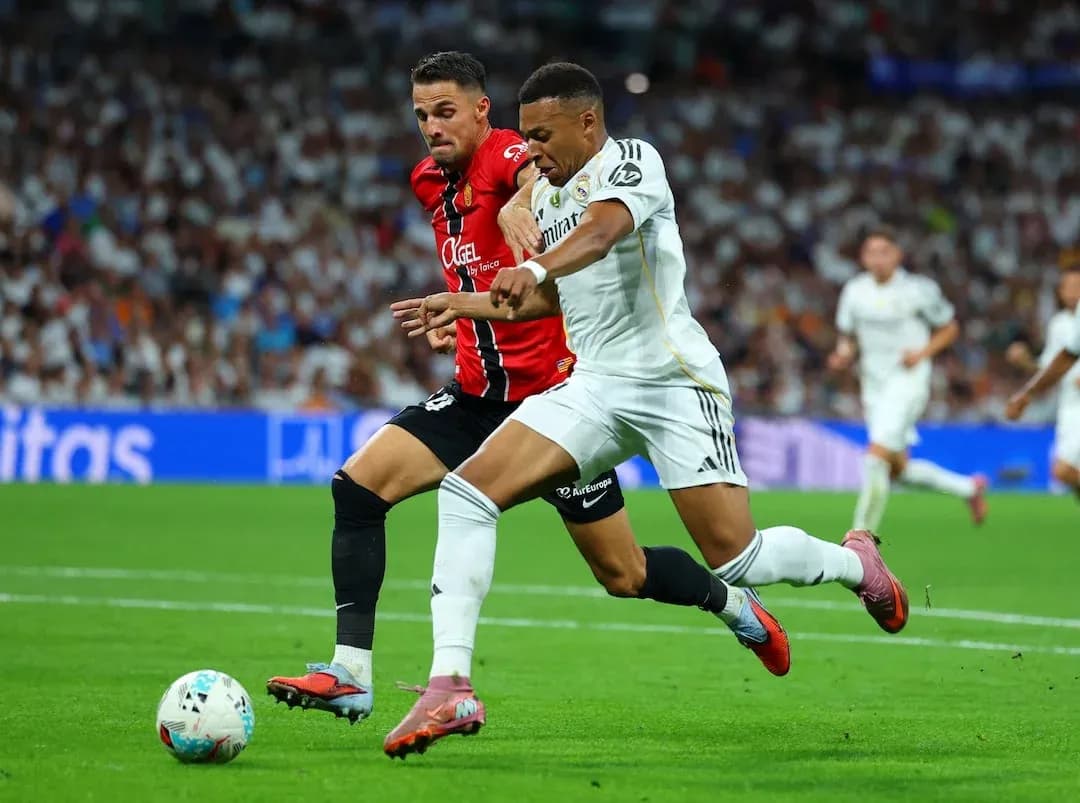
“The Hunter vs. The Shield” was Mbappé against a Mallorca defence that, to date, had conceded 48 goals and kept just three clean sheets all season. Mbappé arrived as the league’s No. 1-rated player, with 87 shots (54 on target), 119 dribbles attempted and 23 goals, including 8 penalties scored from 9 attempts. He is used to dictating terms, drawing 30 fouls and forcing back lines to retreat. Yet Mallorca’s back four, protected by Costa’s relentless work — 49 tackles, 13 blocked opponent shots and 22 interceptions across the campaign — managed to compress his space and funnel him into crowded central zones.
If Mbappé was the hunter, Costa was the shield. The Portuguese midfielder’s season numbers read like a pure destroyer’s portfolio: 343 duels, 175 won, 52 fouls committed and 56 drawn. Against Real, his role was to neutralize the half-spaces where Mbappé and Brahim like to receive, and to harass Güler before he could lift his head.
“The Engine Room Duel” centred on Güler versus Mallorca’s interior trio. Güler has quietly become one of La Liga’s most influential creators: 8 assists, 67 key passes and a 90% passing accuracy, with 44 tackles and 2 blocked opponent attempts that show he can contribute without the ball. But this was a rare day when the opposing engine room dictated the tempo. Darder and Morlanes used the extra body in midfield to crowd him, while Torre’s positioning between the lines forced Tchouameni and Camavinga to constantly look over their shoulders.
That strain on Madrid’s midfield had a knock-on effect on their full-backs. Carreras and Alexander-Arnold are both among the league’s more aggressive defenders in possession — Carreras, in particular, has 26 key passes and 31 successful dribbles so far — but with Real chasing the game, their forward surges left channels that Luvumbo and Muriqi were ruthless in exploiting. Mallorca’s season-long average of 1.5 home goals per match was their platform; here they hit that mark and then some, leaning on Muriqi’s penalty-box gravity. The Kosovar, ranked second in the league scoring charts with 19 goals, is a duel magnet (362 contests, 187 won) and drew Real’s centre-backs into physical battles they did not always control.
From the bench, the contrast in depth was stark, but not decisive. Real Madrid could call on Vinícius Júnior — 11 goals, 5 assists, 162 successful dribbles and 63 fouls drawn — Franco Mastantuono, David Alaba, Dani Carvajal and Jude Bellingham. Mallorca’s options were more modest: Abdón Prats, T. Asano, J. Llabres, M. Joseph and J. Virgili among the forwards, with defensive cover from M. Kumbulla, T. Lato, M. Morey Bauza and D. López. On another afternoon, that weight of attacking talent might have dismantled a tiring defence, especially given Real’s tendency to draw cards late (23.64% of their yellows between 61–75 minutes and 20.00% between 91–105). Here, Mallorca’s game management — and Real’s need to chase — meant the hosts could drip-feed energy from the bench to protect their lead.
The statistical prognosis, even after this upset, still leans heavily towards Real Madrid as one of the league’s dominant forces. Their away record remains formidable, their 11 clean sheets speak to a defence that usually controls games, and their penalty record is flawless so far: 12 scored from 12 attempts. But this match underlined a critical intersection: Mallorca’s peak aggression in the second half and stoppage time collided with Real’s increased card risk in exactly the same windows. In a tight contest, that edge in duels and disruption allowed Demichelis’s side to bend the game to their rhythm.
In the end, the deciding factor was not just Muriqi versus Mbappé, or Güler versus Costa. It was structural: Mallorca’s willingness to compress the pitch, embrace the foul count and turn Son Moix into a knife fight, against a Real Madrid side missing its most balanced midfielder and forced to chase a game on hostile turf. The league table may still show a 38-point gulf, but on this afternoon, the clash of identities tilted decisively towards the underdog.