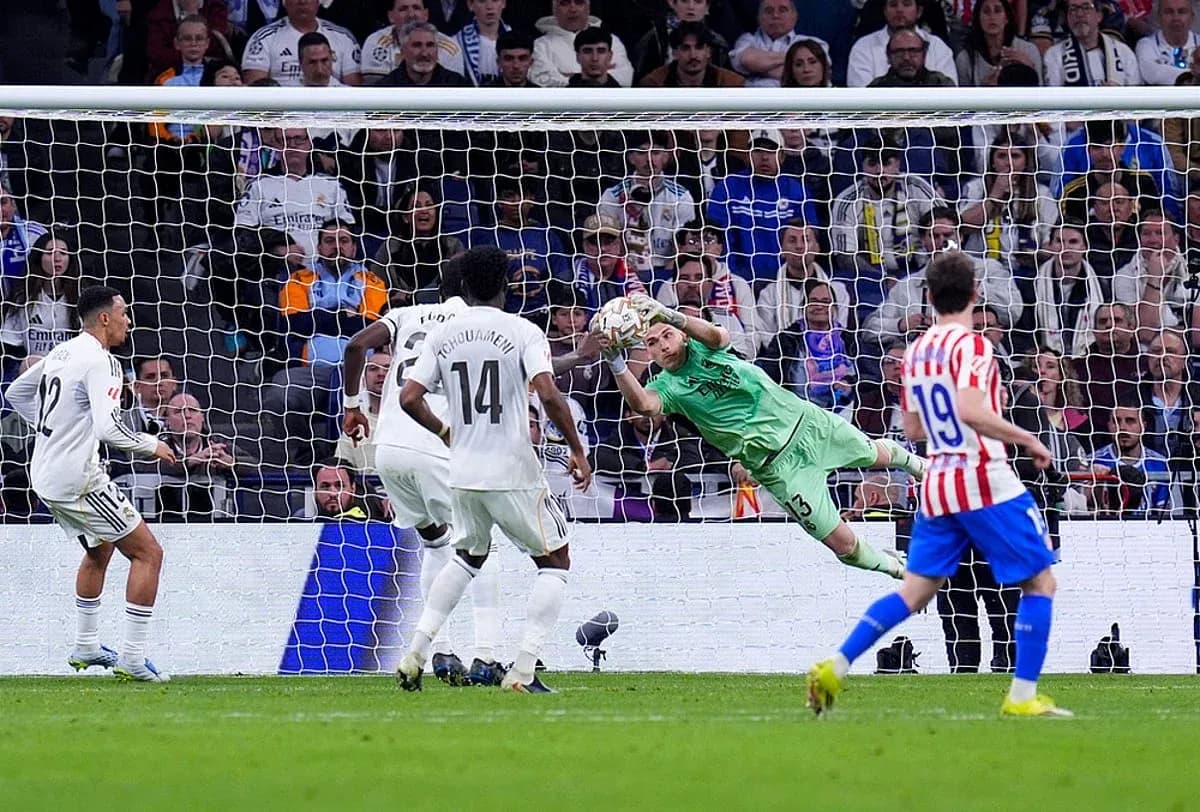
Real Betis vs Espanyol: Tactical Analysis of a Goalless Draw
The Estadio de la Cartuja offered a neutral-stage paradox: a 0-0 that told a rich tactical story between two sides whose season-long identities point in very different directions. Real Betis, fifth in La Liga with 45 points from 30 games, arrived as a Europa League-chasing side built on controlled possession and wide creativity. Espanyol, 10th on 38 points, brought the profile of a volatile mid-table team: capable of bursts of goals, but undermined by defensive swings and disciplinary risk.
Across the campaign to date, Betis have been a 1.5 goals-per-game attack with a positive goal difference (+7), powered especially at “home” (26 goals in 15 home fixtures, 1.7 per game). Their scoring curve is clearly fronted by two peaks: between 16-30 minutes and 76-90 minutes, each accounting for 20.45% of their league goals. They tend to grow into matches and then re-ignite late.
Espanyol, by contrast, sit at 1.2 goals scored and 1.5 conceded per match, their -8 goal difference reflecting a side that often has to chase. Their offensive spikes come immediately after half-time and in the dying stages: 27.03% of their goals between 46-60 minutes, and another 27.03% from 76-90. That creates a fascinating overlay with Betis’ own late surge; the final quarter-hour is statistically the shared danger zone for both.
Defensively, Betis’ main vulnerability has been the opening 15 minutes, when they have conceded 24.32% of their league goals. Espanyol’s heaviest concession window is the 31-45 band (25.58%), followed by the 46-60 range (20.93%). On paper, this match was primed for a flurry around half-time. The goalless outcome, then, speaks to how both defensive units — and the goalkeepers — managed to neutralize each other’s preferred chaos zones.
Absences and the Tactical Void
The team sheets underlined that both managers were forced into structural compromises. Real Betis were without J. Firpo, Isco, G. Lo Celso and A. Ortiz, all listed as missing through various injuries. That stripped Betis of a natural attacking left-back outlet and, more importantly, two high-usage creative midfielders in Isco and Lo Celso. In response, Betis leaned into a 4-3-3 with Sofyan Amrabat and Sergi Altimira tasked with stabilizing the middle and Pablo Fornals given responsibility to link into the front three.
Without Isco’s between-the-lines craft, the onus shifted sharply onto the wings. Antony, one of the league’s more productive wide creators this season (7 goals, 5 assists, 45 key passes so far), started on the right, with Cucho Hernández through the middle and Aitor Ruibal from the left. The absence of Firpo also made Valentín Gómez’s role at left-back more conservative than it might otherwise have been, prioritizing defensive solidity over overlapping volume.
Espanyol’s problems were of a different nature. P. Milla missed out through yellow-card suspension, and J. Puado was sidelined with a knee injury. Milla, who has combined 6 league goals with a combative edge and even a red card this season, is one of Espanyol’s main two-way presences in the final third. His absence, alongside Puado’s, reduced the visitors’ variety in the half-spaces and their pressing bite.
That pushed more responsibility onto Edu Expósito, one of La Liga’s most productive playmakers so far (6 assists, 66 key passes). Lining up nominally off Roberto Fernández in the 4-4-1-1, Expósito had to dictate attacks while also shouldering defensive work in front of the double pivot of Urko González and Pol Lozano. The shape, with Tyrhys Dolan and Cyril Ngonge wide, was less about flooding the box and more about denying Betis central progression.
The Chess Match: Hunters, Shields and Engines
In “The Hunter vs. The Shield” duel, Cucho Hernández was the headline striker on the pitch. With 8 league goals from 25 appearances, he has been Betis’ leading scorer, mixing volume (52 shots, 18 on target) with all-round involvement. Espanyol, conceding 44 goals in 30 matches (1.5 per game), have shown they can be dismantled, particularly around the interval.
Here, though, the back four of Omar El Hilali, Clemens Riedel, Leandro Cabrera and Carlos Romero, shielded by the midfield line, successfully compressed the central channel. Cabrera’s aggression and Riedel’s positioning limited the Colombian’s ability to receive on the turn. When Betis did manage to work the ball wide to Antony, Espanyol were quick to double, forcing crosses rather than cut-backs.
In midfield, “The Engine Room Duel” pitted the Betis trio against Expósito and Espanyol’s central stoppers. Amrabat, the natural enforcer, was key to preventing transitions; his presence allowed Fornals to drift higher to combine with Antony and Cucho. On the other side, Expósito’s season numbers — 786 passes at 77% accuracy, 38 tackles, 17 interceptions — capture a player who both builds and disrupts. He repeatedly dropped into the half-spaces to offer an outlet, then stepped into Betis’ lanes without the ball, slowing their rhythm rather than flying into reckless challenges.
Both benches carried latent game-changers. For Betis, Abdessamad Ezzalzouli — 5 goals and 5 assists this campaign — offered the potential to stretch a tiring back line with direct dribbling (62 attempts, 29 successful) and to win fouls in advanced zones. Rodrigo Riquelme and Chimy Ávila added further options to alter the front line’s profile. Espanyol’s response vector lay with Kike García and Jofre Carreras, plus the defensive insurance of Fernando Calero and Miguel Rubio if a late rearguard was required. Even without specific substitution data, the profiles suggest both managers had levers to either chase or protect a result.
Discipline and the Fine Margins
The disciplinary tightrope hovered in the background. Betis’ yellow-card distribution this season spikes sharply in the final quarter-hour of regulation (25.86%) and again in added time (18.97%), making the closing stages a genuine risk zone. Espanyol are even more volatile late on: 31.34% of their yellows arrive between 76-90 minutes, with another 16.42% in stoppage time. Their red-card profile is equally telling, with dismissals clustered between 46-60, 76-90 and 91-105 minutes.
The absence of Milla through accumulated yellows underlined that reality. For Betis, the lack of red cards in open play windows this season (their only sending-off recorded in the 91-105 band) contrasted with Espanyol’s more combustible pattern, where C. Pickel has already combined 2 yellows, a yellow-red and a straight red across relatively limited minutes. In a tight, goalless contest, both sides clearly prioritized control over confrontation, resisting the late-game chaos that has so often defined their campaigns.
Statistical Verdict: Why It Finished Scoreless
On balance, this was a meeting of a more stable, top-five side and a volatile mid-table opponent, yet the numbers help explain why neither could dictate. Betis’ attack, which has failed to score only four times all season, ran into an Espanyol defense that, for all its flaws, has still produced eight clean sheets to date — five of them away. Conversely, Espanyol’s own 36-goal offense faced a Betis team with nine clean sheets and a defensive record that, while occasionally porous early, tightens as matches wear on.
The decisive factor was the mutual cancellation of peak windows. Betis’ strongest scoring periods — 16-30 and 76-90 — overlapped with Espanyol’s most concentrated defensive efforts on the day, with the back four and Marko Dmitrović standing firm. Espanyol’s preferred surges immediately after half-time and late on met a Betis block that, anchored by Marc Bartra and Diego Llorente, refused to be stretched vertically.
In a season where both teams’ statistical DNA screams volatility, a 0-0 at La Cartuja felt almost anomalous. Yet the data suggests it was less about attacking failure and more about two imperfect defenses choosing, for once, to neutralize rather than be exploited.