Brighton Dominates Wolves in Premier League Clash
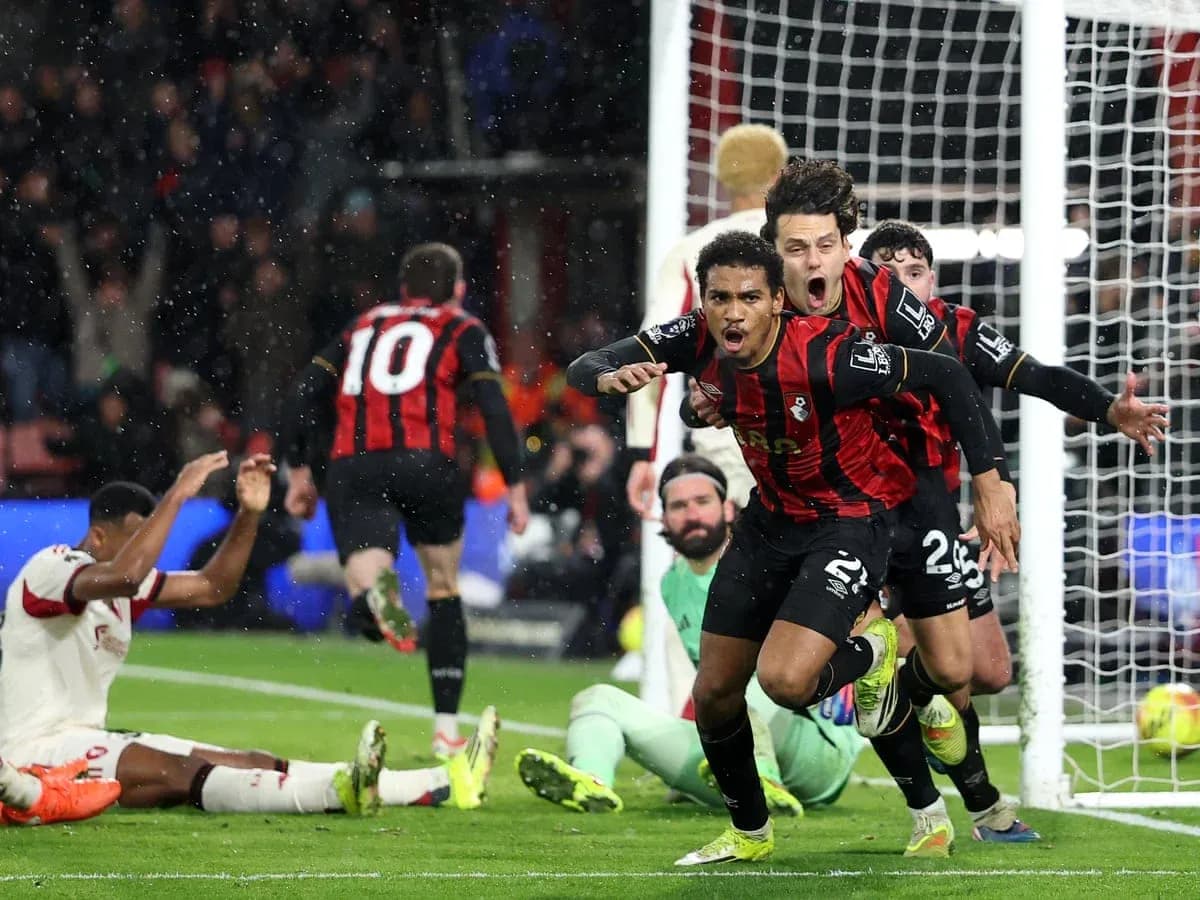
The Amex Stadium felt less like a battleground and more like a confirmation ceremony. In a Premier League season edging toward its conclusion, Brighton’s 3–0 dismantling of Wolves in Round 36 crystallised the gap between a side pushing for Europe and one resigned to relegation.
Following this result, the table told a simple story. Brighton, 7th with 53 points and a goal difference of 10 (52 scored, 42 conceded), look every inch a Conference League play-off contender. Wolves, marooned in 20th on 18 points with a goal difference of -41 (25 for, 66 against), carry the statistical profile of a team long in survival freefall.
At home this campaign, Brighton have been quietly ruthless. Across 18 matches at the Amex they have taken 9 wins, 6 draws and just 3 defeats, scoring 30 and conceding 17. That translates into 1.7 goals scored at home on average, against only 0.9 conceded. Wolves, on their travels, have been the mirror opposite: 0 wins, 5 draws and 13 losses away, with just 7 goals scored and 33 conceded – an away average of 0.4 goals for and 1.8 against. This fixture, in truth, played out exactly along those lines.
Team Selection
Fabian Hurzeler’s selection told its own tactical story. With D. Gómez, S. Tzimas, A. Webster and M. Wieffer all listed as missing through injury, Brighton were without a powerful chunk of their usual spine and rotation options. Yet the XI he fielded looked balanced and aggressive: Bart Verbruggen in goal; a back line of Ferdi Kadıoğlu, Jan Paul van Hecke, Lewis Dunk and Maxim De Cuyper; a midfield platform of Carlos Baleba and Pascal Groß; and an attacking band of Yankuba Minteh, Jack Hinshelwood and Kaoru Mitoma behind centre-forward Danny Welbeck.
Hurzeler leaned into what has defined Brighton’s season: a 4-2-3-1 base (their most-used shape, deployed 31 times overall) morphing into a 2-3-5 in possession. Dunk and van Hecke, two of the league’s most active ball-playing centre-backs, once again acted as deep quarterbacks. Dunk has completed 2,317 passes this season at an accuracy of 92%, while van Hecke has added 2,351 at 87%. Those numbers underpin Brighton’s insistence on building from the back, and against a fragile Wolves press they were able to dictate tempo almost at will.
Wolves, under Rob Edwards, arrived with a squad already compromised. L. Chiwome and E. Gonzalez were both absent with knee injuries, while S. Johnstone and J. Sa were ruled out with a knock and an ankle injury respectively. That left Daniel Bentley in goal behind a defensive trio of Yerson Mosquera, Santiago Bueno and Toti Gomes, with Pedro Lima and Hugo Bueno wide and a midfield core of João Gomes and André. Up front, Adam Armstrong, Mateus Mané and Hwang Hee-chan were tasked with stretching Brighton’s back line.
Wolves' Tactical Struggles
On paper, Wolves’ season-long structure has been reactive and often desperate. They have oscillated between back-three and back-five systems – 3-4-2-1 (11 times), 3-5-2 (9), 3-4-3 (5) and even 5-3-2 (3) – but the defensive numbers are damningly consistent: 66 goals conceded overall, with both home and away averages stuck at 1.8 against per match. Away from home they have failed to score in 12 of 18 games, a stark figure that framed this match as an exercise in damage limitation.
Discipline and mentality were another fault line. Across the season, Brighton’s yellow-card distribution peaks between 46–60 minutes, where 27.91% of their cautions arrive, hinting at a side that increases intensity after the interval. Wolves show a similar spike immediately after half-time, with 28.57% of their yellows in that same 46–60 window, but their red-card profile is far more alarming: one red each in the 31–45, 46–60 and 61–75 ranges. This is a team that often loses control as matches open up.
Individual Battles
Within that context, the individual battles were sharply drawn.
The “Hunter vs Shield” duel centred on Danny Welbeck against a Wolves defence that has leaked 33 away goals. Welbeck has 13 goals in total this season, from 45 shots with 27 on target, and he is no pure poacher; 460 passes at 78% accuracy and 20 key passes underline his role as both finisher and facilitator. Against Mosquera and Toti Gomes, both aggressive defenders, the risk for Wolves was always that Welbeck’s movement would drag them into zones they did not want to defend.
Mosquera himself embodies Wolves’ defensive identity: combative, front-foot, sometimes reckless. He has made 57 tackles, 14 blocks and 26 interceptions, with 11 yellow cards. João Gomes and André, the other pillars of Wolves’ resistance, have also walked the disciplinary tightrope all season. André has 11 yellows and 76 tackles, with 12 blocked shots and 28 interceptions – a true ball-winner whose aggression often crosses the line. João Gomes adds 108 tackles, 6 blocks and 34 interceptions, plus 10 yellows. Together, they form an “Engine Room” that is industrious but constantly at risk of being undermanned through bookings and fatigue.
Opposite them, Pascal Groß and Carlos Baleba offered Brighton a very different kind of midfield control. Groß, the metronome, linked into the wide threats of Mitoma and Minteh, while Baleba provided the vertical thrust that Wolves’ double pivot struggled to track. With Brighton averaging 1.4 goals overall and conceding just 1.2, the structural solidity behind that midfield gave Hurzeler licence to commit numbers forward.
Defensively, Brighton’s “Shield” is anchored by Dunk and van Hecke, whose season-long work explains why they can afford to play on the front foot. Van Hecke has blocked 28 shots – each one a successful intervention – and added 52 tackles and 43 interceptions. Dunk, with 26 blocked shots and 29 interceptions, reads danger early and steps into midfield when needed. Against a Wolves side averaging only 0.7 goals per match overall and 0.4 away, that pairing was always likely to squeeze the life out of transitions.
Statistical Analysis
Set against Expected Goals trends – Brighton’s chance creation typically aligning with their 1.7 home-goal average and Wolves’ anaemic away return – the statistical prognosis for this match was heavily tilted towards the hosts. Brighton’s clean sheet count (10 overall, split evenly between home and away) and Wolves’ 19 total matches without scoring only sharpened that edge.
Following this result, the numbers and the narrative converge. Brighton look like a side whose structure, passing security and attacking variety are calibrated for European nights. Wolves, by contrast, resemble a team whose tactical shape-shifting has never solved the core issues of defensive fragility and attacking impotence. At the Amex, over 90 minutes, those season-long truths simply played themselves out in vivid, one-sided detail.