Fulham vs Bournemouth: Tactical Analysis of a Narrow Defeat
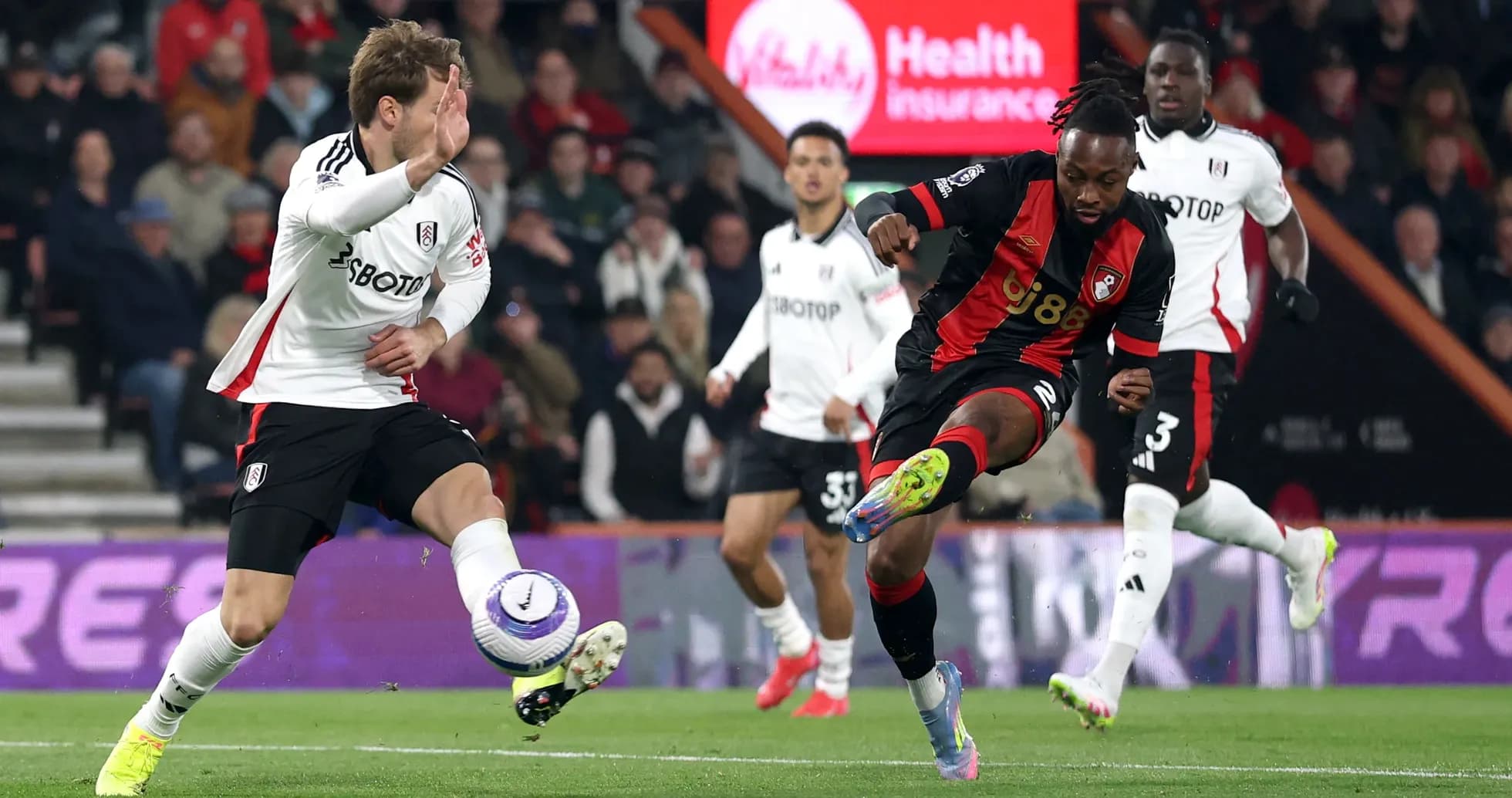
Craven Cottage felt tight and tense as the final whistle confirmed a narrow 0–1 home defeat for Fulham against a Bournemouth side that has quietly grown into a Europa League contender. Following this result, the table tells a clear story of contrasting trajectories: Fulham sit 11th on 48 points with a goal difference of -6 (44 scored, 50 conceded), while Bournemouth are up to 6th on 55 points and a positive goal difference of 4 (56 scored, 52 conceded). It was a match that distilled each side’s seasonal DNA: Fulham strong at home but brittle in key moments; Bournemouth resilient, hard to beat, and efficient on their travels.
Fulham came into this fixture with a home record built on attacking intent: 10 wins from 18 at Craven Cottage, scoring 28 and conceding 20. An average of 1.6 goals at home against 1.1 conceded underpins Marco Silva’s preference for front‑foot football, usually out of a 4-2-3-1 shape, which has been his go-to in 33 league matches. Yet the wider form line – “DDLWWLLLLWLWWLLWWWDDWLWLLLWWLDWLDWLL” – hints at volatility. When Fulham click, they can put three or four past anyone; when they don’t, the structure frays.
Bournemouth arrived with a very different rhythm. Andoni Iraola’s side had lost only 7 of 36 league matches, drawing 16 and winning 13. On their travels they had 6 wins, 7 draws and 5 defeats, scoring 28 and conceding 33 – the same 1.6 goals scored away as at home, but with a more fragile 1.8 conceded. The shape has been consistent: a 4-2-3-1 in 34 games, occasionally morphing into a 4-1-4-1. Their long form string – “LWWWDDWDWLLDLLDDDLDLWDWWDWDDDDDWWDWW” – is a mosaic of tight contests; they rarely get blown away, and they rarely blow teams away, but they keep accumulating points.
The tactical voids on the teamsheet framed the contest. Fulham were without A. Iwobi (injury) and R. Sessegnon (hamstring injury), both listed as Missing Fixture. Iwobi’s absence stripped Silva of a ball‑carrying link between midfield and attack, pushing creative responsibility heavier onto Tom Cairney and Emile Smith Rowe. Sessegnon’s hamstring issue reduced options at left‑sided depth behind Antonee Robinson.
For Bournemouth, the absences were more structurally disruptive. L. Cook (hamstring injury) removed a metronome from the base of midfield. A. Jimenez, suspended, took out a defender who has been one of the league’s most combative full-backs: across the season he committed 35 fouls, drew 20, and picked up 10 yellow cards without a red, a profile that explains why he sits among the top carded players. J. Soler, also out with a hamstring injury, further trimmed Iraola’s rotation options between lines. Bournemouth’s back four therefore leaned on Adam Smith, James Hill, Marcos Senesi and Adrien Truffert to absorb Fulham’s flank-heavy pressure.
Silva’s XI reflected a desire to dominate the ball and territory. Bernd Leno anchored a back four of Timothy Castagne, Joachim Andersen, Calvin Bassey and Robinson – a unit built to circulate possession and step high. In midfield, Saša Lukić and Cairney formed the double pivot, with Harry Wilson, Smith Rowe and Samuel Chukwueze supporting Rodrigo Muniz. The lack of a classic second striker meant Muniz had to occupy both centre-backs, with Chukwueze and Wilson tasked with running beyond.
Iraola’s response was to build a mobile, pressing block. Đorđe Petrović started in goal behind Smith, Hill, Senesi and Truffert. The midfield was a fluid band of Alex Scott, Ryan Christie, Rayan and Eli Junior Kroupi, with Marcus Tavernier drifting inside to join Evanilson up front. Without Cook, Scott’s role as the first receiver from the back line was magnified; Christie, who has already shown his edge with 3 yellow cards and 1 red this season, balanced industry with risk in duels.
The “Hunter vs Shield” duel was always going to revolve around the top scorers. For Fulham, Wilson is both creator and finisher: in total this campaign he has 10 goals and 6 assists in the Premier League, with 48 shots (24 on target) and 38 key passes at an 81% pass accuracy. His dual threat from the right half-space is Fulham’s sharpest weapon. Bournemouth’s answer is Kroupi, who has 12 goals in total this season, scoring from just 29 shots with 20 on target. He is a ruthless finisher who also contributes 21 key passes and 34 dribble attempts, 14 successful.
On paper, this was Wilson’s 10-goal, 6-assist creativity against a Bournemouth defence that concedes 1.8 away goals on average; and Kroupi’s 12-goal cutting edge against a Fulham back line that allows 1.1 at home. The equilibrium tilted because Bournemouth’s “Shield” held firmer. Senesi and Hill defended the box with aggression, while Truffert’s recovery pace denied Chukwueze the space he craves.
In the “Engine Room”, Lukić versus Scott and Christie was decisive. Lukić, one of the league’s most card‑prone midfielders with 9 yellows, again walked the disciplinary tightrope. Across the season he has committed 50 fouls to just 23 drawn, and his role as a destroyer is clear. Bournemouth, as a team, show a pronounced late‑game disciplinary spike: 27.71% of their yellow cards arrive between 76-90 minutes, with another 20.48% in 91-105. Fulham, too, lean into the chaos: 23.29% of their yellows come between 91-105 and 21.92% between 46-60. This match followed that pattern, with the second half fracturing into duels and stoppages as Fulham chased an equaliser and Bournemouth protected their lead.
Statistically, the prognosis for such a fixture leaned towards a tight contest. Heading into this game, Fulham’s home attack at 1.6 goals per match and Bournemouth’s away attack at 1.6 suggested both sides would create. Yet Bournemouth’s 11 clean sheets overall, including 5 on their travels, spoke to an ability to manage game states when they score first. Fulham’s 11 total failures to score – 3 at home, 8 away – hinted at a vulnerability when the first wave of pressure does not yield a breakthrough.
Following this result, the numbers feel vindicated. Bournemouth’s compact 4-2-3-1, even without Jimenez and Cook, proved more efficient than Fulham’s expansive version. Petrović’s command of his area, combined with Senesi’s timing and Truffert’s coverage, blunted Wilson and Muniz. On the other side, Kroupi’s season-long profile as a high‑impact attacker again translated into the decisive margin.
In tactical terms, this was a story of two similar structures but different levels of control. Fulham had the ball, but Bournemouth had the scoreboard. Over 36 matches, Fulham’s total average of 1.2 goals for and 1.4 against has left them mid‑table; Bournemouth’s 1.6 for and 1.4 against, married to their draw-heavy resilience, has propelled them into the European conversation. At Craven Cottage, those arcs crossed – and it was Iraola’s carefully calibrated balance between aggression and restraint that edged Silva’s more volatile, risk‑laden blueprint.