Cape Verde’s World Cup Journey Continues Against Argentina
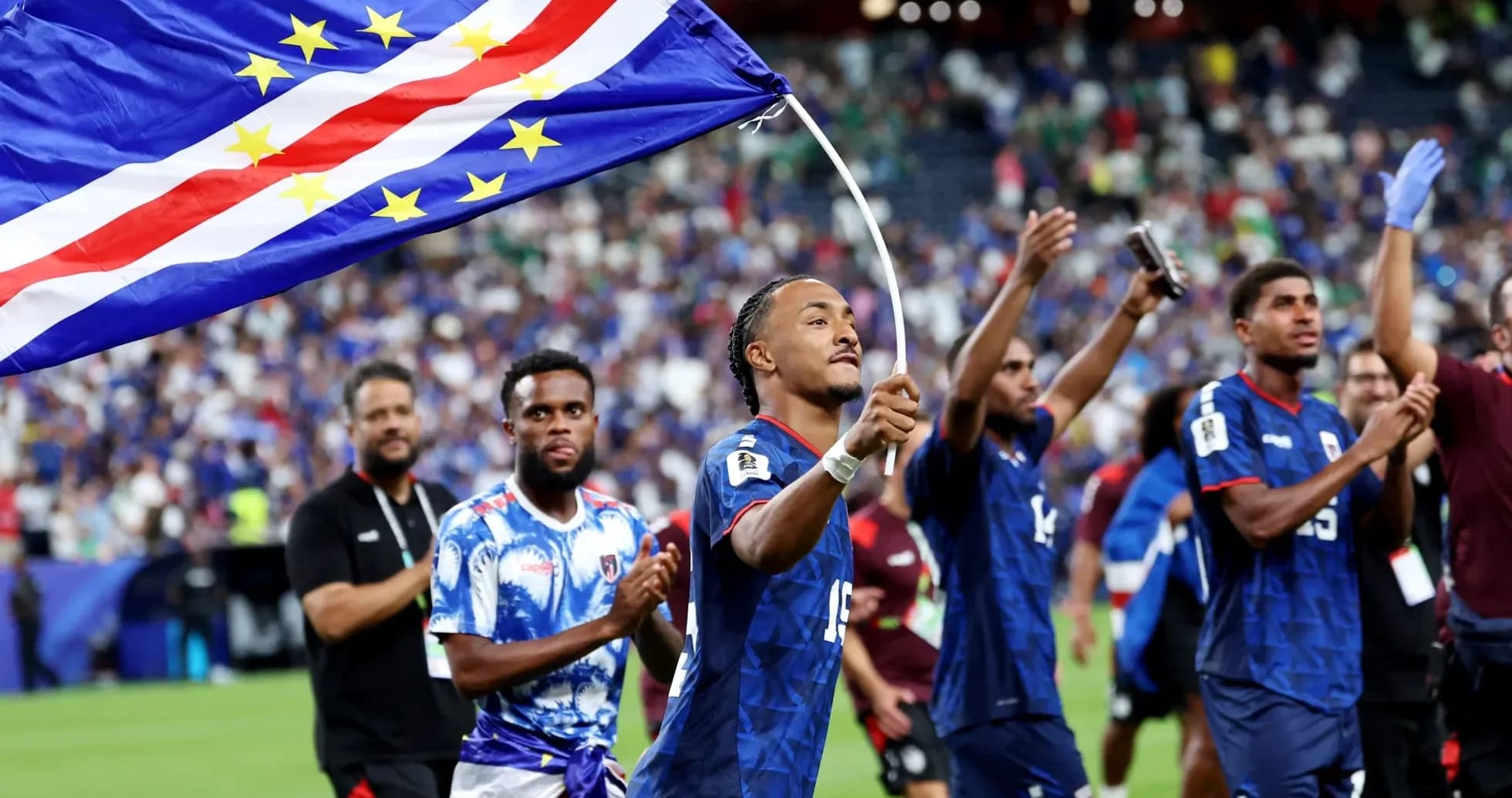
In a sport that devours underdogs, Cape Verde just refuses to blink.
The World Cup debutants drew 0-0 with Saudi Arabia in Houston, a hard-earned point that sealed second place in Group H and booked an extraordinary knockout showdown with reigning champions Argentina in Miami on July 3.
For a nation of just over 500,000 people, ranked 67th coming into the tournament, this is no minor subplot. This is the story.
A Goalless Draw with Everything on the Line
On paper, it was a stalemate. On the pitch, it was a tightrope.
Cape Verde knew a point would almost certainly be enough, but they played with a calm defiance that belied the occasion. Coach Bubista rotated heavily, changing half his starting XI, some of it forced, yet there was one name that could not be moved: Vozinha.
The 40-year-old goalkeeper, already a cult figure after his heroic performance in the opening 0-0 draw against Spain, again anchored his side with authority. He didn’t need to produce the same barrage of saves this time, but his presence steadied a team carrying the weight of history.
Cape Verde edged the first half against a Saudi Arabia side still clinging to their own hopes of qualification after a 1-1 draw with Uruguay and a 4-0 hammering by Spain. The Saudis suffered a major setback on 33 minutes when experienced defender Hassan al-Tambakti was stretchered off, a moment that seemed to drain belief as much as it altered their back line.
Willy Semedo went close with an effort that skidded just wide, but clear chances were rare in a tense opening period. The game felt caged, every attack measured against the risk of a fatal mistake.
Then came the roar from the stands in Houston, not for anything on the pitch, but for news from Guadalajara.
Spain Tilt the Group, Cape Verde Hold Their Nerve
While Cape Verde wrestled with Saudi Arabia in Texas, Spain and Uruguay were locked in a parallel battle in Mexico. Spain’s 1-0 lead late in the first half there changed everything.
As word spread, Cape Verde’s fans erupted. That goal pushed their team into a qualifying position at Uruguay’s expense. Suddenly, the equation was simple: hold your ground, and the dream lives.
The players responded.
Three minutes after the restart, Jamiro Monteiro found himself with a golden chance from close range. The finish, though, lacked conviction and dribbled harmlessly away. Kevin Pina then unleashed a strike from distance that flashed just wide, a reminder that Cape Verde were not simply clinging on.
The tension tightened as the clock ticked into the final quarter of an hour. Saudi Arabia, needing to change the narrative, offered surprisingly little. Their attacks lacked spark, their passing short on imagination for a side supposedly chasing survival.
When Laros Duarte burst through in the 75th minute, Mohammed al-Owais finally had to produce something special, the Saudi goalkeeper making a crucial save to keep his team alive. It felt like the moment that might swing momentum.
It didn’t.
Cape Verde settled again, managed the game, and as the minutes drained away, it was the debutants who looked more likely to nick it. The risk of overcommitting, though, always hovered. They chose control over chaos. It was the right call.
From Spain to Uruguay to Messi
This point was not an isolated achievement. It capped a group-stage campaign that has rewritten expectations.
They opened by standing toe to toe with European champions Spain, surviving waves of pressure in that 0-0 draw, thanks largely to Vozinha’s inspired performance. Then came the 2-2 thriller against two-time former champions Uruguay, a result that did more than add to the points tally; it announced Cape Verde as a serious, stubborn presence.
Unbeaten. Three games, three results that mattered. Enough to finish on three points, behind Spain’s seven, and ahead of Uruguay and Saudi Arabia, both eliminated on two.
Spain now move on to face the runners-up from Group J, either Algeria or Austria. Cape Verde, astonishingly, step onto an even bigger stage.
Lionel Messi and Argentina await in Miami.
For a team from an archipelago off the west coast of Africa, a side that arrived as curious outsiders, this is the kind of fixture that lives forever in a nation’s sporting memory. They have already taken on Spain and Uruguay and refused to bow.
Now comes the world champion. The fairytale continues—how far it goes is no longer a rhetorical question, but the central drama of their World Cup.