Muslera's World Cup Nightmare Ends as Uruguay Exits
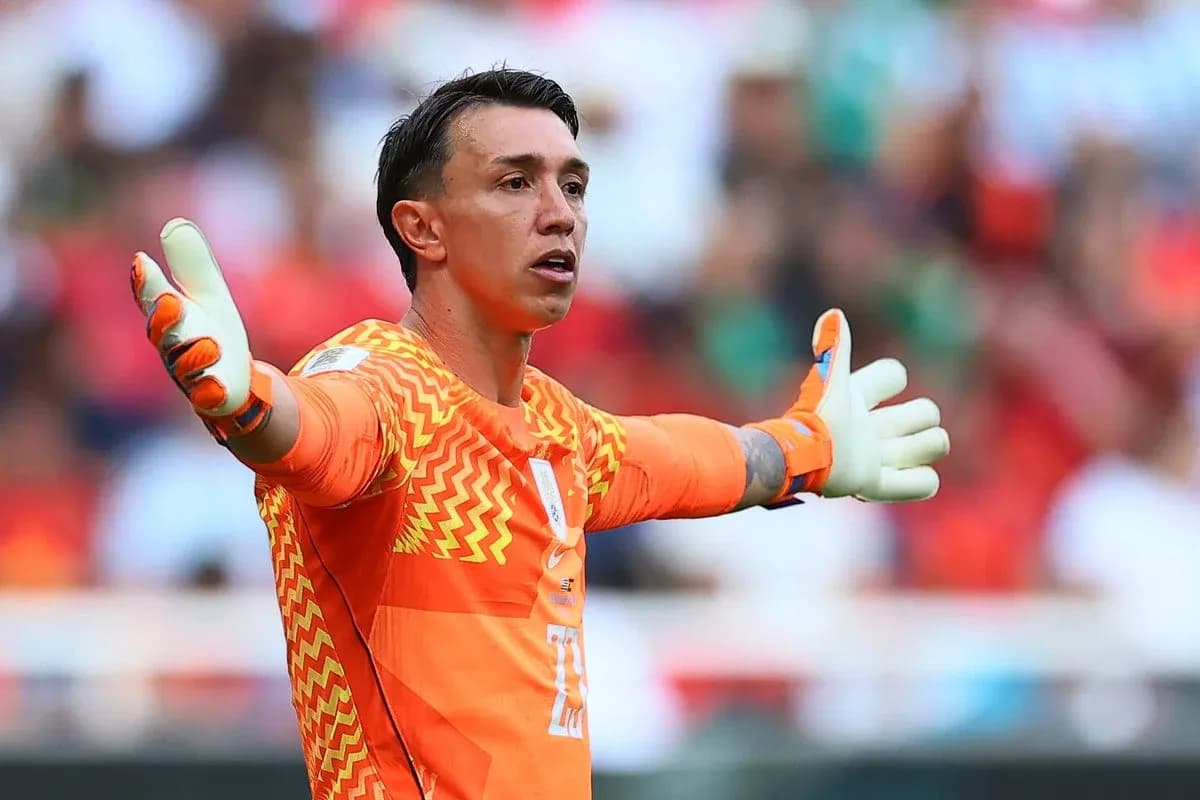
Fernando Muslera’s World Cup 2026 ended not with a save, but with a walk. Dragged off at half-time against Spain, the veteran goalkeeper’s campaign closed in brutal symmetry with how it had unfolded: under a cloud of error and regret.
Uruguay’s 1-0 defeat to Spain sealed their exit from Group J, a limp finish to a group stage that had already been littered with stumbles against Cabo Verde and Saudi Arabia. They needed only a draw to survive. They never looked close.
The decisive moment arrived with a shot that should never have beaten a goalkeeper of Muslera’s pedigree. Alex Baena’s effort lacked venom, placement, and disguise. It had one thing going for it: Muslera’s misjudgment. The ball squirmed past him and rolled into the corner, slow enough for every Uruguayan fan to see the disaster unfolding in real time.
Muslera erupted, bellowing in fury after the ball crossed the line, the anger clearly aimed as much at himself as at the situation. It was more than just another mistake. It was history, for all the wrong reasons.
That error made him the first goalkeeper on record to commit three mistakes leading directly to goals in a single World Cup campaign, with data tracked back to 1966. For a man who has been a symbol of reliability for La Celeste for over a decade, the numbers cut deep.
When the teams re-emerged after the break, Muslera was gone. Sergio Rochet stood between the posts. The substitution itself was a landmark: Uruguay had not changed their goalkeeper in a World Cup match since substitutions were first allowed at Mexico 1970.
The assumption was simple: Marcelo Bielsa had seen enough. But the story, as Bielsa told it, ran differently.
“The Muslera change was not my decision, it was Fernando,” the Uruguay coach said on national television, laying bare the reality that the 38-year-old had effectively taken himself out of the firing line.
In a few words, Bielsa revealed both the weight of Muslera’s anguish and the turmoil inside a team that never truly settled in this tournament. The coach did not hide his own sense of failure either.
“I couldn't boost the Uruguay players, I leave nothing to the country,” he admitted, a stark self-indictment from a manager whose intensity usually defines his teams.
On the pitch, Uruguay never found that trademark Bielsa ferocity. Needing a result, they drifted. Spain controlled, prodded, and picked their moment. Once Baena’s shot found its way in, Uruguay rarely looked capable of mustering a response worthy of their World Cup pedigree.
Bielsa tried to jolt his side. With the game slipping away, he made another big call, one that will echo just as loudly as Muslera’s exit. Federico Valverde, Real Madrid’s midfield powerhouse and the emotional heartbeat of this generation, was withdrawn after 56 subdued minutes.
In a match crying out for leadership and drive, Uruguay lost their captain on the pitch as well as their leader at the back. The decision fed into a growing narrative of discord and confusion around this campaign, one already fuelled by speculation of disagreements inside the camp and doubts over Bielsa’s methods.
The table tells its own story. Three group games, three draws needed only once, and not a single win. Cabo Verde. Saudi Arabia. Spain. Two points, and a flight home.
This was supposed to be a bridge between eras: the fading old guard, the rise of a new core led by Valverde and others, all under the command of one of football’s most distinctive coaches. Instead, it ended with a goalkeeper asking to be taken off, a star midfielder pulled early, and a manager openly questioning his own impact.
Bielsa’s future now hangs over Uruguayan football like a storm cloud. Does the federation double down on his project after such a bruising exit, or decide that this volatile marriage has already run its course?