Uruguay's World Cup Collapse as Spain Advances
Uruguay arrived as a proud, battle-hardened heavyweight. They left as the highest‑ranked side dumped out in the group stage, their campaign collapsing under the weight of internal strife and on‑field errors in a 1-0 defeat to Spain.
For Marcelo Bielsa and his squad, it was a miserable, messy end.
A broken camp, a broken campaign
The warning signs had been flashing for days. Draws against Cape Verde and Saudi Arabia had already put Uruguay on the brink, but it was the noise off the pitch that really betrayed the state of the camp.
Reports of a revolt surfaced, with senior figures – among them Real Madrid’s Federico Valverde – clashing with Bielsa over his tactical approach. A team that once thrived on unity and defiance suddenly looked fractured, drained of conviction.
On the biggest stage, that fragility showed.
Spain flat, Uruguay fatal
Spain’s King Felipe watched on from the stands in Guadalajara, expecting the only group-stage meeting between former world champions to carry a certain weight. Instead, it drifted, tense but strangely lifeless.
Spain, unbeaten and unbreached in competitive football coming into the night, had roared back into form with a 4-0 demolition of Saudi Arabia, sparked by Lamine Yamal’s return to the starting XI. Before that, they had laboured to a goalless draw against Cape Verde, prompting questions about their cutting edge.
Those questions resurfaced. Luis de la Fuente’s side controlled the ball but rarely the tempo. The passing was neat, the patterns familiar, yet the incision was missing. Uruguay, for all their troubles, were not being carved open.
Then the pressure finally told – not through brilliance, but through a mistake.
Muslera’s nightmare continues
Fernando Muslera, a hero of Uruguay’s run to the 2010 semi-finals, has seen almost everything in international football. This tournament will be one he will want to forget.
Already culpable for both Cape Verde goals in a 2-2 draw, the 40-year-old endured another brutal moment. On 42 minutes, with Spain having barely threatened, Marcos Llorente whipped in a cross and Alex Baena’s effort lacked real venom. It should have been routine.
Muslera let it dribble over the line.
As the ball crept in, so did the sense that Uruguay’s World Cup was slipping away in slow motion.
To deepen the blow, the move that led to the goal also claimed Manuel Ugarte. The Manchester United midfielder went down in the build-up and was stretchered off, his knee injury looking serious at first glance. One of Uruguay’s most dynamic presences in midfield was gone, their hopes dimmed even further.
Bold calls, blunt response
Bielsa reacted at the break, hauling off Muslera for Sergio Rochet. It was a necessary change, but it also underlined how far things had unravelled for one of the country’s long‑standing servants.
An hour in, the Uruguay coach went further, substituting Valverde – the symbol of the reported dressing-room tension and usually the heartbeat of this side. It was a bold call, the kind that either transforms a night or confirms a crisis.
It did neither. Uruguay huffed, chased, and tried to turn the game into a fight. The structure remained loose, the ideas muddled. Spain, though far from fluent, never truly lost control.
De la Fuente turned to his own bench and found the spark he needed. Dani Olmo and Fabian Ruiz added urgency and angles, finally giving Spain some thrust between the lines.
Olmo should have killed the contest. A rare flash of Yamal’s magic opened Uruguay up, the teenager sliding a clever ball across for his Barcelona team-mate, only for Olmo to spoon his finish over the bar. It summed up Spain’s night: dominant enough, but rarely ruthless.
Yamal managed, Torres wasteful
Yamal, still being carefully managed after a hamstring injury cut short his club season, lasted until the final 15 minutes. His influence flickered rather than burned, yet every touch still carried a murmur of anticipation.
He made way, and Ferran Torres almost delivered the exclamation mark. With five minutes left, he broke clear, only the goalkeeper to beat. His shot crashed off the bar. Uruguay survived that moment, but not the broader verdict on their tournament.
Red card and a bleak exit
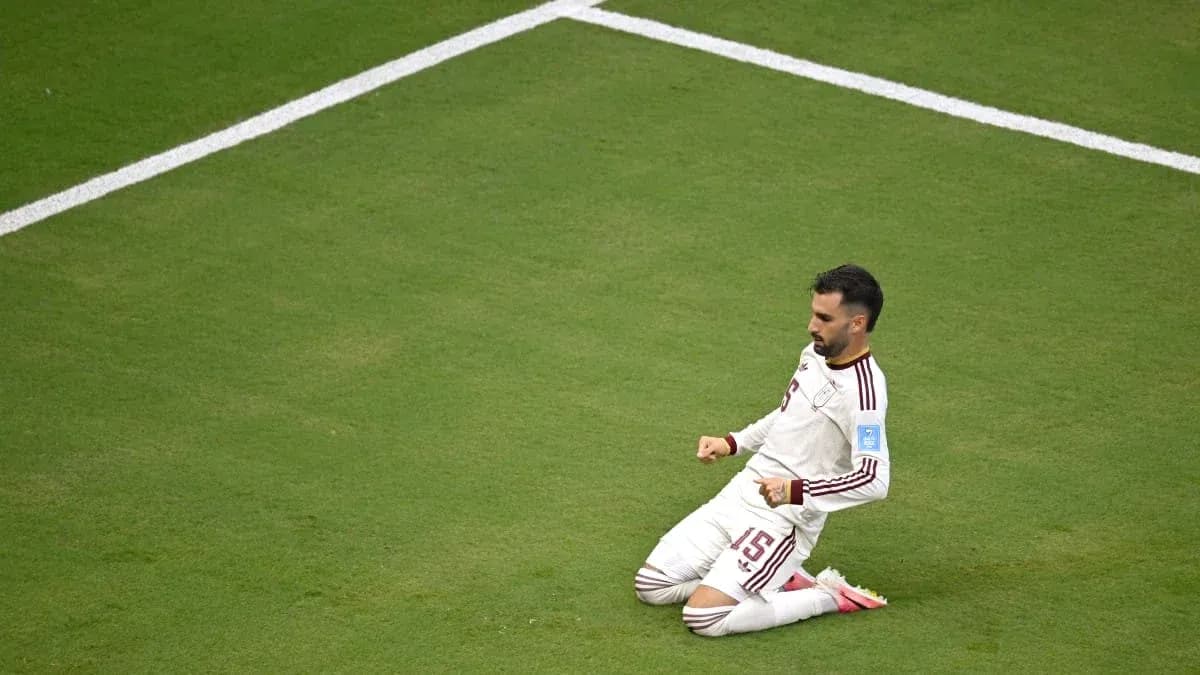
By stoppage time, frustration had turned into recklessness. Agustin Canobbio flew into a wild lunge on Pau Cubarsi and saw a straight red card. It was a challenge borne of exasperation, the final, needless act of a campaign that had already spun out of control.
The whistle went soon after. Uruguay were out. A team tipped to make a deep run had stumbled, argued, and finally fallen at the first hurdle.
Spain advance, questions linger
On paper, Spain look ominous. Thirty-four competitive matches unbeaten. Still yet to concede a goal at this World Cup. A squad stacked with technical quality and guided by a coach who has quietly rebuilt their competitive edge.
On the pitch, the picture is more nuanced. While France, Argentina and the Netherlands have produced spells of thrilling, incisive attacking football, La Roja continue to feel more functional than frightening. They move the ball well, they control territory, they suffocate opponents – but the cutting edge comes and goes.
De la Fuente will not complain about progress or clean sheets. Yet as the knockout rounds begin on Sunday, he knows this: the margins tighten, the opponents sharpen, and nights like this – controlled, but not convincing – will not always be enough.