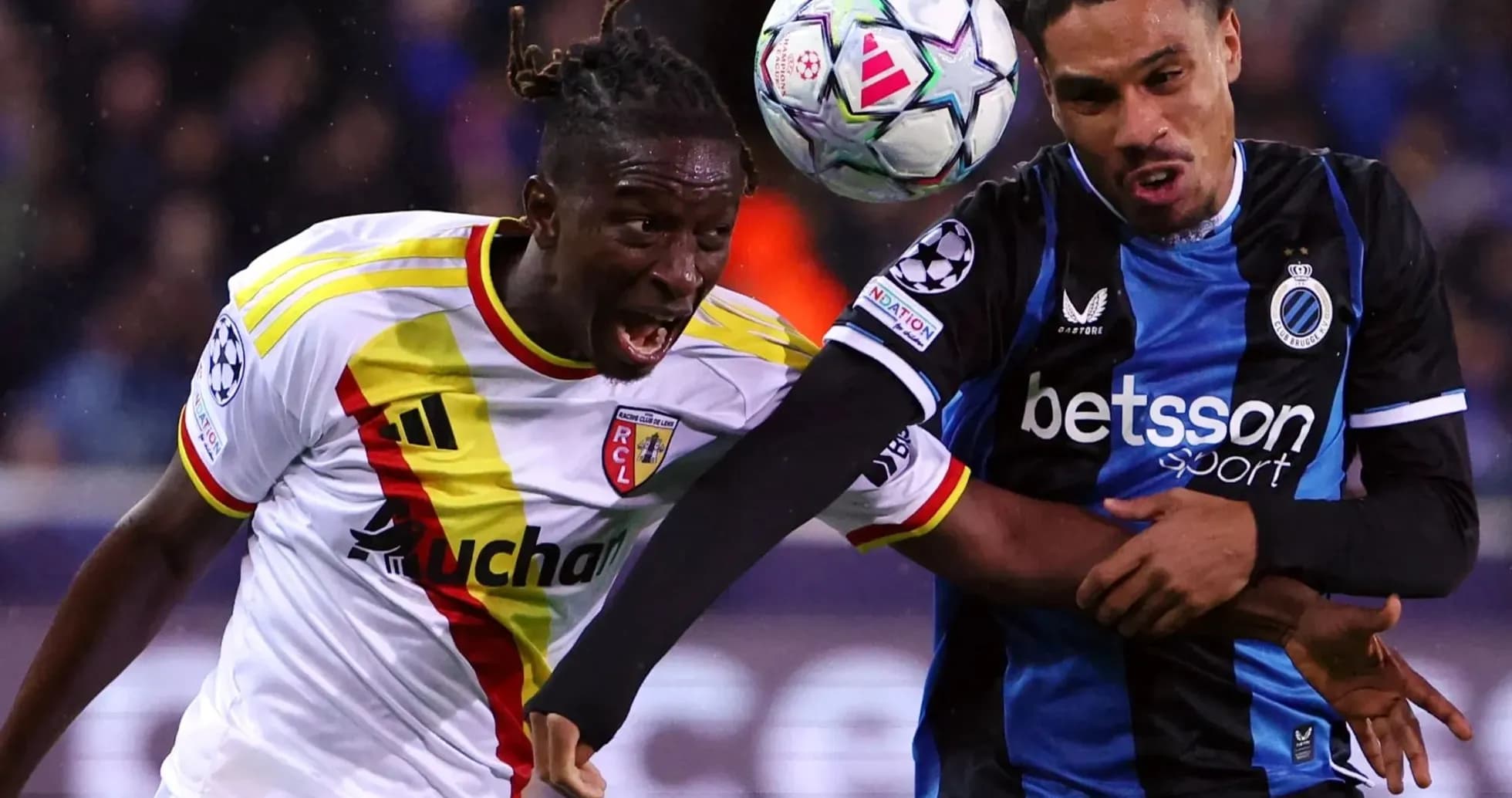
Club Brugge KV Dominates Lens 3–0 in UEFA Champions League
Under the Bruges floodlights at Jan Breydel Stadium, this league-stage contest in the UEFA Champions League ended with the scoreboard emphatically tilted: Club Brugge KV 3–0 Lens. It was more than a scoreline; it felt like a statement of intent from a side quietly building a dangerous European profile.
Heading into this game, Club Brugge were already shaping up as one of the competition’s more incisive attacks. Overall they had scored 9 goals in 3 matches, an average of 3.0 per game, with 5 of those at home at 2.5 per home match. The trade-off was a certain looseness: 6 goals conceded overall at 2.0 per game, including 3 at home at 1.5. Lens arrived in Bruges on a very different trajectory: ranked 27th in the table with 3 points, 3 goals scored overall at 1.0 per game, and 7 conceded at 2.3. On their travels they had been more adventurous but fragile, with 3 away goals for at 1.5 per away game, and 5 against at 2.5.
The contest was framed by absences that subtly reshaped both squads. For Club Brugge, J. Ordonez missed out with a foot injury, trimming I. Leko’s defensive options but not touching his core back four. Lens, however, were hit by a cluster of unavailabilities: M. Diarra and I. Jourdren were off the roster, while I. Ganiou, M. Nawrocki and A. Sima were sidelined with knee or muscle injuries, and J. Gradit – usually a defensive reference point – was out with a muscle problem. For Yannick Cahuzac, it meant leaning heavily on the available core of his 3-4-2-1, without the luxury of rotating his back line or adding a different profile in attack.
Leko’s Strategy
Leko’s 4-2-3-1 looked purpose-built to exploit those structural issues. Y. Sommer in goal sat behind a back four of K. Sabbe, J. Spileers, B. Mechele and J. Seys – a unit designed less for expansive overlapping and more for control of transitions. In front of them, the double pivot of F. Potts and H. Vanaken formed the hinge of the side: Potts as the metronome, Vanaken as the tall, late-arriving playmaker who could step into the half-spaces or crash the box.
Ahead of them, the three in support of N. Tresoldi gave Brugge their cutting edge. Carlos Forbs on the right, F. Lemaréchal centrally and Jan Virgili on the left offered a blend of dribbling, movement between the lines and diagonal runs. At the tip, Tresoldi – already one of the standout forwards of this Champions League campaign – came in with 4 goals overall, from 3 appearances, with 11 shots (7 on target) and a rating of 7.43. His presence turned every cross, cut-back and through ball into a potential high-value chance.
Lens’ Approach
Lens’ 3-4-2-1, by contrast, was more about survival and opportunism. R. Risser in goal was shielded by a back three of R. Aguilar, S. Baidoo and M. Udol. Across midfield, Saud Abdulhamid and M. Skóraś provided width, with M. Cuisance and A. Haidara tasked with balancing ball progression and defensive screening. Ahead of them, J. Kadile and T. Hazard floated as dual creators behind F. Ivanović.
The problem for Lens was that their structural weaknesses aligned almost perfectly with Brugge’s strengths. Overall, Lens had failed to keep a single clean sheet, with 7 goals conceded, and both of their yellow-card peaks came late: 61–75 minutes and 76–90 minutes, each accounting for 40.00% of their cautions. That pattern suggested a side that tired, chased games and became increasingly desperate as time wore on.
Disciplinary Patterns
Brugge, meanwhile, had a disciplinary curve that told its own tactical story. Overall, 44.44% of their yellow cards arrived between 61–75 minutes, with another 22.22% from 76–90 and 11.11% in stoppage time. This was a team that pushed the tempo and pressed aggressively into the final third of matches, even if it meant flirting with bookings. At Jan Breydel, with the crowd behind them, that late-game surge became a weapon rather than a risk.
The “Hunter vs Shield” duel inevitably centered on Tresoldi against a Lens defence that had conceded 5 goals on their travels. Tresoldi’s numbers – 4 goals overall, 2 penalties converted from 2 attempts, 32 duels contested with 18 won – painted the picture of a forward who not only finished but constantly wrestled centre-backs out of their comfort zone. Without Gradit, Baidoo and Aguilar were left to handle that physical and positional challenge largely on their own, with Cuisance and Haidara often dragged backwards to plug gaps.
Engine Room Battle
In the “Engine Room” battle, Vanaken and Potts had the platform to dictate. Haidara is a natural enforcer, but with Lens chasing the game and lacking a solid defensive cushion, he and Cuisance were frequently caught between stepping out to press and staying compact in front of the back three. That indecision opened the channels that Lemaréchal and Virgili repeatedly attacked, pulling the Lens structure apart.
Tactically, the match unfolded almost as the season data would predict. Club Brugge, who had failed to score in none of their matches so far, again found multiple routes to goal, while Lens – with 2 matches overall without scoring – struggled to convert sporadic forays into genuine chances. Brugge’s season-long average of 3.0 goals for and 2.0 against overall was nudged in the right direction by this clean-sheet win; Lens’ 1.0 goals for and 2.3 against overall were reinforced by another scoreless, three-goal defeat.
From a statistical prognosis perspective, this 3–0 felt less like an anomaly and more like the logical intersection of form, structure and mentality. Brugge’s high ceiling in attack, anchored by Tresoldi’s ruthless finishing and Vanaken’s orchestration, met a Lens side stretched by absences and late-game indiscipline. Over 90 minutes, under the watch of referee Luis Miguel Branco Godinho, the patterns that had been hinted at in the numbers crystallised on the pitch – and the Belgian side walked away with a result that matched their growing European ambition.