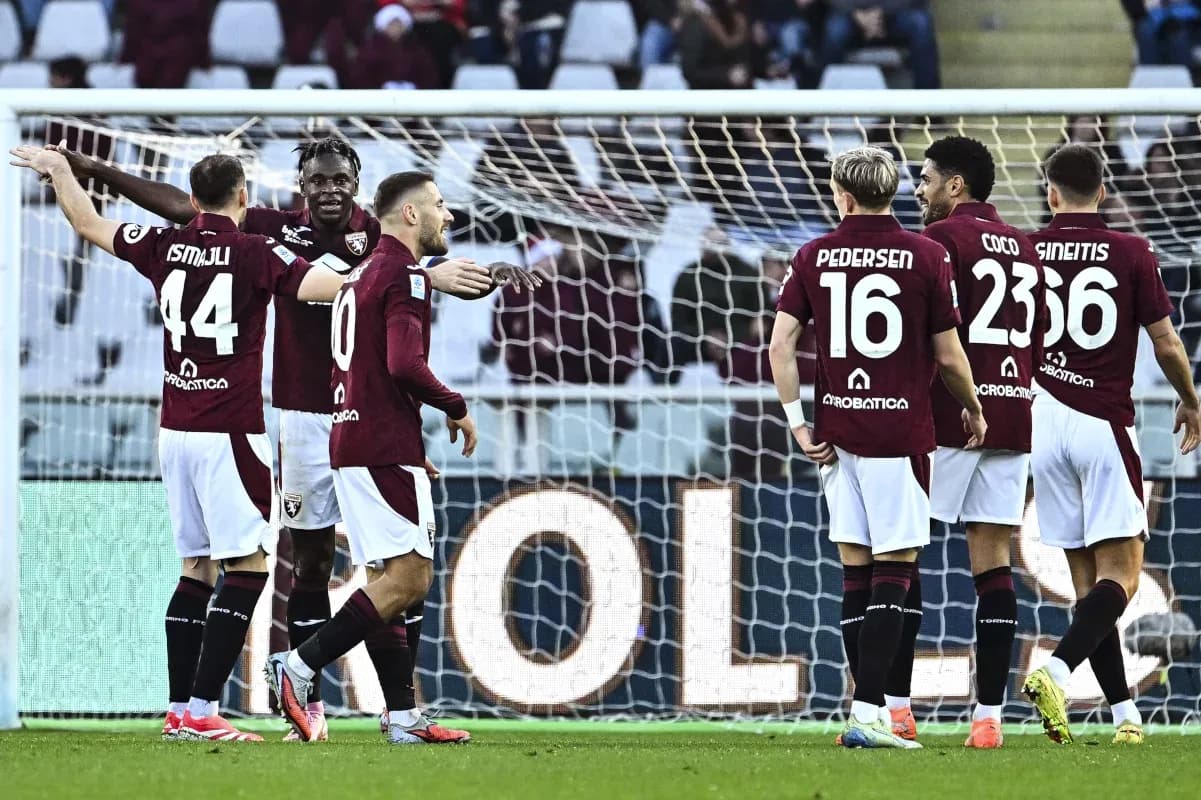
Cremonese and Torino Battle to a Goalless Draw
On a grey April afternoon at Stadio Giovanni Zini, a season’s worth of tension condensed into 90 anxious minutes. Cremonese, 17th in Serie A heading into this game, clung to survival hopes; Torino, 12th, chased mid-table security and a faint European mirage. The 0-0 scoreline at full time read like a stalemate, but beneath it lay two very different footballing identities colliding under pressure.
I. The Big Picture – contrasting DNAs in a goalless draw
Cremonese came into Round 33 with a fragile profile: only 28 points from 33 matches and a goal difference of -21, the product of 26 goals scored and 47 conceded overall. At home they had been cautious to a fault, averaging just 0.8 goals for and 1.4 against, with only 2 wins from 16 at Zini. Their season has been built on grinding, low-scoring contests, reflected again here by the clean sheet and the lack of cutting edge.
Torino, by contrast, arrived with more volatility in their numbers. With 40 points and a goal difference of -17 (37 scored, 54 conceded overall), they are more expansive but defensively porous. On their travels they averaged 0.9 goals for and 1.8 against, a profile of a side that often opens up away from home and lives with the consequences. That chaos did not fully materialise in Cremona, but it informed Leonardo Colucci’s choices: a 3-4-1-2 designed to control transitions and lean on individual quality in the final third.
Marco Giampaolo answered with a 4-4-2 that felt like a pragmatic departure from Cremonese’s more common three-at-the-back shapes this season. With 3-5-2 used 24 times overall and 3-1-4-2 four times, this back four was a deliberate attempt to stabilise the wide areas against Torino’s wing-backs and dual strikers.
II. Tactical Voids – absences and disciplinary shadows
The team sheets told a story of what was missing as much as what was present. Cremonese were stripped of attacking variety: M. Collocolo (injury), F. Moumbagna (muscle injury), M. Thorsby (injury) and J. Vardy (muscle injury) all absent, while Y. Maleh served a suspension after a red card. For a side that had already failed to score in 16 of 33 league games overall, those absences forced Giampaolo to lean on A. Sanabria and F. Bonazzoli as a relatively improvised partnership, supported from wide by J. Vandeputte and R. Floriani.
Torino’s voids were equally significant in the final third. D. Zapata (thigh injury), Z. Aboukhlal (muscle injury), N. Nkounkou (injury) and Z. Savva (knee injury) all missed out, reducing Colucci’s options for rotation and late-game impact. The responsibility for penetration therefore fell heavily on G. Simeone and C. Adams, with N. Vlasic tasked to stitch attacks together between the lines.
Disciplinary trends framed the match’s emotional tone. Cremonese’s season-long yellow-card pattern shows a late-game spike: 26.15% of their bookings arrive between 76-90 minutes, with a further 10.77% in 91-105. Torino, too, accumulate cards as matches wear on, with 17.46% in 61-75 and another 17.46% in 76-90, then a notable 22.22% in 91-105. Even without a detailed card log for this fixture, both sides stepped onto the pitch with the statistical profile of teams who grow more ragged and desperate as the clock ticks down. That undercurrent likely contributed to the risk-averse closing stages that preserved the 0-0.
III. Key Matchups – Hunter vs Shield, Engine Room vs Enforcer
The headline duel was clear: G. Simeone, Torino’s leading scorer in Serie A with 9 goals overall, against a Cremonese defence that concedes 1.4 goals per game overall but had quietly assembled 9 clean sheets this season. Simeone’s numbers underline his role as the “Hunter”: 48 shots overall, 25 on target, and a striker comfortable operating on limited service. Colucci’s 3-4-1-2 positioned him alongside Adams, with Vlasic in the pocket to draw out centre-backs and create gaps for Simeone’s diagonal runs.
Cremonese’s “Shield” was a collective rather than a single star. The back four of F. Terracciano, F. Baschirotto, S. Luperto and G. Pezzella sat in front of E. Audero and rarely over-committed. Baschirotto and Luperto were the obvious aerial anchors against Simeone and Adams, while Pezzella, one of the league’s card magnets with 8 yellows and 1 red overall, walked the fine line between aggression and recklessness on the left. His season data – 45 tackles, 11 successful blocked shots and 10 interceptions overall – illustrates a defender who steps out decisively, and against Torino that front-foot defending helped disrupt early combinations before they could feed Simeone in dangerous zones.
In the “Engine Room”, the duel between creators and disruptors shaped the game’s rhythm. For Torino, Vlasic’s season tells of a multi-phase threat: 7 goals and 3 assists overall, 45 key passes and 51 dribble attempts with 25 successes. He is both playmaker and secondary scorer, and in this match he floated between Cremonese’s lines, trying to drag W. Bondo and A. Grassi out of shape.
Giampaolo responded with industry and compactness. Bondo and Grassi formed the central hinge of the 4-4-2, tasked with screening Vlasic and preventing quick progression into Simeone and Adams. Out wide, Vandeputte and Floriani tracked Torino’s wing-backs, M. Pedersen and R. Obrador, effectively turning Cremonese’s shape into a 4-4-1-1 without the ball, with Sanabria often dropping to clog the lane into Vlasic. The result was a game in which Torino had territory and phases of possession, but struggled to find clear central lanes.
IV. Statistical Prognosis – xG without numbers, and what the draw suggests
Even without explicit xG data, the season statistics sketch the underlying probabilities. Heading into this game, Cremonese’s overall average of 0.8 goals for and 1.4 against suggested that a low-scoring defeat was more likely than a clean-sheet draw. Torino’s away profile of 0.9 goals scored and 1.8 conceded pointed to a match tilted towards goals at both ends. The 0-0, then, represents a kind of statistical outlier born from tactical caution and depleted attacking resources.
Cremonese will quietly cherish the point. Following this result, their defensive narrative strengthens: a side that, when forced into a back four and stripped of attacking depth, can still shut down a more talented frontline. Their survival bid will depend on repeating this level of concentration while somehow nudging that 0.8 goals-per-game ceiling upwards.
For Torino, the draw reinforces a season-long theme: solid structure, flashes of individual brilliance, but an inability to consistently convert territorial control into goals, especially away. Simeone remains the sharpest spear in Colucci’s armoury, Vlasic the creative fulcrum, yet without the injured attackers and with a conservative game plan, Torino’s xG ceiling in fixtures like this will stay modest.
In tactical terms, this match felt like a rehearsal for the run-in: Cremonese learning to suffer and survive; Torino discovering that, unless they take more risks, their season may end in the anonymity their numbers already predict.