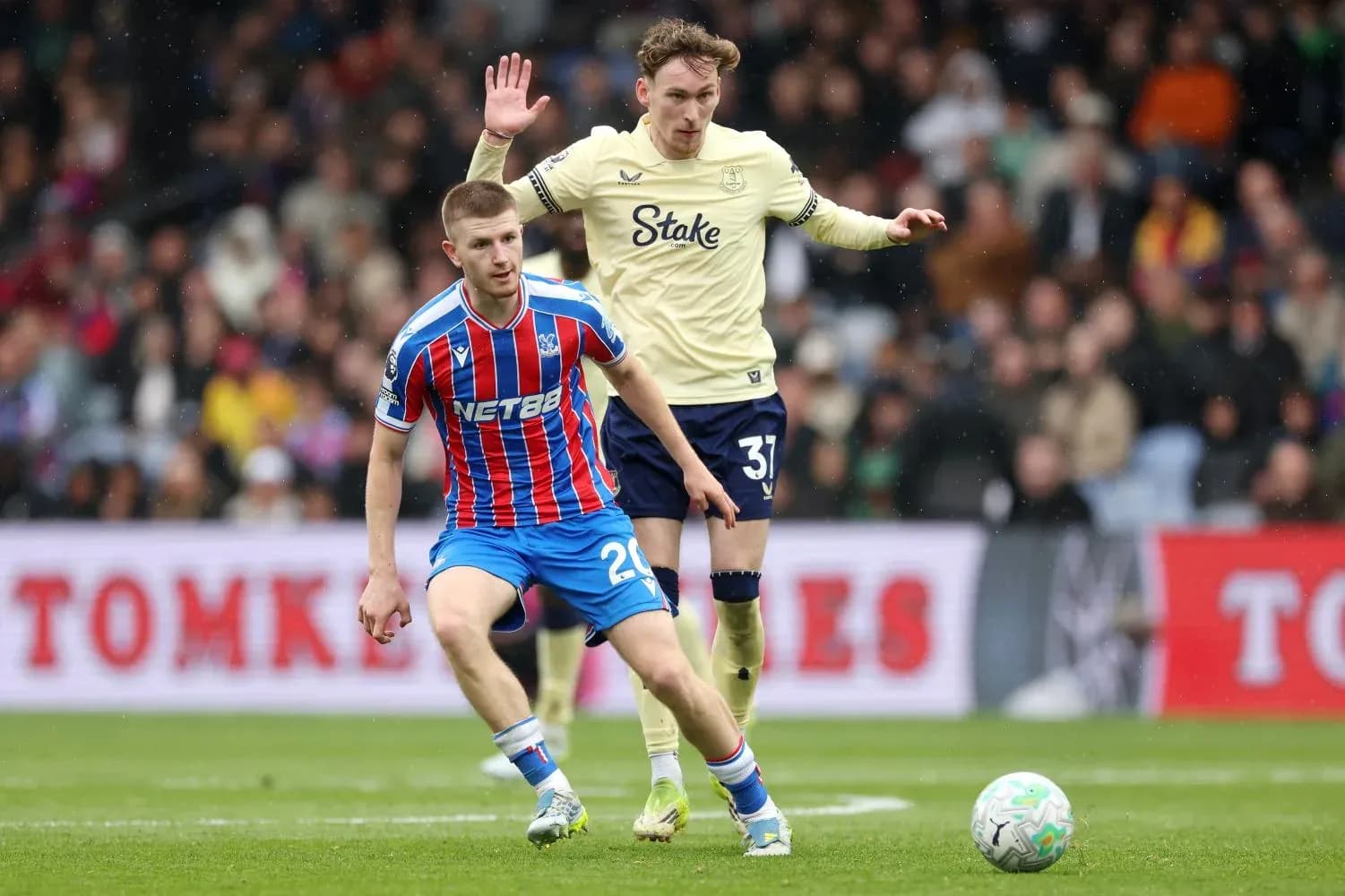
Crystal Palace vs Everton: Tactical Stalemate in Premier League Clash
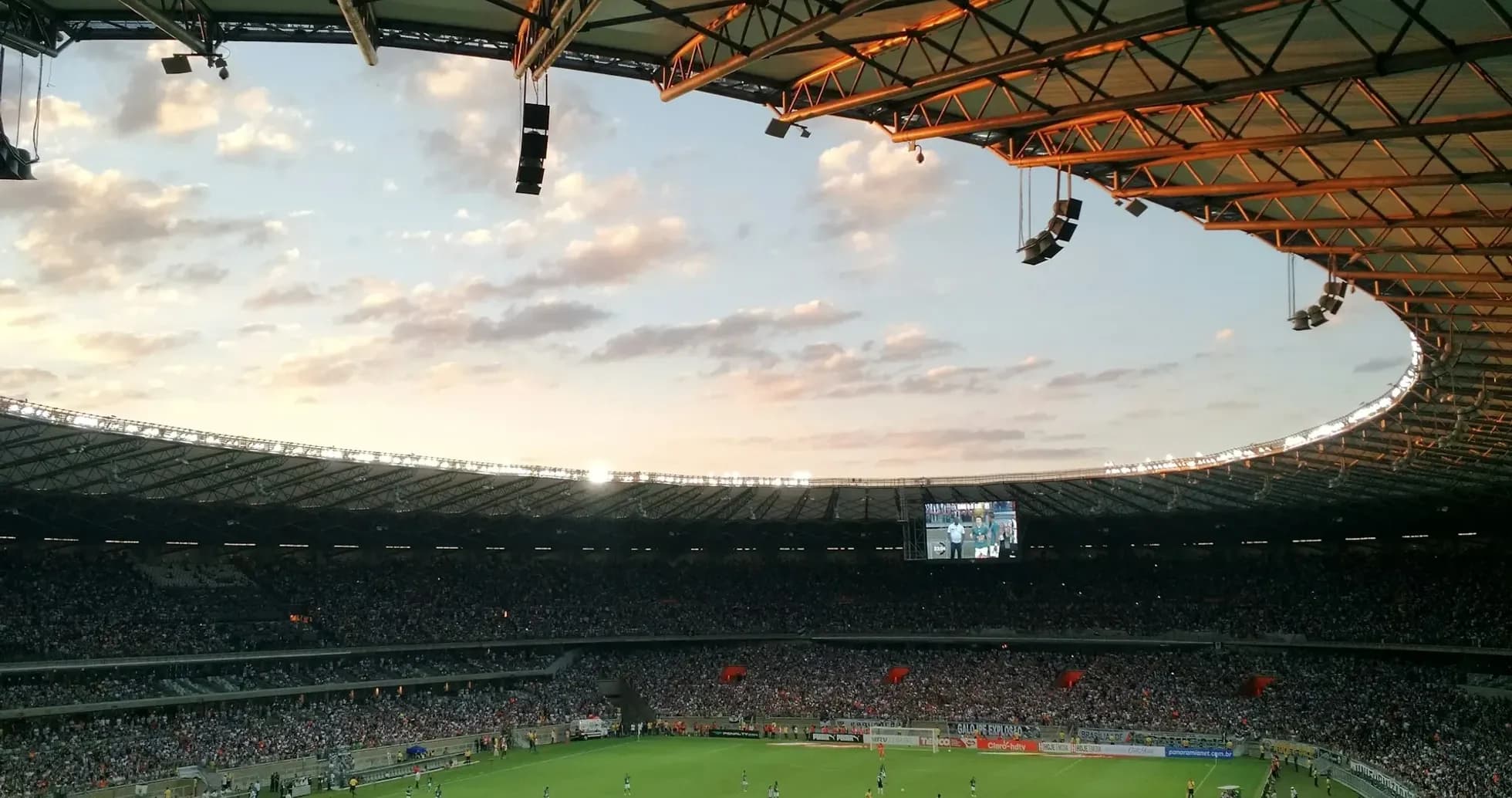
Selhurst Park felt like a mirror held up to two imperfect but compelling projects. In the late-season light of a Premier League Round 36 clash, Crystal Palace and Everton played out a 2–2 draw that said as much about their evolving identities as it did about the points shared. Following this result, Palace sit 15th on 44 points with a goal difference of -6, while Everton, 10th on 49 points with a goal difference of 0, remain the more balanced outfit over the campaign. Yet over these 90 minutes, the gap between them narrowed into a tactical stalemate rich in subplots.
Palace arrived with the clear imprint of Oliver Glasner: a 3-4-2-1 that has become their default, used 31 times this season. The back three of J. Canvot, M. Lacroix and C. Richards formed the structural spine, with D. Henderson behind them and the wing-backs D. Munoz and T. Mitchell tasked with stretching the pitch. Ahead of the double pivot A. Wharton and D. Kamada, the fluid pairing of I. Sarr and B. Johnson hovered behind J. S. Larsen, looking to exploit half-spaces rather than hold fixed positions.
This structure fits Palace’s season-long profile. Heading into this game they had played 35 league matches, scoring 38 goals overall and conceding 44. At home they averaged 1.0 goals for and 1.2 against, a narrow margin that forces them into fine‑margin football at Selhurst Park. Eleven wins, eleven draws and thirteen defeats overall underline their streaky nature; the biggest winning streak is just two games, mirrored by a losing run of three. Clean sheets at home (7) show they can lock games down, but having failed to score 7 times at Selhurst, they often live on the edge of stalemate.
Everton, by contrast, arrived as a more conventional but equally hard-edged side. Their season has been built on a 4-2-3-1, used 21 times, and that shape was reflected in the personnel even if no formation was explicitly listed: J. Pickford in goal; a back four of J. O’Brien, J. Tarkowski, M. Keane and V. Mykolenko; a midfield platform with T. Iroegbunam and J. Garner; and an advanced unit of M. Rohl, K. Dewsbury-Hall and I. Ndiaye behind lone forward Beto. With 46 goals scored and 46 conceded overall across 36 games, Everton’s goal difference of 0 is the statistical embodiment of their equilibrium.
Injuries cast long tactical shadows over this fixture. Palace were without C. Doucoure, E. Guessand, E. Nketiah and B. Sosa, all listed as missing with various injuries. The absence of Doucoure in particular stripped Glasner of a natural ball-winner at the base of midfield, pushing more responsibility onto Wharton and Kamada to both build and break play. Without Nketiah as an alternative central threat, J. S. Larsen’s role as focal point became non-negotiable, with J. Mateta only available from the bench as an impact option rather than a partner.
Everton’s absentees were equally decisive. J. Branthwaite’s hamstring injury removed their most athletic central defender, forcing M. Keane into the XI alongside Tarkowski and subtly lowering the back line’s recovery pace. The loss of I. Gueye further thinned their defensive midfield options, leaving T. Iroegbunam to shoulder much of the screening work. Perhaps most creatively damaging was the absence of J. Grealish, whose 6 assists and 7.20 average rating this season had made him one of the league’s more productive playmakers. Without him, Everton leaned more heavily on K. Dewsbury-Hall and J. Garner to progress the ball and create.
Discipline was always likely to be a hidden battleground. Palace’s yellow-card distribution this season peaks between 31–45 minutes with 19.72% of their bookings, and remains high from 46–60 minutes at 18.31%, suggesting a tendency to get dragged into duels either side of half-time. Their red cards are concentrated between 46–75 minutes, a warning about emotional control when games become stretched. Everton’s pattern is even more volatile: 20.29% of their yellows come between 46–60 minutes and 21.74% between 76–90 minutes, with late-game red cards also prominent (50.00% of their reds between 76–90 minutes). That profile hints at a side that pushes the physical line as fatigue and jeopardy rise.
Within that context, individual matchups framed the story. In the “Hunter vs Shield” duel, the focus inevitably gravitates toward J. Mateta, Palace’s leading scorer with 11 league goals. Even starting on the bench, his presence loomed over Everton’s central defenders. Mateta’s 55 shots and 31 on target this season underline his volume and precision, and his penalty record (4 scored from 4, no misses) adds a ruthless edge. Up against an Everton defence that concedes 1.2 goals on their travels and 1.3 overall per match, his introduction was always likely to tilt the xG balance in Palace’s favour once the game became more open.
On the other side, Everton’s creative “engine room” ran through J. Garner. Officially listed as a defender but functionally a deep-lying playmaker, he has produced 7 assists, 52 key passes and 1665 total passes at 86% accuracy. His 115 tackles and 9 blocked shots show that his contribution without the ball is as pronounced as his work with it. Against Palace’s midfield of Wharton and Kamada, Garner became both conductor and enforcer, tasked with breaking Palace’s first line of pressure and then immediately suppressing transitions the other way.
Behind him, the red-card‑marked figure of J. O’Brien added another layer of tension. With 55 tackles, 16 successful blocks and 186 duels won, O’Brien is an aggressive front-foot defender, but his single red card this season is a reminder of the risk baked into his style. Against the direct running of Sarr and Johnson, his timing in stepping out of the line was always going to be a fine margin between decisive intervention and dangerous overcommitment.
Statistically, the draw felt like the natural equilibrium point. Palace’s home scoring rate of 1.0 goals per game met Everton’s away average of 1.2; Palace concede 1.2 at home, Everton concede 1.2 away. Both sides came in with modest clean-sheet numbers on their travels and at home respectively, and both have converted every penalty they have taken this season (Palace 7 from 7, Everton 2 from 2). The absence of any penalties missed removed one of the great variance factors from the xG equation.
Following this result, the tactical prognosis is of two teams whose underlying numbers justify their mid-table realities. Palace remain a system in evolution, capable of unsettling better-ranked opponents but hampered by thin margins in both boxes. Everton look more stable, underpinned by a balanced goals-for and goals-against profile, but still reliant on key individuals like Garner and, when fit, Grealish to turn control into incision.
The 2–2 scoreline at Selhurst Park did not redefine either season, but it did crystallise the story so far: Palace as the high-variance, structurally ambitious project still chasing consistency; Everton as the more settled, attritional unit that lives on the knife edge of narrow wins and draws. In xG terms, this was a contest that always looked destined to be decided by a single moment either way. Instead, it ended level—an honest reflection of two squads whose strengths and flaws remain almost perfectly in balance.