Egypt's Historic World Cup Victory and Its Impact
Egypt’s night of history in Dallas did not end on the pitch. It spilled into the streets of Cairo, into tents and shattered homes in Gaza, and across a region desperate for a rare moment of unfiltered joy.
Egypt hold their nerve, and their moment
At Dallas Stadium, under the weight of a first-ever World Cup knockout appearance, Egypt walked the tightrope and refused to fall.
A 1-1 draw after extra time against Australia in a tense round of 32 tie pushed the game to penalties. The pressure finally told on the Socceroos. Harry Souttar missed. Lucas Herrington missed. Hossam Abdelmaguid did not.
Abdelmaguid stepped up and rolled in the decisive spot-kick, sealing a 4-2 shootout victory and launching Egypt into the last 16, where Argentina or Cape Verde await. The roar that followed was not just about progression. It was about arrival. Egypt had just claimed their first-ever World Cup knockout win.
The game itself had started with a jolt of belief. Emam Ashour rose in the 13th minute to glance home a header and give Egypt a precious early lead. Control, though, was always fragile. Ten minutes into the second half, Mohamed Hany turned the ball into his own net, and suddenly the match tightened, the anxiety thickening with every duel, every clearance.
Extra time brought more nerves than chances. Both sides looked terrified of being the one to blink first. Penalties became inevitable. Egypt embraced them.
A victory carried beyond borders
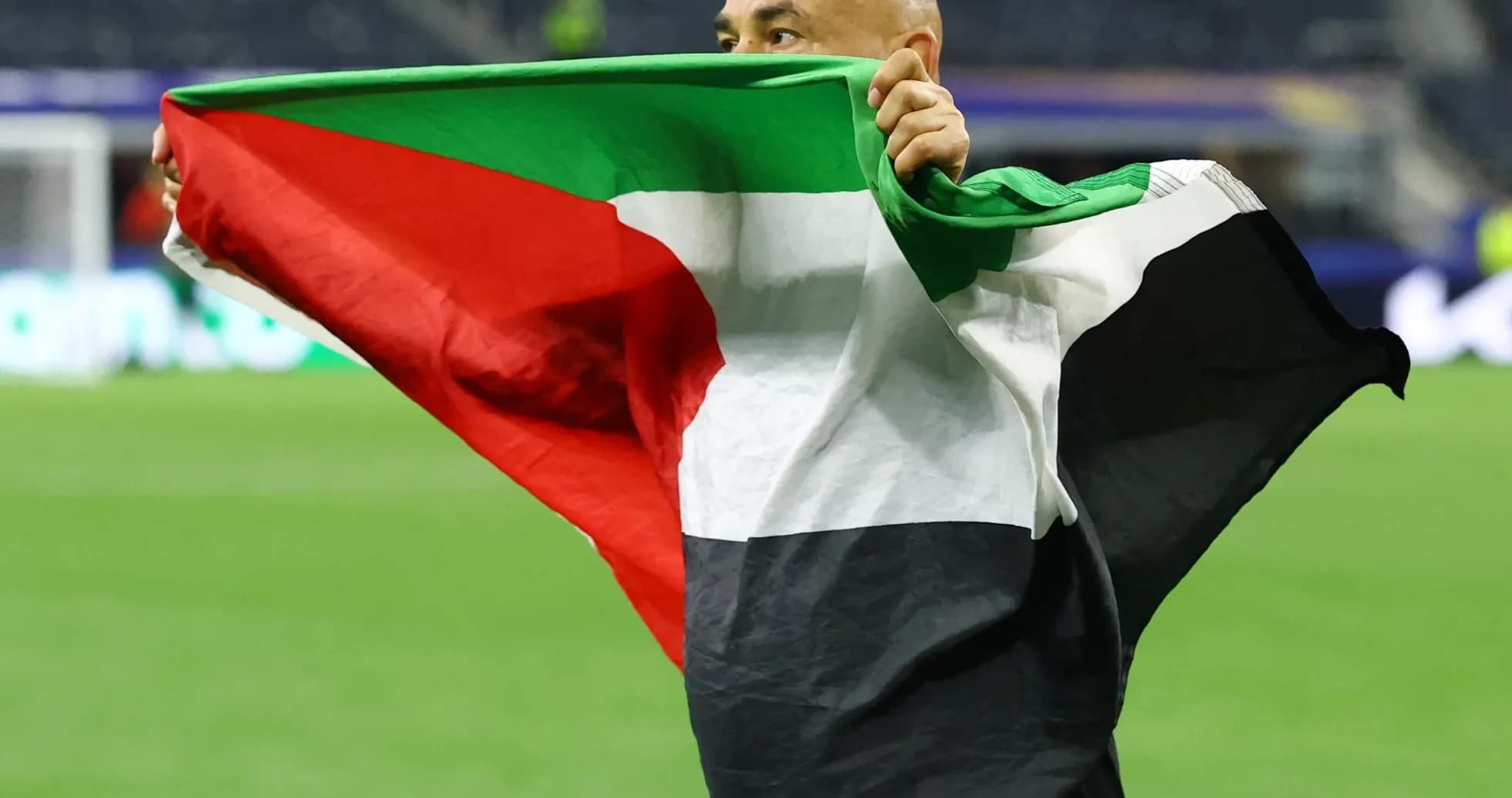
When the final kick hit the net, Hossam Hassan did not reach first for tactics boards or television cameras. He reached for flags.
The Egypt coach walked back onto the pitch carrying both the Egyptian and Palestinian flags, a deliberate, unmistakable image. His players dropped to the turf in prostration, a collective gesture of gratitude and release after a landmark night.
Speaking afterward, Hassan dedicated the win beyond his own dressing room.
“May God grant them [the Palestinians] victory, may God have mercy on their martyrs,” he told reporters. “I’m saying to them: I’m dedicating this victory to the Egyptian people and Palestinian people, those kind and honourable people.”
The message travelled quickly. In Gaza, where football usually competes with the sound of drones and explosions, thousands gathered to watch. Social media filled with scenes that felt almost surreal against a backdrop of bombed-out buildings and makeshift tents.
“For the first time, I’m following the World Cup with this much excitement,” Gaza-based Tamer Nahed wrote on X. He described how “thousands of people came out of their tents and from among their destroyed homes to watch the match,” how “faces lit up with smiles, cheers filled the air, and it felt as if everyone had decided to give themselves a moment of life despite everything surrounding them.”
Footage from the besieged strip showed crowds huddled around screens amid rubble, children with Egyptian flags painted on their faces, adults clapping, shouting, clinging to a fleeting escape. Egypt’s win became their respite.
Tension off the pitch
The night had not been without friction.
Hours before kick-off, members of the Egypt squad were involved in an altercation with police at their team hotel in Dallas, an incident that quickly went viral. According to the Egypt national team, a Dallas police officer pushed team director Ibrahim Hassan and winger Trezeguet as they attempted to take a photo with a fan.
The Dallas Police Department later said the situation had been resolved at the scene. No lingering fallout, no formal escalation. Just another layer of tension on a day already heavy with meaning.
A last-16 stage set
By the time the stadium emptied, the story had grown beyond a simple knockout win. Egypt had not only survived a cagey, grinding contest and a penalty shootout; they had turned a football match into a shared celebration stretching from Dallas to Gaza.
Next comes Argentina or Cape Verde, a very different kind of test, a step into territory Egypt have never walked before at a World Cup. The tactical questions can wait.
For one night, Egypt’s players carried more than their own hopes. They carried flags, faces, and a region’s need for something to cheer. The bracket says “round of 16.” For millions watching, it already feels bigger than that.