Fenerbahçe and AS Roma Share Points in UEFA Champions League Opener
On a humid Istanbul night at Chobani Stadium Fenerbahce Sukru Saracoglu, Fenerbahçe and AS Roma opened their UEFA Champions League 2026 league stage campaigns with a 1–1 draw that felt less like an opening chapter and more like an early stress test of identity and structure.
This was a meeting of contrasting starting points. Heading into this game, Fenerbahçe arrived as one of the form sides of the competition: six matches in total, unbeaten, with four wins and two draws. They had scored 8 goals overall, split evenly with 4 at home and 4 on their travels, for a precise average of 1.3 goals per game both at home and away. Defensively, they had conceded just 3 in total, 1 at home and 2 away, translating to 0.3 at home and 0.7 away, 0.5 overall. A goal difference of +5 underpinned a side that had combined control with cutting edge.
Roma, by contrast, stepped into Istanbul with a blank European slate this season: no matches played, no goals scored or conceded, and no established rhythm in this competition. Their rank of 17 in the table before kickoff was purely nominal, a placeholder waiting for substance.
I. The Big Picture – Structures and Intent
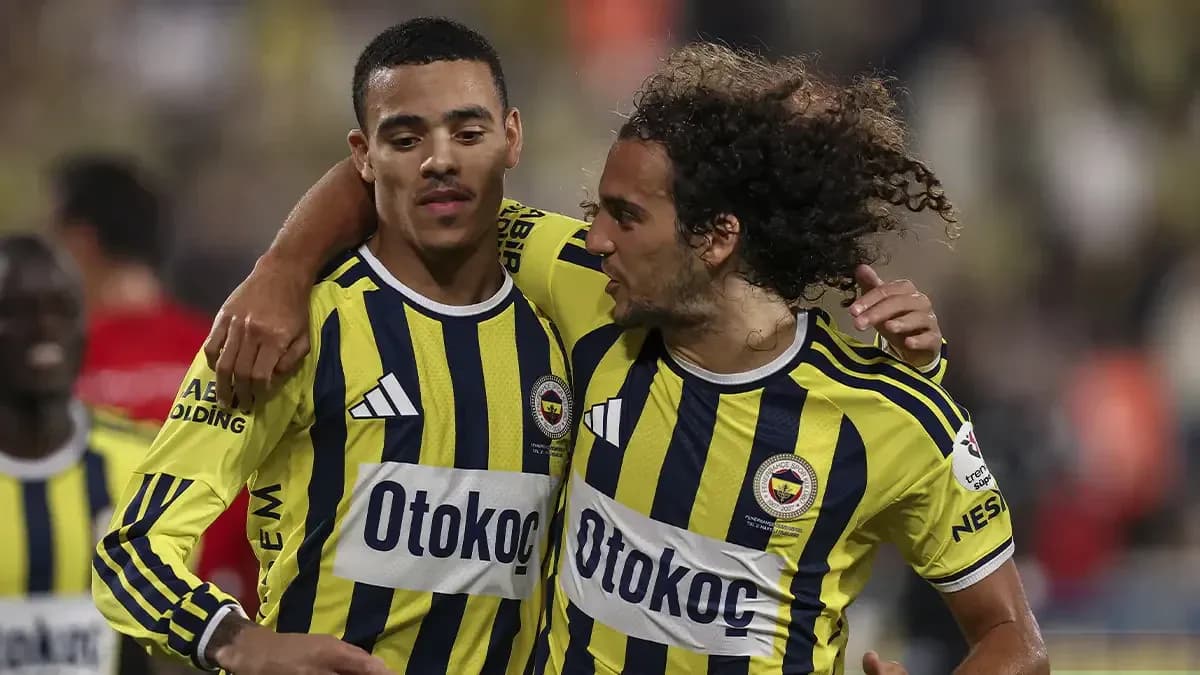
İ. Kartal set Fenerbahçe up in a 4-3-3, a notable shift from their preferred 4-2-3-1 used in all 6 previous European games this campaign. Ederson anchored the side in goal, protected by a back four of M. Müldür, M. Škriniar, N. Aké and A. Brown. In front of them, a hard-running midfield trio of N. Kanté, İ. Yüksek and B. Elmaz provided the scaffolding for an aggressive front line of M. Greenwood, V. Muriqi and K. Aktürkoğlu.
Across from them, G. Gasperini’s Roma arrived in a 3-4-2-1 that promised verticality and overloads between the lines. M. Svilar started behind a back three of G. Mancini, E. Ndicka and Hermoso. The wing lanes were patrolled by D. Rensch and Wesley, with B. Cristante and M. Koné forming a double pivot. Ahead of them, P. Dybala and M. Soulé floated behind central forward D. Malen, a configuration built to attack the spaces between Fenerbahçe’s lines rather than simply their back four.
The tactical story of the first half was Roma’s structure against Fenerbahçe’s timing. Fenerbahçe’s disciplinary profile in Europe this season had already revealed a pattern: a late-game surge in yellow cards, with 30.77% of their cautions between 31–45 minutes and another 30.77% between 76–90, followed by a further 38.46% in added time from 91–105. It is the profile of a side that raises the temperature precisely when games become stretched.
II. Tactical Voids – Absences and Their Echoes
Fenerbahçe entered this fixture missing several important names. M. Asensio, out with a muscle injury, removed a creative and goalscoring option from the right half-space. J. Oosterwolde’s Achilles tendon injury deprived them of a dynamic, left-sided defender who could have matched Roma’s wide rotations. The absence of M. Guendouzi due to a red-card suspension stripped the midfield of a press-resistant carrier and aggressive presser, forcing greater responsibility onto İ. Yüksek and B. Elmaz in connecting the thirds. Rodrigo Becao, M. Yandas, A. Diouf and A. Fall were all listed as off the roster, further narrowing Kartal’s options for defensive reshuffling.
Roma’s own voids were more targeted but no less significant. L. Pellegrini, out with a thigh injury, removed their most natural link between midfield and attack, a player whose timing of runs and final ball might have tilted the balance in the half-spaces. M. Bah’s knee injury limited depth in wide or defensive roles, leaving Gasperini with fewer ways to alter his wing structure mid-game.
III. Key Matchups – Hunter vs Shield, Engine Room vs Enforcer
In attack, Fenerbahçe’s European narrative has been defined by Talisca, the competition’s leading scorer for the club with 4 goals in 6 appearances and 23 shots in total, 13 on target. Though he did not feature in this fixture’s lineup, his presence in the broader squad context has shaped how opponents prepare for Fenerbahçe: a focal point who stretches defensive lines and opens space for others. In his absence from this particular teamsheet, the onus fell on V. Muriqi to provide the penalty-box presence and on M. Greenwood and K. Aktürkoğlu to carry the creative load.
Greenwood entered this match already with 2 goals and 1 assist in 6 European appearances, supported by 8 shots (5 on target) and 180 completed passes with 6 key passes. He is less a pure poacher and more a hybrid forward, capable of dropping off to link play. That dovetailed with Aktürkoğlu’s profile: 2 assists in 5 appearances, 121 passes with 12 key passes and 11 tackles, a winger who works both ways and can function as a playmaker from wide areas.
The Hunter vs Shield duel thus crystallised on Fenerbahçe’s right side and Roma’s left. Greenwood and Aktürkoğlu probing at E. Ndicka and Hermoso, with Wesley tracking back. Roma’s back three, untested statistically in this European season before kickoff, were asked to withstand a side averaging 1.3 goals per game overall and yet to fail to score in any of their 6 matches in total.
In midfield, the Engine Room battle pitted N. Kanté and İ. Yüksek against B. Cristante and M. Koné. Kanté’s presence allowed Fenerbahçe to be brave with their full-backs, especially M. Müldür, stepping high to pin Roma’s wing-backs. Cristante, in turn, was tasked with screening central spaces and tracking late runs from Elmaz, while Koné needed to carry Roma upfield under pressure.
Further ahead, P. Dybala’s roaming from the right half-space into central pockets forced constant handovers between Aké, Kanté and İ. Yüksek. If Roma were to break Fenerbahçe’s impressive defensive average of 0.5 goals conceded overall, it was always likely to be through Dybala’s ability to manipulate shape rather than pure aerial dominance against Škriniar and Aké.
IV. Statistical Prognosis – Balance of Risk and Control
From a numbers perspective, Fenerbahçe entered the night as the more stable proposition. They had kept 3 clean sheets overall, 2 at home, and had never failed to score either at home or on their travels. Their penalty record in Europe this season was flawless: 2 penalties taken, 2 scored, 0 missed, a small but telling marker of composure under pressure.
Roma, with no prior Champions League data this season, were an unknown quantity statistically but a known tactical entity under Gasperini: aggressive in pressing triggers, committed to overloads, and willing to leave their back three exposed if it meant creating a numerical advantage between the lines.
The 1–1 full-time scoreline reflected the equilibrium between Fenerbahçe’s structured aggression and Roma’s vertical daring. Fenerbahçe’s late-game card profile suggested they would push hard in the closing stages, and the match followed that emotional arc even if the data for this specific fixture is not detailed here. Roma, for their part, showed enough control in their 3-4-2-1 to suggest they can grow into this league stage once their injured creators return.
Following this result, both sides leave Istanbul with a point and a clearer sense of who they are. Fenerbahçe remain a side whose numbers—1.3 goals scored per game overall, 0.5 conceded, no defeats—mark them as dark horses. Roma, starting from statistical zero, have already shown they can impose their structure in one of Europe’s most hostile venues. The tactical sequel, when these two meet again, promises to be shaped by the same key battlegrounds: Greenwood and Aktürkoğlu against Roma’s left, Dybala drifting into Fenerbahçe’s blind spots, and a midfield war where Kanté and Cristante will once more define the rhythm of the night.