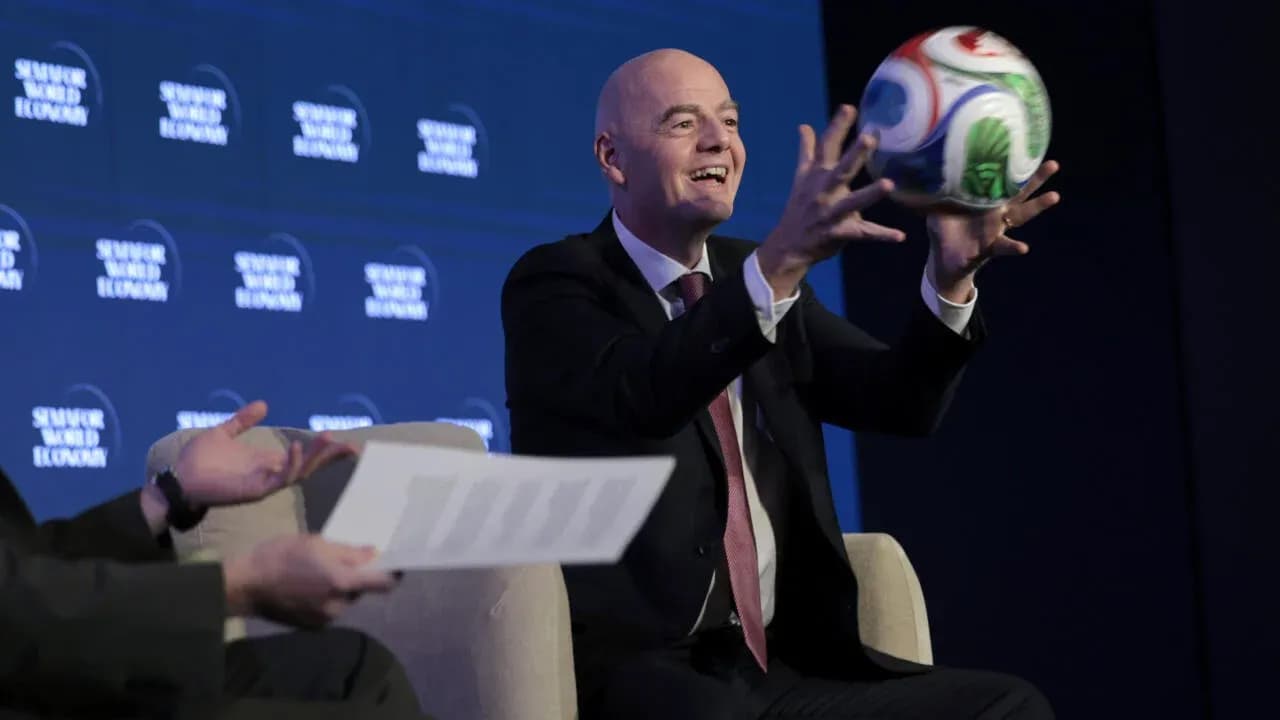
FIFA Congress Faces Geopolitical Turbulence Ahead of World Cup
The World Cup is coming, but FIFA’s annual Congress in Vancouver will spend as much time wrestling with geopolitics as with football.
Around 1,600 delegates from more than 200 member associations are gathering with a loaded agenda: Iran’s World Cup status, Russia’s ongoing exile, and a tournament so expensive that some qualified teams say they cannot afford to play in it.
And one country is already casting a long shadow over the meeting.
Iran storm out of Canada
The Iranian football federation’s delegation never even made it to Vancouver.
After landing in Toronto earlier in the week, officials from the FFIRI abruptly turned around and flew home, abandoning their onward journey. Iranian media reported that federation president Mehdi Taj — a former member of Tehran’s Islamic Revolutionary Guard Corps (IRGC) — and two colleagues left after being “insulted” by Canadian immigration officers.
Canada has designated the IRGC a terrorist organization since 2024. On Wednesday, its immigration authorities underlined the consequences.
Without naming individuals, Canada’s immigration agency said in a statement that people linked to the IRGC are “inadmissible” and “have no place in our country.” Privacy laws prevent Ottawa from commenting on specific cases, but the message was unmistakable.
The fallout lands straight in FIFA’s lap. Iran’s participation at the World Cup was already under a cloud after the Middle East war erupted on February 28, triggered by a wave of attacks by the United States and Israel. Now the political storm has reached the World Cup’s host continent.
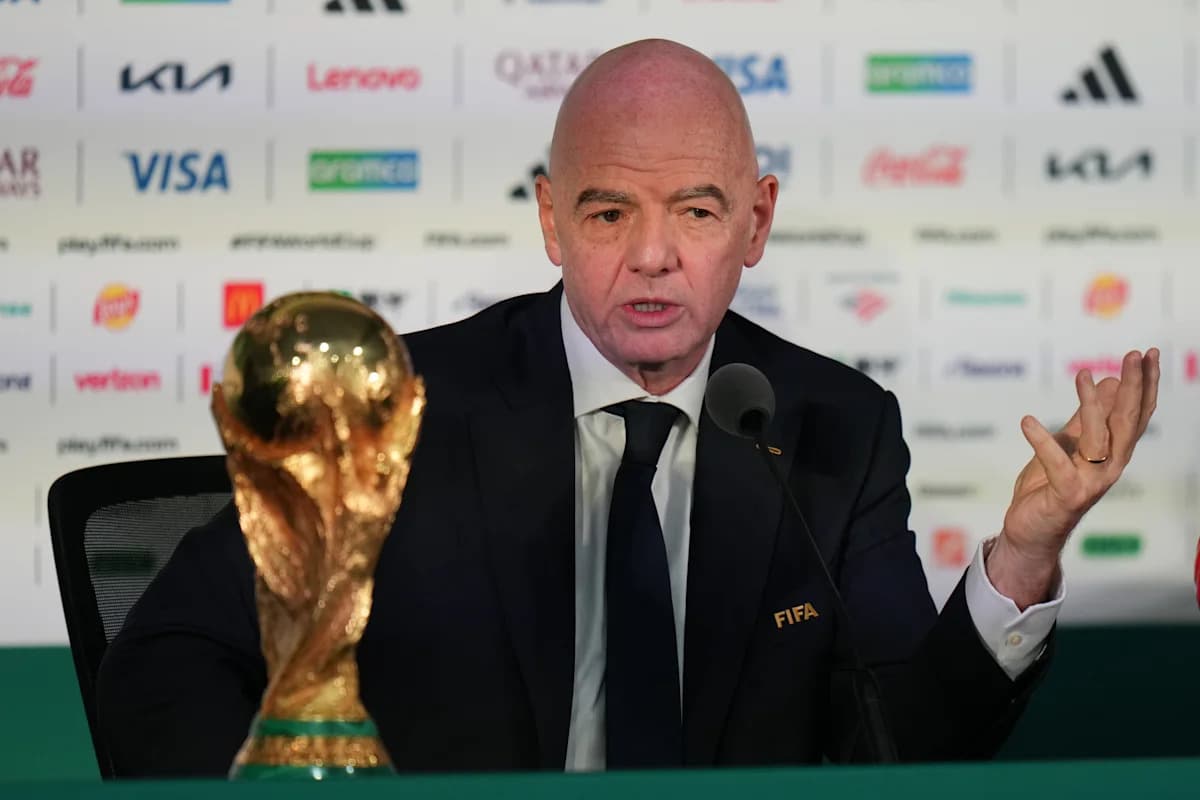
Iranian officials revealed last month that they had proposed moving their three group-stage matches from the United States to co-hosts Mexico. That idea was quickly shut down. Gianni Infantino told AFP that Iran will play “where they are supposed to be, according to the draw.”
Washington, at least publicly, has tried to draw a line between the team and the state. US Secretary of State Marco Rubio said last week that Iran’s players would be welcome to compete at the tournament. But he also warned that members of the wider delegation with IRGC ties could be barred from entering the country.
So Iran remain in the draw. Their fixtures remain in the United States. Their ability to bring their full delegation does not.
Infantino under pressure on and off the pitch
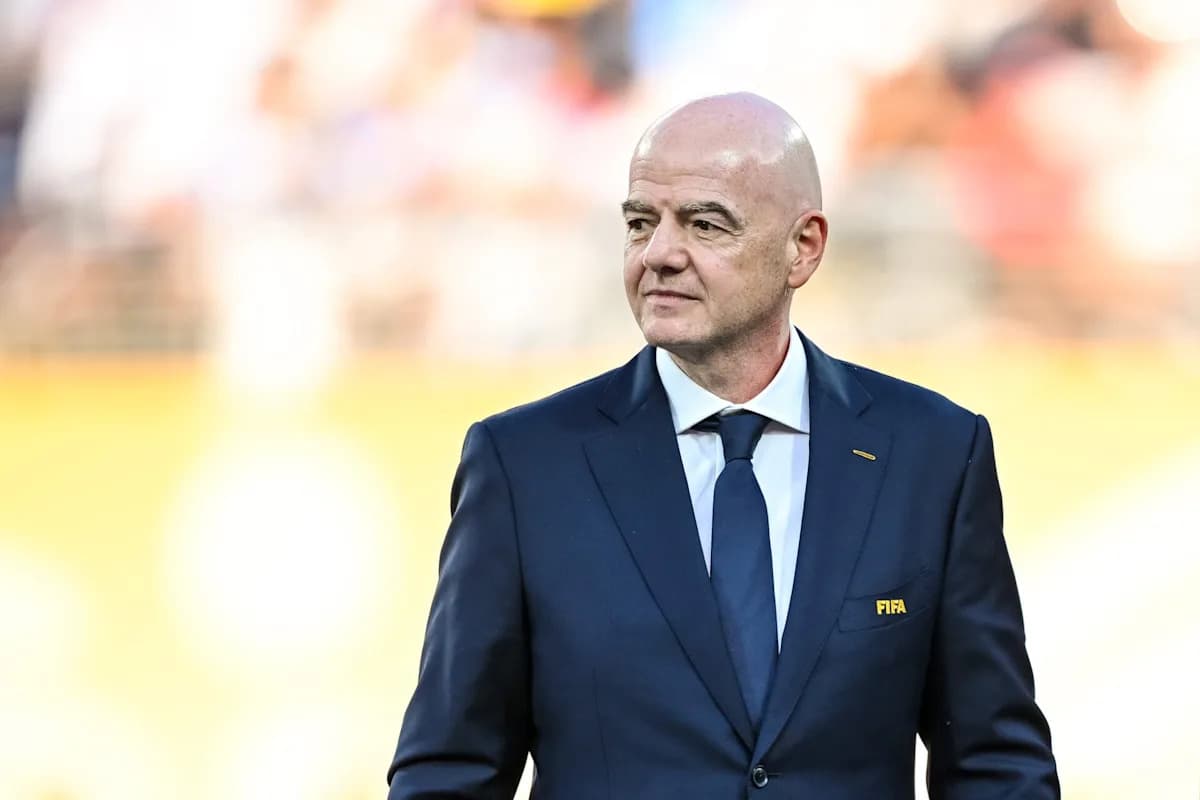
All of it swirls around Infantino as he walks into Thursday’s Congress, already under pressure on several fronts.
World Cup ticket prices have soared, drawing anger from fans and federations alike. His close friendship with US President Donald Trump continues to jar with sections of the global game, especially as the tournament heads to American soil.
On Tuesday, FIFA tried to ease one headache. It announced a jump in World Cup financial distributions to nearly $900 million, up from the $727 million first set out in December. The move followed warnings from several qualified teams that, once they accounted for long-haul travel, taxes and operational costs, they risked losing money by simply turning up.
The financial boost buys FIFA some goodwill in the dressing rooms and boardrooms. It does nothing to quieten the human rights questions.
Rights groups want Infantino to use his address to delegates to spell out how fans, journalists and local communities will be protected from the Trump administration’s harsh immigration policies. Amnesty International’s Steve Cockburn accused the FIFA president of failing so far to explain how visitors will be shielded from “arbitrary detention, mass deportations and crackdowns on free expression.”
“This FIFA Congress should be the moment he does so,” Cockburn said, demanding more than “empty platitudes.”
Infantino’s own choices have added to the backlash. During last December’s World Cup draw in Washington, he awarded Trump the FIFA Peace Prize, a move that stunned many in the game. Now there are open calls for that award to be scrapped.
“We want to see (the prize) abolished,” Norwegian FA president Lise Klaveness told reporters this week. “We don’t think it’s part of FIFA’s mandate to give such a prize.”
The question hanging over Congress is whether anyone inside the room will force that debate, or whether it will be quietly parked while the politics rage elsewhere.
Russia’s exile back on the table
Another unresolved fault line runs through Russia’s continued exclusion from international football.
The ban, imposed after the 2022 invasion of Ukraine, has kept Russian national and club teams out of FIFA and UEFA competitions. It has also become a symbol of how far football is willing to go in responding to war — and how far it is prepared to compromise to bring a major power back into the fold.
Infantino has already signalled his stance. Speaking to Sky News in Britain earlier this year, he backed the idea of readmitting Russia.
“We have to (look at readmitting Russia). Definitely,” he said, arguing that the ban “has not achieved anything, it has just created more frustration and hatred.”
Those words will echo in Vancouver if the issue reaches the floor. Some federations see the ban as a necessary line in the sand. Others, especially in regions with close ties to Moscow, are more inclined to argue for a way back.
The Congress may not take a formal decision, but any move to reopen the door to Russia would reshape the political map of the game once again.
A Congress on a fault line
FIFA bills its Congress as the sport’s parliament. This year, it looks more like a summit on how far football can pretend to sit above politics while its flagship tournament sits in the crosshairs of global power struggles.
Iran’s absent delegation, Canada’s hard line on the IRGC, the United States’ mixed signals, the spiralling costs of a supersized World Cup, human rights warnings over Trump-era immigration, and the looming question of Russia’s return — all of it converges in one room.
Infantino wanted this World Cup to showcase football’s global reach. The Congress in Vancouver will show just how high the political price of that ambition has become.