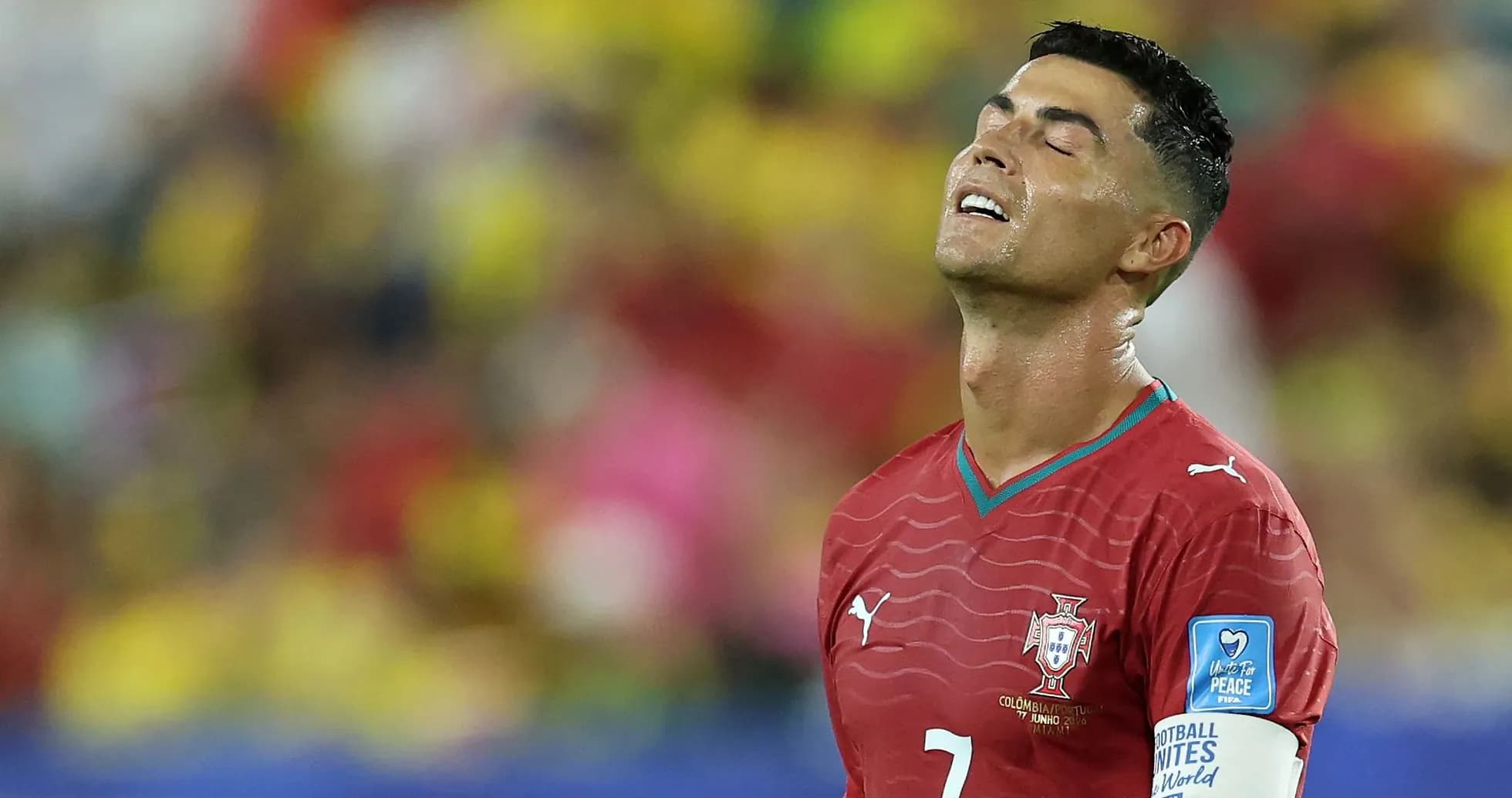
Diego Forlan's Tactical Insight on Cristiano Ronaldo's Role for Portugal
Diego Forlan has never been afraid of a hard truth in the penalty area. Now he’s delivered one for his old Manchester United team-mate – and for Portugal.
Speaking on ESPN’s La Casa del Kun, the 2010 World Cup Golden Ball winner broke down Cristiano Ronaldo’s role with the kind of blunt clarity only a striker can offer. The gist was simple: Ronaldo still smells goals, but his static presence as a No.9 is shrinking Portugal’s attack instead of stretching it.
"I'm speaking as a striker, the problem is that Cristiano is in the center, he is who he is, he is there as a No.9, and he stays there to take advantage of the goal because he no longer goes out to look for the ball, but he ends up conditioning Portugal," Forlan said. It was not a character assassination. It was a tactical diagnosis.
Forlan described a familiar scenario for any forward who has lived in the box. The veteran star plants himself between the centre-backs, waiting for the decisive cross or cut-back. The defenders are happy with that. They hold their line, stay touch-tight, and the game narrows.
"It's the typical situation where we used to say, 'I'm staying here because I'm close to the goal to score,' but you don't understand that you end up hurting your team because both center backs stay there, you don't move," he explained. "The center backs stay put, one becomes a reference point and the other is left out. You have no one who can get to you because you start closing down that space."
That space is exactly where Portugal’s other artists want to live. Bruno Fernandes between the lines. Bernardo Silva drifting into pockets. Rafael Leao attacking from wide with that long, loping stride. On paper, it’s an attacking unit that should terrify anyone in the knockout rounds. On the pitch, Forlan sees a funnel.
With Ronaldo locked in the middle, the pitch narrows, the angles disappear, and Portugal’s game becomes predictable. Everything goes into the same corridor, into the same reference point. Elite defenders can read that in their sleep.
Forlan’s solution is not to drop Ronaldo, not to strip him of status, but to nudge his game a few yards wider – literally and figuratively.
"If he moved a little to the wings, the others could get in and he could be involved," he said. "That's where Portugal falters because they don't explode because everything ends up going to one side, which is actually a funnel. I wouldn't say it's a problem, it's about making him understand. Telling him: 'Move, get out of there so you can do something'."
The message is pointed but respectful: Ronaldo can still be the finisher, still be the reference, but he has to move defenders first. Drag a centre-back out. Open a lane for a late run from midfield. Create the chaos that his team-mates can exploit.
As Portugal head into the knockout rounds under Roberto Martinez, that question hangs over the entire campaign. The captain has already shown he can still find the net. The instinct in the box has not deserted him. The concern, as Forlan outlined, is what happens in the long stretches between those moments – especially against top-level opposition that thrives on structure and thrives even more on predictability.
Portugal have done their job so far, booking a place in the round of 32 and a tie with Croatia. The real examination starts now. Martinez must manage not just Ronaldo’s minutes, but his map of the pitch. Does he remain a fixed landmark for defenders, or does he become the moving target that unlocks the full power of Fernandes, Bernardo, and Leao?
Forlan’s challenge to his former colleague is clear: the goals will still be there. The question is whether Ronaldo is willing, at this late stage of a glittering career, to trade a little comfort in the centre for the movement his team so desperately needs.