Formula 1: Sao Paulo Sets Stage for Constructors’ Championship
The drivers’ title is done, the constructors’ crown could be wrapped up by Sunday, and yet Formula 1 refuses to ease off. It never does.
Sao Paulo arrives not as an epilogue, but as a prologue – the first page of the next fight.
Mercedes: one title banked, another in sight
Kimi Antonelli comes to Brazil as the newly crowned world champion, already talking about 2027 rather than a lap of honour. The remaining races, he says, are a live test bed for his title defence. Across the garage, George Russell is sifting through the wreckage of a season that slipped away, trying to understand how a year that began with such authority ended with him in the role of supporting act.
For Mercedes, the job this weekend is brutally simple: outscore Ferrari by three points and the constructors’ championship is theirs. Do that, and they complete the story of a return to the level that defined the 2010s, when the silver cars set the standard and everyone else chased shadows.
They started 2026 in that old, familiar mode. Seven wins from the first eight races. A gulf in performance. Talk of another procession.
Then the season broke in half.
Ferrari, McLaren and Red Bull have all taken turns at the front since. Over the last 12 races, Mercedes have six wins, Red Bull three, McLaren two and Ferrari one. The dominance has gone. In its place: a four-way knife fight.
Early signs in Sao Paulo suggest that will continue. Antonelli looked sharp in practice, as did Lando Norris in an upgraded McLaren. Behind the headline times, though, the real drama is simmering in red.
Ferrari’s civil war
Ferrari arrived in Brazil carrying more baggage than their freight crates.
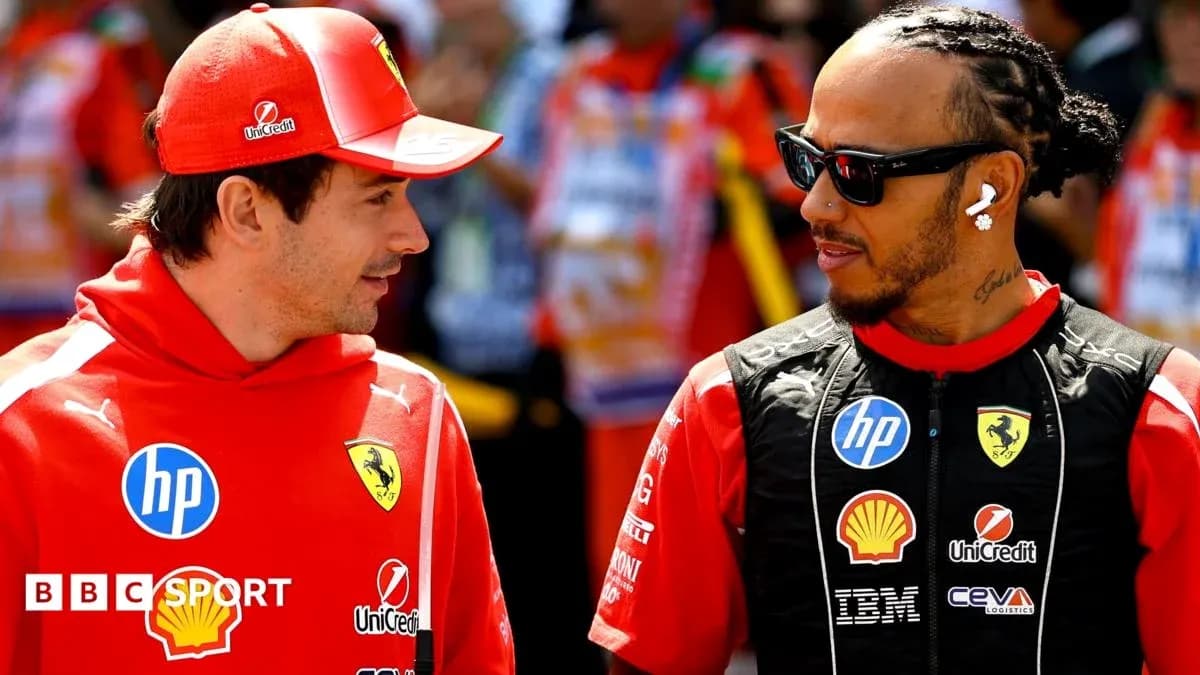
Lewis Hamilton and Charles Leclerc managed to turn a likely one-two in Mexico into a self-inflicted disaster, colliding on the opening lap and handing victory to Max Verstappen. The fallout was immediate and raw. Hamilton spoke of “big problems” and the need for “serious talks”.
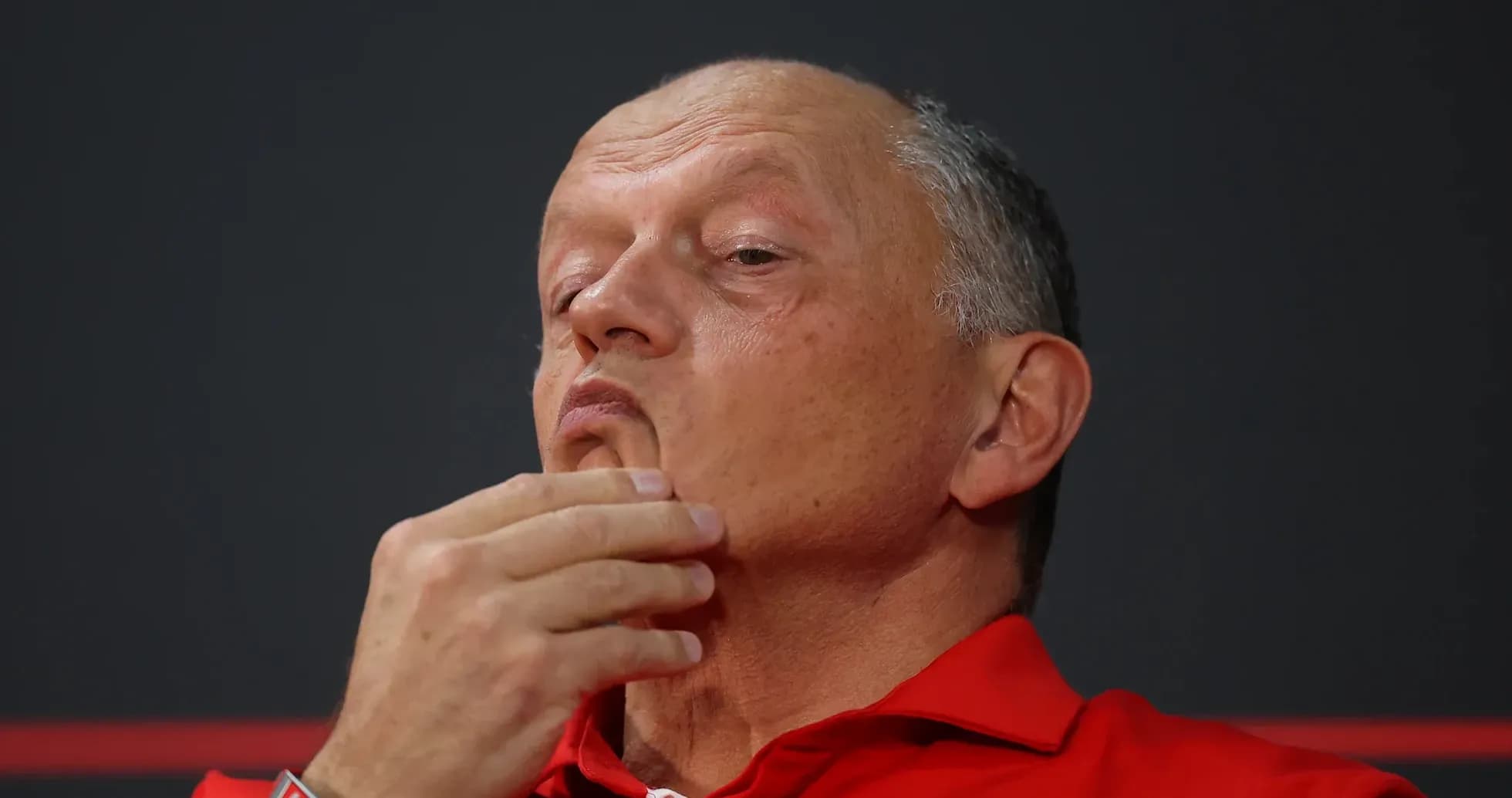
Those talks came on Thursday night in Brazil, after Leclerc and team principal Frederic Vasseur flew back to Europe between races. By Friday, Vasseur was trying to steady the ship.
“It went well. It was good to discuss. It was good to clarify our positions and now we turn the page,” he said. The message, though, was anything but soft. Respect each other. Respect Ferrari. Respect the hundreds of people at Maranello and at the track. The guidelines, he insisted, have not changed: the team comes first.
Ferrari know the stakes. With a strong chassis already in hand, if they can lift their power unit to Mercedes and Red Bull levels, they have a realistic shot at the title next year. That future does not include their drivers tripping over each other at Turn One.
Hamilton, for his part, has not been shy.
He has highlighted the way Leclerc races him compared with others, pointing to Singapore, where Leclerc yielded to Verstappen into the first corner, and contrasting it with the aggression shown against him in Mexico. Hamilton believes there is a pattern stretching back through Leclerc’s relationships with Sebastian Vettel and Carlos Sainz.
“We could have easily had a one-two and so we definitely have to work towards making sure that doesn't happen again,” he said.
Hamilton is not about to soften his edges, either.
“Of course, there's some times you say things and maybe you might regret it afterwards, but I don't,” he said. “I've never apologised for being authentic and real. And I'm not going to be silenced. I have not been asked to not say anything. And that's just the way it is. I wear my heart on my sleeve and I say how I feel in the moment.”
That honesty cuts both ways. It makes him a lightning rod inside Ferrari, but also the figure Vasseur may need if the team is to break a title drought that has lasted since 2008.
Hamilton knows exactly what he wants.
“It's not so easy having someone like me come into a team because I'm very outspoken and I push and push and push, push for so many changes and I'm going to be pushing for more,” he said. “As long as I'm here, that's how it's going to be. I'm here to win.”
He is already deep in the detail, working with the head of aerodynamics to “hold on to the goodness” of this year’s car and iron out the weaknesses. The engine department, he says, are “doing their thing” and he hopes they can “pull through”.
If Ferrari can harness that energy rather than be torn apart by it, they will be dangerous. If not, Sao Paulo may be remembered as the moment the tension became unmanageable.
Red Bull’s resurgence and a familiar name on the charge
Red Bull’s story is cleaner. No civil war, just a late-season surge that has dragged them back into the conversation.
Verstappen, the early-season bystander, has turned into the hunter again. He picked up the pieces of Ferrari’s chaos in Mexico, his win there making it three victories in the last four races. That run has carried him to second in the drivers’ standings, something that looked fanciful when Red Bull were nearly a second off the pace in the opening third of the year.
“It's a big surprise to be second in the championship, but we take it,” Verstappen said. The car, he admitted, “was not where we wanted it to be” and the team still had to learn “quite a bit” about the new power units. The turnaround has been as much about persistence as performance.
He refused to settle for sixths and sevenths when Red Bull were mired in the midfield. Sometimes that was the limit of the car. Once they found a better operating window, the old rhythm returned: qualify near the front, control the race, strip points away from everyone else.
“It shows that the team never gave up and they were really pushing to find these improvements and understand the difficulties,” Verstappen said. “I'm just happy that within a season we had such a big turnaround.”
The fight for second is now tight. Verstappen leads Hamilton by two points. Hamilton is nine clear of Russell. Russell has five in hand over Leclerc. None of them grew up dreaming of finishing runner-up. All of them would quietly accept fourth if it meant avoiding an extra long-haul trip to Shanghai for the FIA prize-giving, which is mandatory for the top three.
But status matters. Momentum matters. For teams, the constructors’ standings mean prize money. Just 17 points separate Red Bull and McLaren in the scrap for third, with roughly $10m on the line.
McLaren: flashes of speed, flaws laid bare
McLaren’s season has echoed Red Bull’s arc in miniature. They started a long way off Mercedes, then slashed the gap. In mid-summer, when Norris won in Hungary and the Netherlands, they briefly looked like the fastest team in the field. That peak didn’t last.
They have slipped back, but not out of contention. Upgrades arrive this weekend, and with them a flicker of optimism.
“I certainly feel like the last few weekends, the pace has not been too bad on Sundays,” Norris said. A few “little, little” improvements, he believes, could have turned decent results into strong ones. The hope is that the new parts in Brazil nudge them into a better position on Saturdays, giving him a real shot on race day.
He is realistic. No bold promises of instant wins. The car still has clear weaknesses – driveability and the difficulty of extracting its peak remain major issues – but the underlying speed is there.
“If it just puts us a little bit more forward in qualifying, we just have a little bit better chance in the race,” Norris said. “And of course, I would like to be back on the podium as soon as possible.”
McLaren always knew there would be a price for their 2025 title push. They openly compromised their 2026 prospects to get that championship over the line. Only once this season began did they fully understand the depth of the trade-off: gear ratios that are too short, drag that is too high, a wheelbase shorter than ideal.
All fixable. All on the list for next year. And unlike the start of the current engine era, they now understand their power unit far better. The learning curve will not be as brutal.
A calendar in the shadow of conflict
Brazil is not the end. On paper, three more races follow: Las Vegas, Qatar and Abu Dhabi. In reality, the schedule sits under a cloud.
The war in the Middle East has cast doubt over the two Gulf rounds. MotoGP, owned by the same US group that runs F1, is in Qatar this weekend, operating almost as a test case for Formula 1’s visit later this month. Personnel there have received detailed, and unsettling, instructions on what to do in the event of a missile strike.
A decision cannot be kicked down the road much longer. F1 has been in constant contact with governments and security experts, seeking assurances that the events can go ahead safely. They have prepared, planned, and modelled scenarios. They cannot control what happens beyond the circuit gates.
So the sport does what it always does. It keeps moving, with optimism born of preparation and a measure of hope that the final laps of this season can be run where and how they were intended.
In Sao Paulo, though, there is no room for abstraction. A constructors’ title can be sealed. A Ferrari feud can either cool or ignite. Verstappen can tighten his grip on second. McLaren can prove their upgrades are more than theory.
The championship is decided. The fight is anything but.