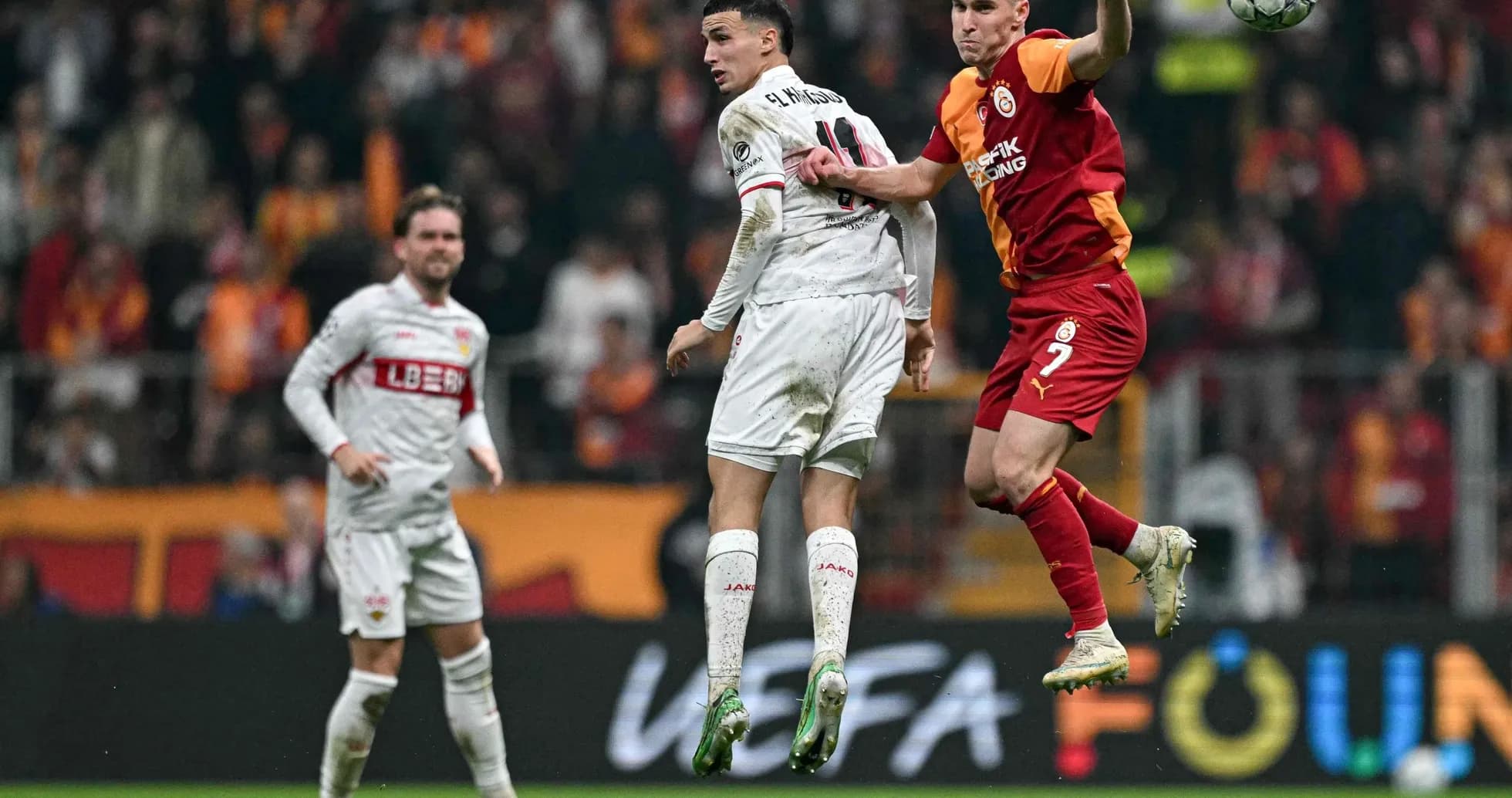
Galatasaray Triumphs Over Stuttgart in Champions League Clash
Rams Park under the Champions League lights has always felt more like a cauldron than a stadium, and this league-stage clash between Galatasaray and VfB Stuttgart was no exception. By the time Chris Kavanagh blew for full time, the scoreboard read 2–0 to the hosts, a result that subtly reshapes the league-stage picture.
Heading into this game, Galatasaray were 18th in the overall table with 6 points from 4 matches, their goal difference at -1 after scoring 8 and conceding 9. Stuttgart arrived in Istanbul sitting 14th with 7 points from 4, and a far healthier goal difference of 3, built on 7 goals scored and only 4 conceded. On paper, Stuttgart were the more balanced outfit; on the pitch, Okan Buruk’s side imposed their own version of chaos and control.
Galatasaray’s season-long numbers in the Champions League painted them as a front-foot, high-variance team. Overall they had scored 8 goals in 4 matches, an average of 2.0 per game, but conceded 9, an overall average of 2.3. At home, that volatility sharpened: 3 goals for and 4 against across 2 matches, equating to 1.5 scored and 2.0 conceded on their own turf. Stuttgart were the antithesis: 7 goals for and 4 against overall, translating to 1.8 scored and just 1.0 conceded per match, with identical defensive averages at home and away. If Galatasaray thrive in open firefights, Stuttgart are built for controlled engagements.
That contrast was immediately visible in the lineups. Galatasaray set up in their now-familiar 4-2-3-1, the only formation they had used in this European campaign. Uğurcan Çakır anchored the side in goal, with a back four of Roland Sallai, Davinson Sánchez, Abdülkerim Bardakcı and Ismaïla Jakobs. In front of them, Lucas Torreira and Mario Lemina formed the double pivot, the platform for a fluid band of three: Yunus Akgün wide, Aleksey Batrakov in the central creative lane, and Baran Yılmaz drifting between lines. Victor Osimhen led the line as the lone striker, the spear of Buruk’s aggressive, transition-hungry approach.
Stuttgart countered with a 3-4-1-2 under Sebastian Hoeneß. Fabian Bredlow started in goal, shielded by a back three of Rocco Hendriks, Julian Chabot and Maximilian Mittelstädt. The wing and central lanes were staffed by Jamie Leweling, Grischa Prömel, Atakan Karazor and Chris Führich, with Bilal El Khannouss operating as the advanced midfielder behind a front two of Deniz Undav and Ermedin Demirović. This was a clear statement: Stuttgart would try to compress the centre, overload the half-spaces, and rely on their dual-striker threat to punish any Turkish overcommitment.
Absences subtly reshaped both squads. Galatasaray were without E. Aydin, Kaan Ayhan, C. Guner, K. Karatas, A. Unyay and A. Yilmaz, all listed as off the roster. While not headline names in this Champions League run, their absence tightened Buruk’s rotation options, particularly in defensive depth and youth cover. Stuttgart’s missing list cut closer to the core of their structure: J. Diehl, L. Sauer, Josha Vagnoman and Dan-Axel Zagadou all sidelined with muscle injuries, and Angelo Stiller out with a groin injury. S. Drljaca and L. Stergiou were also off the roster. The net effect was a thinner defensive and midfield rotation for Hoeneß, forcing him to lean heavily on Karazor’s screening and the back three’s positional discipline.
From a disciplinary standpoint, the warning lights for late-game chaos were already blinking before a ball was kicked. Galatasaray’s yellow card distribution this campaign skewed heavily towards the closing stages: 44.44% of their cautions had arrived between 76–90 minutes, with additional spikes in the 61–75 window (22.22%). Stuttgart, by contrast, spread their yellows more evenly, but still saw 22.22% of their bookings in the final quarter-hour. This overlap suggested a high-tension finale was almost baked into the matchup: a home side prone to late emotional surges, an away team willing to foul to halt transitions.
Within that storm, the game’s central duel crystallised around two figures: Aleksey Batrakov and Ermedin Demirović. Both entered the night as top scorers in this Champions League season for their clubs, each with 4 goals. Batrakov, a 20-year-old playmaker, had been quietly devastating: 4 goals from 4 appearances, all as a starter, with 5 shots on target from 5 attempts and 108 completed passes at 81% accuracy. He is less a classic No.10 than a modern hybrid, equally willing to drop into the second phase or arrive late in the box.
Demirović, Stuttgart’s spearhead, had also scored 4 in 4 appearances, though with only 2 starts and 163 minutes on the pitch. His efficiency was remarkable: 5 shots, 4 on target, 4 goals. Where Batrakov orchestrates, Demirović finishes – a pure penalty-box predator who thrives on quick, vertical service from El Khannouss, Führich and Undav.
The “Hunter vs Shield” narrative, then, was double-edged. On one side, Batrakov and Osimhen testing a Stuttgart defence that, on their travels, had conceded only 2 goals in 2 away matches, an away average of 1.0 against. On the other, Demirović and Undav attacking a Galatasaray rearguard that had shipped 4 goals at home across 2 games, a home average of 2.0 conceded. Statistically, Stuttgart’s defensive structure looked more trustworthy, but Galatasaray’s attacking output at Rams Park – 1.5 goals per home game – combined with their fervent crowd, suggested they could tilt the xG balance through sheer volume and momentum.
In midfield, the “Engine Room” duel pitted Torreira and Lemina against Karazor and Prömel. Torreira’s ability to patrol the space in front of Sánchez and Bardakcı was crucial to preventing El Khannouss from turning and threading passes into Demirović. Lemina’s surges and ball-carrying were the counterweight, designed to drag Stuttgart’s double pivot backwards and open pockets for Batrakov. Karazor, meanwhile, had to both shield his back three and step out to confront Batrakov between the lines, a taxing dual mandate that risked exposing the channels if mistimed.
Statistically, the pre-match prognosis leaned towards a narrow, high-stakes encounter rather than a goal glut. Stuttgart’s overall defensive average of 1.0 goal conceded per match, home and away, suggested they would not collapse, even in Istanbul. Galatasaray’s overall scoring average of 2.0, coupled with their willingness to play on the edge – zero failed-to-score games, but only 1 clean sheet in total – implied that the hosts would manufacture chances, but also leave doors open.
Following this result, the narrative tilts. Galatasaray’s ability to shut out a side as efficient as Stuttgart, while leaning on the creative genius of Batrakov and the vertical menace of Osimhen, hints at a team learning to marry their attacking chaos with just enough control. Stuttgart, for all their structural solidity in the numbers, discovered that in the Champions League’s most hostile arenas, defensive averages and neat goal differences can be bent out of shape by a single night under the lights.