Sporting CP Triumphs Over Shakhtar Donetsk in Tactical Clash
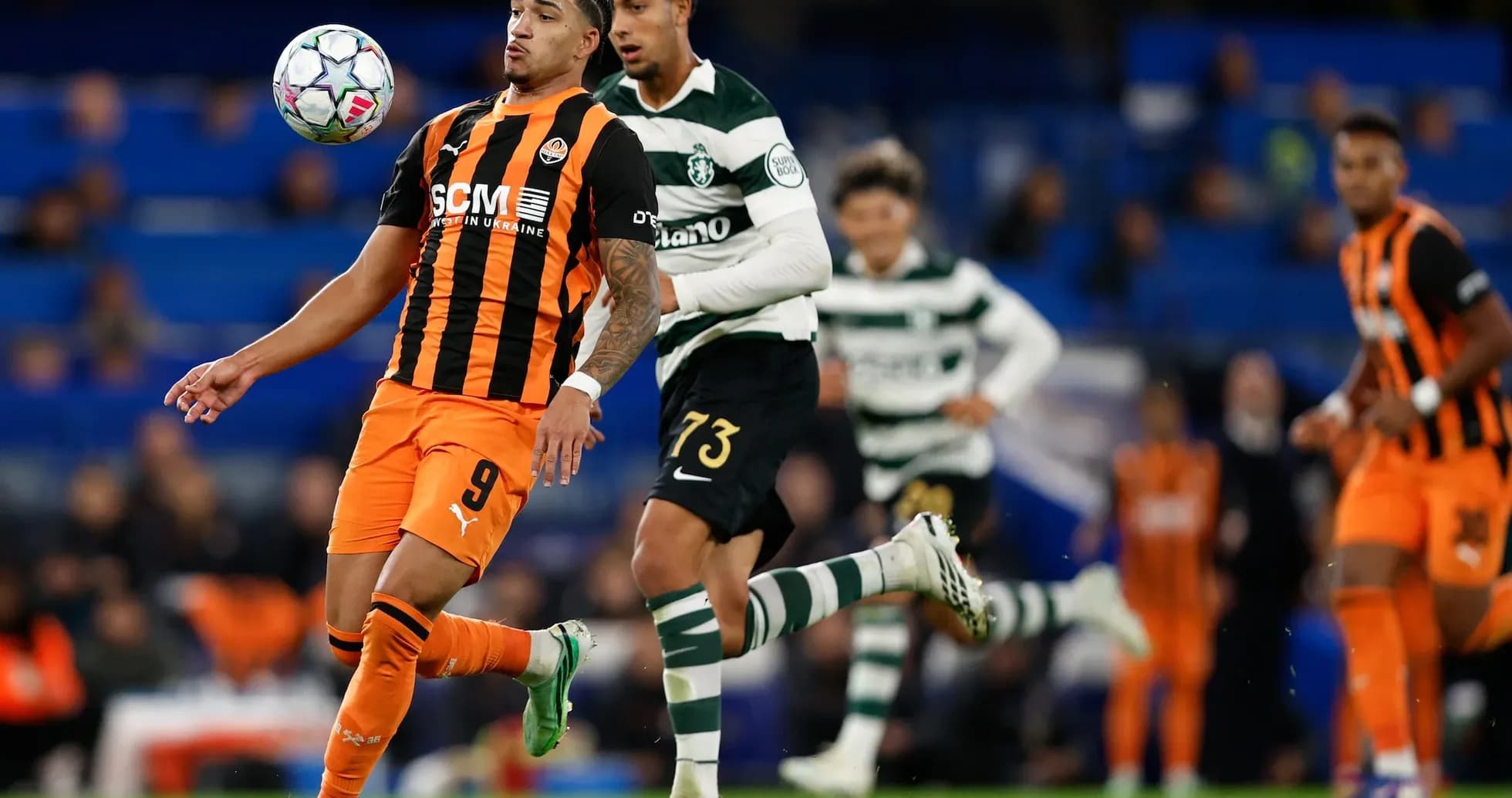
Under the lights at Stamford Bridge, a “neutral” London night framed a very modern Champions League contrast: Shakhtar Donetsk, officially the home side, still searching for a stable European identity this season, against a Sporting CP team that has quietly become one of the most efficient travellers in the competition. The scoreboard told a tight story – 0-1 to Sporting – but the deeper narrative is about how two distinct tactical blueprints collided and why the Portuguese side, already shaping up as a dark horse, imposed their will.
Shakhtar's Current Form
Heading into this game, Shakhtar sat 21st in the overall league standings with 4 points from 4 matches, their goal difference perfectly balanced at 0 (4 scored, 4 conceded). Their campaign numbers painted a team on a knife edge: overall they averaged 1.0 goals scored and 1.0 conceded per match, with a home profile of 1.5 goals for and 1.0 against across 2 fixtures. The form line – DWLL in the broader statistics, LLWD in the standings snapshot – hinted at volatility rather than momentum.
Sporting's Confidence
Sporting, by contrast, arrived in London with the swagger of a side that knows its structure. They were 10th in the overall table, on 9 points from 4 matches, with a goal difference of +4 (8 scored, 4 conceded). On their travels, they had been immaculate: 2 away wins from 2, scoring 3 and conceding 0, for an away average of 1.5 goals for and 0.0 against. The away clean-sheet record, combined with an overall scoring rate of 2.0 goals per game, made Rui Borges’s team one of the most balanced outfits in the league stage.
Tactical Divergence
The squad sheets underlined the tactical divergence. A. Turan doubled down on Shakhtar’s season-long preference for a 4-1-4-1, a shape they had already used in 3 of their 4 European fixtures. D. Riznyk anchored the side in goal behind a back four of Vinícius Tobias, V. Bondar, M. Matvienko and Pedrinho. E. Nazaryna sat as the lone pivot, tasked with screening and linking, while a band of four – Alisson Santana, O. Ocheretko, Marlon Gomes and G. Mendoza – supported central striker Kauã Elias.
Opposite them, Rui Borges shifted into a 3-4-1-2, one of the alternative systems Sporting had already sampled this season alongside their more frequent 4-3-3 and 4-2-3-1. Rui Silva started in goal, shielded by a back three of Eduardo Quaresma, Eduardo Felicíssimo and Gonçalo Inácio. The wing-backs and central midfield quartet – Geny Catamo, S. Andersen, Sergi Altimira and M. Araújo – were set up to stretch Shakhtar’s full-backs and overload Nazaryna’s zone. I. Doumbia operated between the lines, with L. Suárez and F. Ioannidis paired up front.
Absentees
If Shakhtar’s structure looked stable on paper, the list of absentees told a more fragile story. Eguinaldo (shoulder injury), Marlon (muscle injury) and Pedrinho (muscle injury) were all ruled out as “Missing Fixture” in the pre-match reports, alongside several players listed as off the roster such as V. Korniyenko, T. Puzankov, M. Shved and D. Tvardovskyi. That meant Turan had to lean heavily on younger creative profiles like Marlon Gomes and G. Mendoza to carry the attacking burden behind Kauã Elias.
Sporting’s own absences were more contained but still notable. S. Alexandropoulos was unavailable, while Z. Debast and N. Santos missed out through injury and a knee problem respectively. Yet the depth on the bench – with attacking options such as Rafael Ferreira Nel, Luis Guilherme, N. Irankunda, Flávio Gonçalves and J. Derry – ensured Rui Borges could adjust the front line without losing intensity.
Discipline and Game Rhythm
Discipline and game rhythm were always going to be key. Shakhtar’s yellow-card profile this season revealed a tendency for turbulence either side of half-time: 20.00% of their cautions came between 31-45 minutes, with a combined 60.00% arriving in the 46-75 window. That pattern suggested emotional spikes when games opened up, potentially exposing them to transitions just as Sporting’s physical and tactical control usually ramps up. Sporting’s bookings, meanwhile, clustered late in the second half, with 60.00% of their yellows in the 61-75 period, reflecting a side that often defends a lead with aggressive, calculated fouls rather than early-game rashness.
The Hunter vs Shield Duel
Within that context, the “Hunter vs Shield” duel was always going to revolve around L. Suárez. Heading into this match he had been one of the standout forwards in the competition: 4 goals in 4 appearances, all from the starting XI, with a rating of 7.56 and 15 shots, 7 of them on target. His penalty record was flawless, 2 scored from 2 taken, with no misses. He is not just a finisher but a volume threat, backed by 64 completed passes and 5 key passes, plus the work rate to press (36 duels contested, 21 won). Shakhtar, who had failed to keep a single clean sheet overall this campaign and conceded 1.0 goal per game both home and away, were always at risk of being worn down by that constant movement across their back line.
The “Shield” for Sporting was a collective. On their travels this campaign they had not conceded a single goal, backed by 2 away clean sheets and an away goals-against average of 0.0. Rui Silva’s role was as much about commanding a compact block as making saves, while the back three of Eduardo Quaresma, Eduardo Felicíssimo and Gonçalo Inácio allowed the wing-backs to press high without leaving the central corridor exposed. Shakhtar’s home scoring rate of 1.5 goals per game hinted at threat, but Sporting’s structural discipline away from home had already neutralised more expansive attacks.
Midfield Dynamics
In midfield, the “Engine Room” clash was more subtle but just as decisive. For Shakhtar, Nazaryna’s job as single pivot was to provide the first pass out of pressure, while Ocheretko and Marlon Gomes looked to receive between the lines and feed Kauã Elias. Against Sporting’s box-like central unit – S. Andersen and Sergi Altimira in the middle, with M. Araújo stepping inside and I. Doumbia floating ahead – that task became a survival exercise. If Sporting could lock Nazaryna and Ocheretko into their own half, Shakhtar’s 4-1-4-1 risked flattening into a 4-5-1, isolating Kauã Elias and turning their attacks into hopeful counters.
Contrasting Tactical Levers
The benches offered contrasting tactical levers. Turan could reshape the front line with L. Traoré, Gabriel Carvalho or Luca Meirelles, or switch to a more traditional double pivot by introducing players like Isaque, D. Kryskiv or O. Karavaev. That flexibility, however, was reactive rather than proactive, compensating for missing first-choice attackers. Rui Borges, on the other hand, could tilt the game further in Sporting’s favour by adding fresh speed (Luis Guilherme, N. Irankunda), a different type of penalty-box presence (Rafael Ferreira Nel, Flávio Gonçalves) or defensive stability (Iván Fresneda, Ibrahima Ba, Salvador Blopa) to lock down a lead.
Statistical Prognosis
From a statistical prognosis standpoint, the numbers always leaned towards a narrow Sporting success. Shakhtar’s overall record of 1 win, 1 draw and 2 defeats, combined with 2 failures to score in 4 matches, pointed to inconsistency in the final third. Sporting, with 3 wins from 4, 0 failures to score and a perfect away defensive record, had a repeatable formula: score at a rate of 2.0 goals per game overall, manage risk on their travels, and trust their structure.
The 0-1 scoreline ultimately mirrored that logic. Sporting’s away solidity and the cutting edge of a forward like L. Suárez were always likely to find a way through a Shakhtar side still piecing together its attacking hierarchy amid injuries. Shakhtar’s tactical bravery in a 4-1-4-1 gave them phases of control, but against one of the most balanced away units in the league stage, the margins were unforgiving – and those margins, on this night at Stamford Bridge, belonged to Sporting CP.