Gavi's Journey: From Injury to Competition in Spain's World Cup Squad
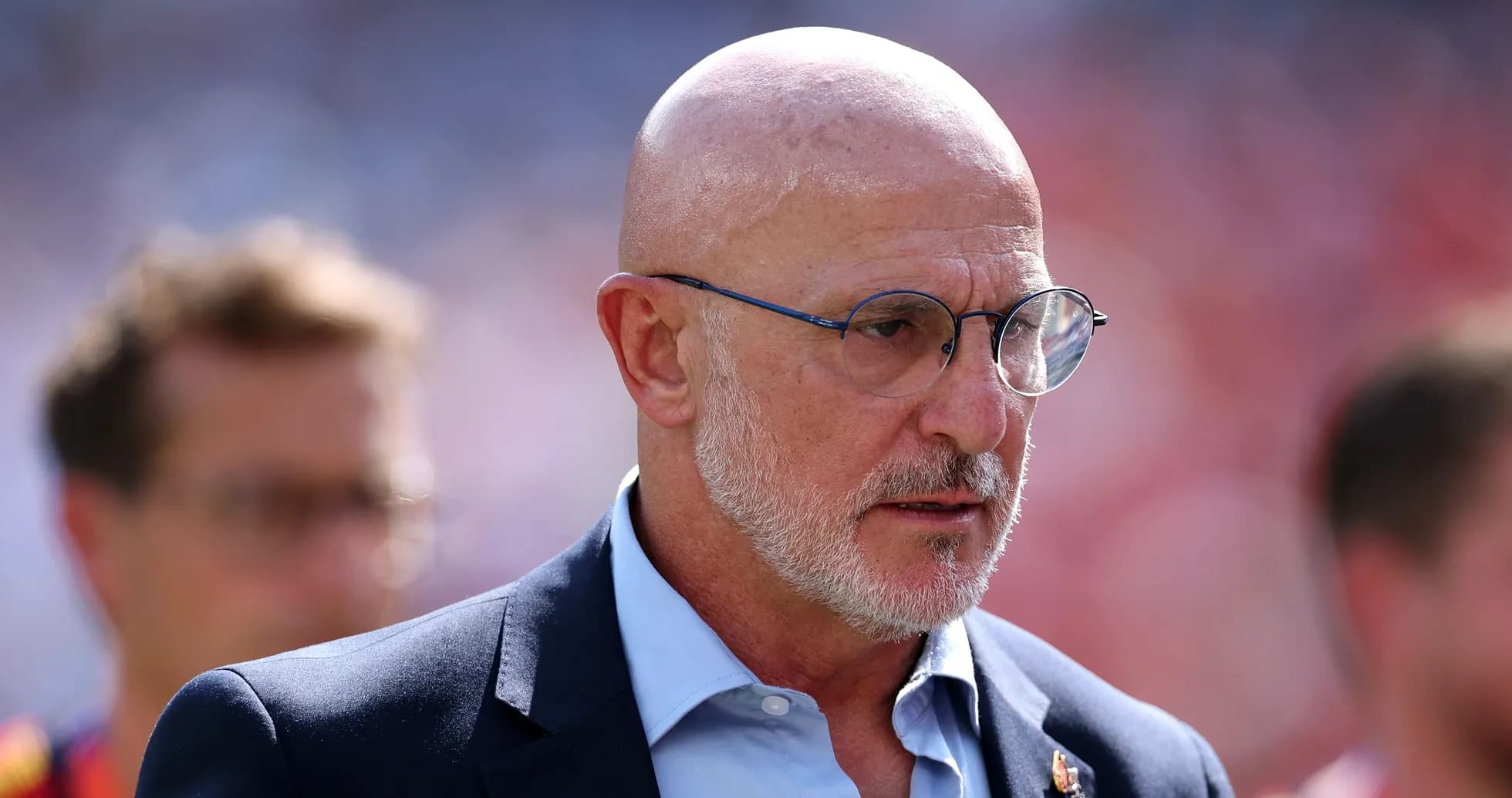
Spain step into the first international break of the season as world champions, riding the high of their World Cup triumph and turning their attention to the UEFA Nations League. The core of Luis de la Fuente’s squad, as usual, is painted in Barcelona colours. La Roja arrive confident, dominant, and seemingly untouchable.
Yet when De la Fuente was asked to pick the hardest spell of his tenure, he didn’t point to any tactical crisis, qualifying scare, or pressure-soaked final. He went straight to one moment: Gavi’s injury.
“It was horrifying”
Speaking to COPE, the Spain coach laid bare just how deeply that night cut into the heart of his dressing room. No filters, no clichés.
“Gavi’s injury was a tough moment for everyone,” he said. “We had a feeling of pain stemming from an accident, from losing a dear person to us.”
This wasn’t just a key player going down. It felt like the team had lost a piece of itself.
De la Fuente then pulled back the curtain on what the cameras never fully captured.
“If you had seen the reaction from the players in the dressing room, it was horrifying,” he recalled. “Everyone was hugging and supporting him. It was incredibly moving.”
Those scenes, raw and emotional, left a scar on a group that has since conquered the world. Even now, with medals around their necks and a new competition on the horizon, that night still shapes how they see each other — and how they see Gavi.
Back on the pitch, but not yet back on top
Gavi, now 22, has done the hard part that doesn’t make headlines. The long rehab. The lonely gym work. The endless drills to trust the knee again. He’s back. He’s available. He’s on the pitch.
But his battle has simply changed location.
At Barcelona, the fight is no longer against an injury. It’s against a depth chart.
Hansi Flick has a midfield packed with quality and hierarchy. Pedri is an automatic starter, the reference point in the middle. The summer arrival of Rodri has added another heavyweight presence. Around them, Fermin Lopez has surged with form and personality, while Dani Olmo has pushed his way into the conversation with consistent, polished performances.
Somebody has to sit. Right now, that somebody is often Gavi.
The player who once symbolised Barça’s new generation finds himself reduced to cameos, brief bursts of intensity rather than the full-blooded 90 minutes that used to define him. For a footballer who thrives on rhythm and repetition, that stings.
A race against time and competition
Gavi’s situation is not just a question of ego or status. It’s physical, too. He is still navigating the legacy of the serious knee injury from 2023 and the setback that followed last season. To truly put that behind him, he needs minutes, duels, fatigue — all the things that regular football brings.
Right now, those minutes are scarce.
That reality turns every appearance into a test. Every touch, every press, every late run into the box has a little extra weight. In a squad as congested as Barcelona’s, there is no room to ease back in. You either impose yourself, or you get swallowed by the rotation.
For Gavi, the margin for error is thin. But the opportunity is clear.
Club form, country status
De la Fuente’s admiration for Gavi is obvious in the way he speaks about him. The coach still sees him as one of the emotional engines of Spain’s dressing room, a player who drags others into the fight. Yet even for a World Cup-winning manager, loyalty has limits.
Spain are stacked in midfield. Competition at international level mirrors what Gavi faces at Camp Nou. To remain a central figure for La Roja, he cannot rely on memories of past performances or on the sympathy born from his injury.
He needs sharpness. He needs rhythm. He needs to look like the Gavi who once tore into games as if every ball was a 50–50 he had already decided to win.
That starts at club level. Camp Nou is now both his platform and his proving ground.
If he can turn those scattered minutes under Flick into a run of convincing displays, the picture changes quickly. His role at Barcelona grows, his influence with Spain stabilises, and the story moves away from injury and absence to impact and leadership.
If not, the question becomes unavoidable: how long can one of Spain’s most symbolic midfielders afford to stand on the fringes while the next wave fights to take his place?