Genoa vs Como: Serie A Round 3 Tactical Analysis
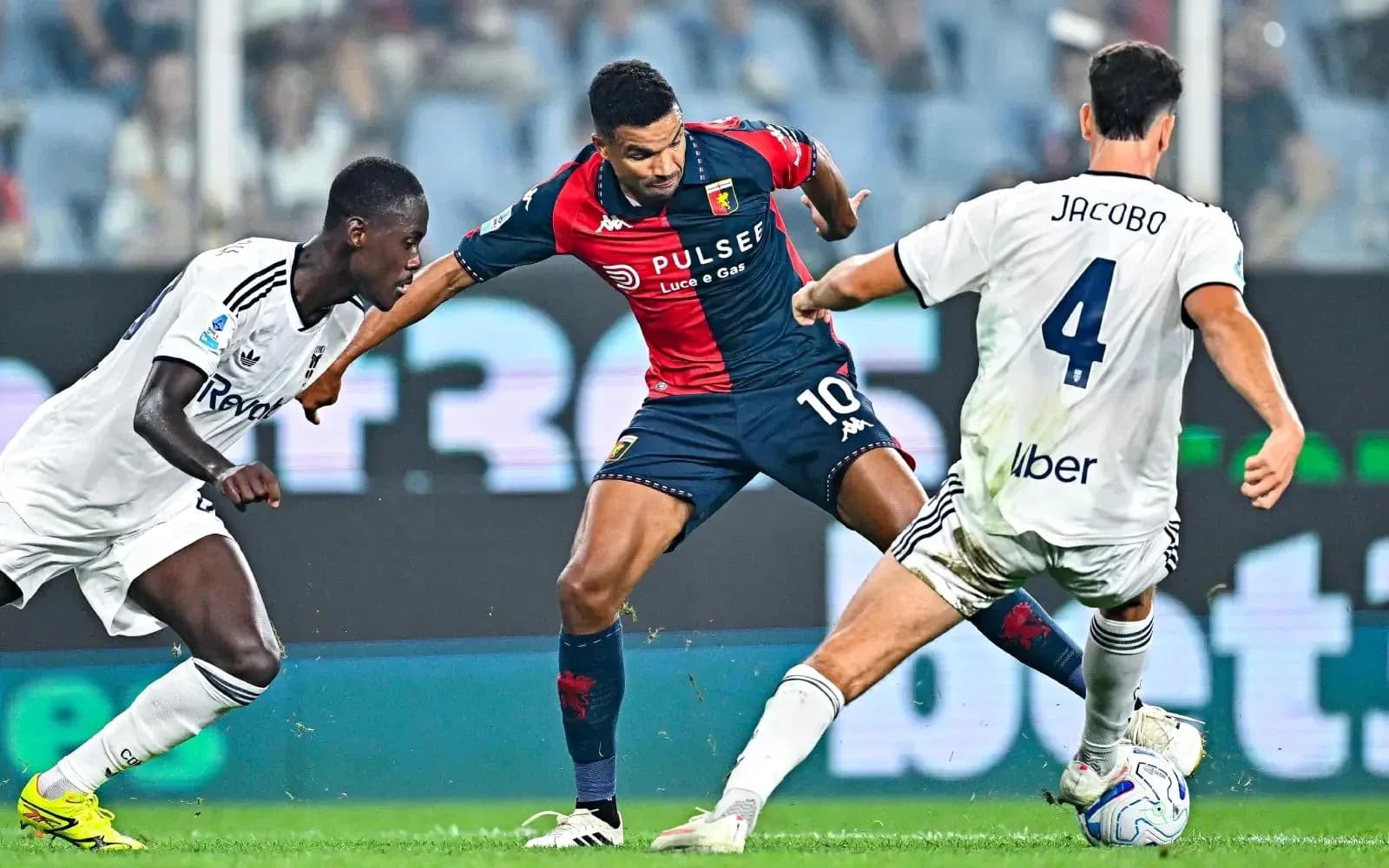
Under the floodlights of Stadio Luigi Ferraris, Round 3 of the 2026 Serie A season delivered a brutal reality check for Genoa and a statement of intent from Como. By full time, the scoreboard read 1–4, a scoreline that did more than settle a match; it crystallised the early-season identities of both sides.
Following this result, the league table tells a stark story. Genoa sit 19th with 0 points from 3 matches, their overall goal difference at -6, built from 1 goal scored and 7 conceded. At home, they have played 2, lost 2, scoring 1 and conceding 6. Como, by contrast, leave Genoa third in Serie A on 7 points from 3 games, unbeaten, with an overall goal difference of +4 after 7 goals for and 3 against, all on their travels. One side is sinking into an early relegation battle; the other is flirting with the Champions League places.
I. The Big Picture – Tactical Identities Collide
Daniele De Rossi doubled down on Genoa’s back-three identity, rolling out a 3-4-1-2 that tried to blend solidity with vertical thrust. J. Bijlow anchored the side in goal behind a defensive trio of M. Ellertsson, L. Østigård and A. Marcandalli. The wing corridors were entrusted to S. Sabelli on the right and the young creator T. Baldanzi on the left, with D. Sow and J. Vásquez attempting to stabilise the middle. Ahead of them, M. Frendrup floated as the connective tissue behind a front two of L. Colombo and M. Osmajić.
On paper, the structure offered Genoa numbers in central defence and the possibility of quick combinations through the half-spaces. In practice, it exposed their deepest flaw: a side already conceding an overall average of 2.3 goals per match, with that figure swelling to 3.0 at home, was asked to defend large spaces in transition against one of the league’s sharpest away attacks.
Cesc Fàbregas, in the opposite dugout, stayed faithful to Como’s 4-2-3-1, a shape that has already become a travelling menace. J. Butez stood behind a back four of Yan Couto and Álex Valle as adventurous full-backs, with Jacobo Ramón Naveros and T. Chalobah as the central pairing. The double pivot of M. Perrone and L. da Cunha gave the visitors a stable base from which a potent trio – Assane Diao, N. Paz and M. Baturina – could orbit around lone striker T. Douvikas.
This is a team that, heading into this game, had scored 7 goals in 3 away matches at an average of 2.3 per away outing, while conceding just 1.0 away. The blueprint was clear: compress the centre, spring the flanks, and let their technical attackers manipulate Genoa’s vulnerable lines.
II. Tactical Voids – Absences and Discipline
Genoa arrived already thinned on the edges of the squad. C. Drameh was unavailable as inactive, while E. Havel (thigh injury) and L. Venturino (knee injury) were also missing. None are established pillars of this XI, but in a side that has yet to keep a single clean sheet overall and has failed to score in 2 of their 3 matches, every absent option narrows De Rossi’s tactical flexibility.
Como had their own absentee in J. Addai, sidelined by an Achilles tendon injury. Yet the spine of Fàbregas’s project – Baturina, Diao, Douvikas, Yan Couto – was intact, and that continuity showed in the fluidity of their attacking patterns.
Discipline is another axis where the two squads diverge. Genoa’s season-long card profile already hinted at volatility: yellow cards spread across early (0–15), mid (31–45), and post-interval (61–75) phases, with a further cluster in added time (91–105). Individually, L. Østigård has collected 3 yellows in 3 appearances, while D. Sow and Alexsandro Amorim have 1 each. These are not red-card crises, but they are the signs of a defensive unit that is often late, often stretched, and constantly firefighting.
Como, by contrast, have drawn just a single yellow in the 46–60 minute window so far, with no red cards. Their aggression is selective, their control evident. Even Baturina, who has 1 yellow card alongside his attacking output, embodies a calculated edge rather than reckless overcommitment.
III. Key Matchups – Hunter vs Shield, Engine Room Battles
The most decisive duel of the night was the “Hunter vs Shield” confrontation: Como’s front four against Genoa’s back three and double pivot. Douvikas, with 2 league goals and 9 shots (5 on target) overall, continually pinned Østigård and Marcandalli, forcing them into uncomfortable foot races and aerial duels. Østigård’s season numbers – 4 successful blocks and 4 interceptions overall – speak of a defender constantly in the line of fire, but the volume of work is itself an indictment of Genoa’s collective structure.
Behind Douvikas, the creative triangle of Baturina, Diao and Paz repeatedly found pockets between Genoa’s midfield and defence. Baturina’s overall campaign – 2 goals, 1 assist, 5 shots, 90 passes at 87% accuracy, plus 3 key passes – underlines his status as Como’s conductor. Diao, with 2 goals, 1 assist, 7 shots and 6 key passes of his own, is the chaos agent, driving at defenders and doubling as a counter-pressing spearhead. Their movement exploited exactly the zones that Genoa’s 3-4-1-2 leaves exposed when the wing-backs are forced high.
In the engine room, Sow and Vásquez tried to stem the tide against Perrone and L. da Cunha, but the numbers from the season paint a familiar imbalance. Sow, accurate and industrious with 91 total passes at 91% accuracy and 2 tackles overall, is not a natural destroyer; he needs structure around him. With Genoa conceding an overall average of 2.3 goals per match and Como conceding just 1.0, the midfield battle was always tilted towards the visitors’ control.
On the flanks, Yan Couto’s role was pivotal. Already with 1 assist and 160 passes at 89% accuracy overall, he offered width and progression down Como’s right, pushing Baldanzi and Ellertsson back and denying Genoa the chance to build through their left side. Every time Genoa tried to release Frendrup or Colombo into the channels, Como’s full-backs and pivots squeezed the space, turning potential counters into turnovers.
For Genoa, Colombo remains a flicker of hope. With 1 assist and 4 key passes overall, he is one of the few Rossoblù players consistently connecting moves, but he is working in a side that has failed to score in 2 of 3 matches and averages just 0.3 goals per game overall. Osmajić’s presence alongside him offered depth, yet the service into the front two was sporadic at best.
IV. Statistical Prognosis – Where the Numbers Point
Following this result, the trajectories are clear. Genoa’s overall record – 3 defeats from 3, 1 goal scored, 7 conceded, 0 clean sheets – describes a team whose structure is not yet aligned with its personnel. At home, conceding an average of 3.0 goals while scoring just 0.5 is unsustainable. Without a dramatic tightening of the back line and a clearer plan to bring Baldanzi and Frendrup into advanced, central zones, their relegation-tagged status in the standings looks justified.
Como, meanwhile, have crafted an away-first identity. Three matches, all on their travels, have yielded 2 wins and 1 draw, 7 goals scored and only 3 conceded. Their average of 2.3 goals for and 1.0 against away is the statistical profile of a side that can both hurt opponents and manage games. With Baturina and Diao already among the league’s most productive attackers, and Douvikas providing a robust focal point, Fàbregas has a platform that marries control with incision.
There were no penalties to distort the underlying numbers – neither side has taken or missed one this season – so the patterns are pure tactical expression. Genoa are porous, reactive, and over-reliant on individual defensive heroics. Como are compact, technically assured, and ruthless in the final third.
If these trends hold, Genoa’s season will be defined by a desperate search for balance in front of Bijlow, and perhaps a recalibration away from such an exposed back three. Como, on the other hand, look every inch a dark horse for the European places: a team whose attacking structure, away resilience, and disciplined aggression are already aligned with their lofty position near the top of Serie A.