Haiti vs Scotland: World Cup Group C Match Analysis
Gillette Stadium in Boston hosted a meeting of contrasts as Haiti and Scotland opened their World Cup Group C campaigns. Under the lights and the watch of Mustapha Ghorbal, Scotland edged a 1–0 win, a result that immediately split the group table in two: Scotland top with 3 points and a goal difference of +1, Haiti bottom with 0 points and a goal difference of -1. Following this result, the story is not only about the scoreline, but about two 4‑4‑2 systems revealing very different levels of maturity on the biggest stage.
The Big Picture – Two 4‑4‑2s, two identities
Both coaches, Sebastien Migne and Steve Clarke, trusted the symmetry of 4‑4‑2, but the shapes behaved differently.
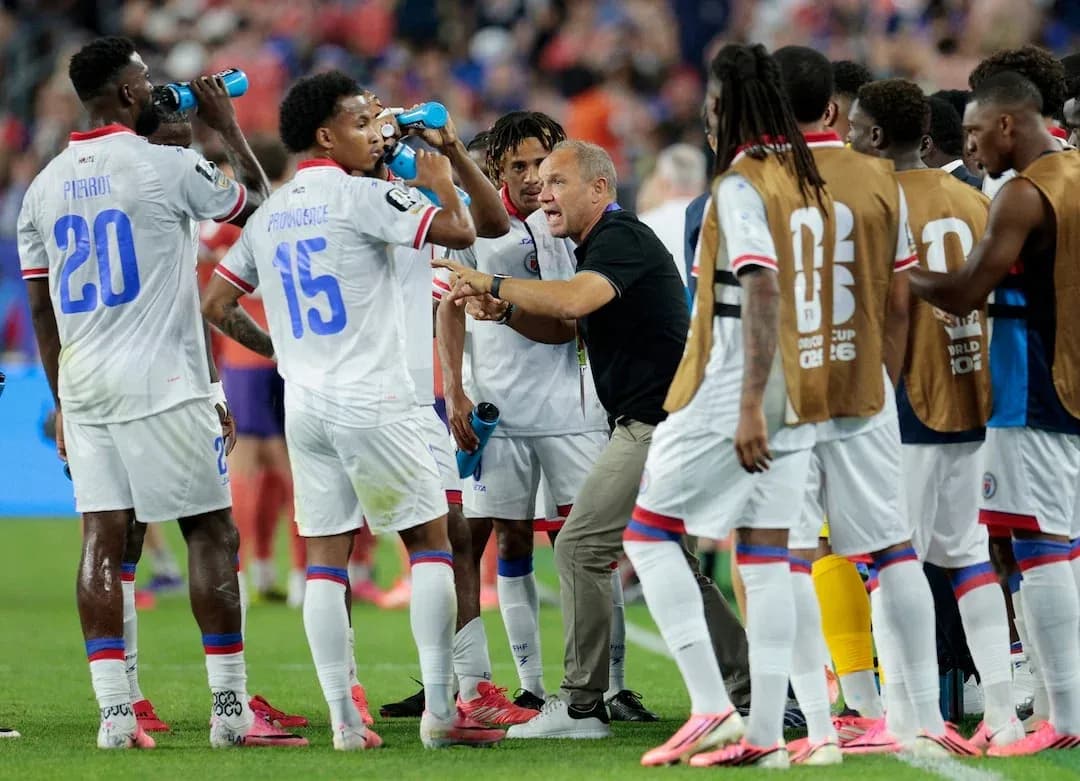
Haiti’s 4‑4‑2 was compact and reactive. Johny Placide anchored a back four of Carlens Arcus, Ricardo Adé, Hannes Delcroix and Martin Expérience, with a midfield band of four that blended energy and creativity: Louicius Don Deedson wide, Danley Jean Jacques and Jean‑Ricner Bellegarde inside, and Ruben Providence opposite. Up front, Frantzdy Pierrot and Wilson Isidor formed a physically imposing but service‑starved partnership. Heading into this game, Haiti had not scored in the competition, and that pattern held: in total this campaign they have 0 goals for and 1 against, with an overall scoring average of 0.0 and an overall concession rate of 1.0.
Scotland’s 4‑4‑2, meanwhile, was assertive and positionally disciplined. Angus Gunn sat behind a back four of Aaron Hickey, Grant Hanley, Jack Hendry and Andy Robertson. In midfield, Ben Gannon‑Doak offered vertical thrust on the right, Scott McTominay and Lewis Ferguson patrolled the centre, and John McGinn tucked in from the left to form Scotland’s familiar boxy overload between the lines. Lawrence Shankland and Che Adams led the line, a blend of penalty‑box finishing and channel running. On their travels, Scotland have 1 goal for and 0 against so far, with an away scoring average of 1.0 and an away concession rate of 0.0 – a textbook away‑day foundation.
Tactical Voids – Where the squads were stretched
With no explicit missing‑player data, both sides appeared close to full strength, but the “voids” were structural rather than personnel‑based.
For Haiti, the key gap was progression from the double pivot into the forwards. Jean Jacques and Bellegarde had to cover vast horizontal distances, screening McTominay and Ferguson while also trying to release Pierrot and Isidor early. The result was a stretched unit: when Haiti dropped into a low block, Pierrot and Isidor were often marooned, leaving Don Deedson and Providence as the only real outlets. Haiti’s failure to score – they have already failed to score in 1 total match this campaign – underlines how rarely they could connect third‑man runs from midfield with their front two.
Defensively, Haiti were relatively disciplined but still raw. Their season card profile shows a single yellow card concentrated in the 31–45 minute window, accounting for 100.00% of their yellows so far. That spike hints at a side that tightens up under late‑half pressure, resorting to tactical fouls when legs and concentration dip.
Scotland’s void was different: not chance creation, but game management once in front. Their disciplinary curve is revealing. In total this campaign, Scotland’s yellow cards are clustered in the second half and stoppage time: 33.33% of their yellows come between 46–60 minutes, and 66.67% arrive from 91–105 minutes. That late‑game surge of cautions speaks of a team willing to foul to protect a lead, but it also hints at emotional spikes and slightly ragged control as the clock runs down.
Individually, the card data underlines this edge. Aaron Hickey’s 75‑minute shift included a yellow card, 35 passes at 88% accuracy, and 7 duels contested with 5 won – a full‑back playing on the front foot, sometimes over the line. From the bench, Kenny McLean and Findlay Curtis each came on, each committed a foul, and each took a yellow. Scotland’s depth adds bite, but also risk.
Key Matchups – Hunter vs Shield, Engine Room vs Enforcer
Hunter vs Shield tilted Scotland’s way. Pierrot and Isidor, Haiti’s “hunters”, were matched against a Scottish central defensive pairing of Hanley and Hendry that rarely had to defend in emergency situations thanks to the platform in front of them. Scotland have yet to concede in total this campaign, and their overall goals‑against average stands at 0.0; this clean sheet was not an accident but the product of structure. Hickey and Robertson squeezed high, pinning Haiti’s wingers back and forcing Pierrot and Isidor to drop deeper than they wanted.
On the other side, Shankland and Adams were the hunters testing a Haitian shield that, while organised, is still adapting to this level. Haiti’s overall concession rate of 1.0 reflects a back line that can stay in games but not yet dominate them. Adé and Delcroix had to hold a very narrow line to deal with Shankland’s penalty‑box movement, which in turn opened the half‑spaces for McGinn and Gannon‑Doak to attack.
In the Engine Room, the duel between McTominay–Ferguson and Jean Jacques–Bellegarde shaped the tempo. McTominay’s ability to drop between the centre‑backs allowed Robertson to push on, while Ferguson’s quieter, metronomic role ensured Scotland could recycle possession and keep Haiti running. For Haiti, Bellegarde tried to stitch transitions together, but with his side’s overall possession profile skewed towards defending, his influence came in flashes rather than sustained waves.
Statistical Prognosis – What this game tells us going forward
Following this result, the statistical picture is stark. Overall, Haiti have played 1 match, lost 1, scored 0, and conceded 1. They have no clean sheets and have already failed to score once. Their biggest defeat so far is a 0–1 at home, and their biggest attacking output is still to come. The numbers paint a side whose defensive baseline is respectable but whose attacking mechanisms are underdeveloped.
Scotland, by contrast, have started with an away win, 1–0, and a clean sheet. Overall they have 1 win, 1 goal for, 0 against, and 1 clean sheet. Their card distribution – yellows spiking late – suggests that as the stakes rise, their physical and psychological edge will remain a double‑edged sword.
In xG terms, while the raw figures are not provided, the patterns of play suggest Scotland generated the higher quality chances: sustained territorial pressure, overlapping full‑backs, and a front two receiving regular service. Haiti’s threat was more episodic, likely producing a modest xG profile built on counters rather than siege.
The prognosis is clear. If Haiti are to stay alive in Group C, they must find a way to convert Pierrot’s presence into penalty‑area volume and give Don Deedson and Providence more licence to break lines. For Scotland, this match confirms that their 4‑4‑2 travels well, that their back four is capable of tournament‑level control, and that their main task now is to temper their late‑game aggression with a touch more composure. The foundations of a deep run are visible; the question is whether they can keep winning these fine‑margin games without disciplinary costs catching up with them.