Saudi Arabia vs Uruguay: Match Report and Tactical Analysis
Saudi Arabia 1-1 Uruguay at Hard Rock Stadium opens Group H with a shared point that both reflects Uruguay’s territorial dominance and Saudi Arabia’s resilience. With the draw, Saudi Arabia move to 2 points and remain well placed in the Round of 32 zone, while Uruguay also climb to 2 points and stay at the top end of the group picture, both sides now on identical records and finely poised heading into the second round of fixtures.
Match Report
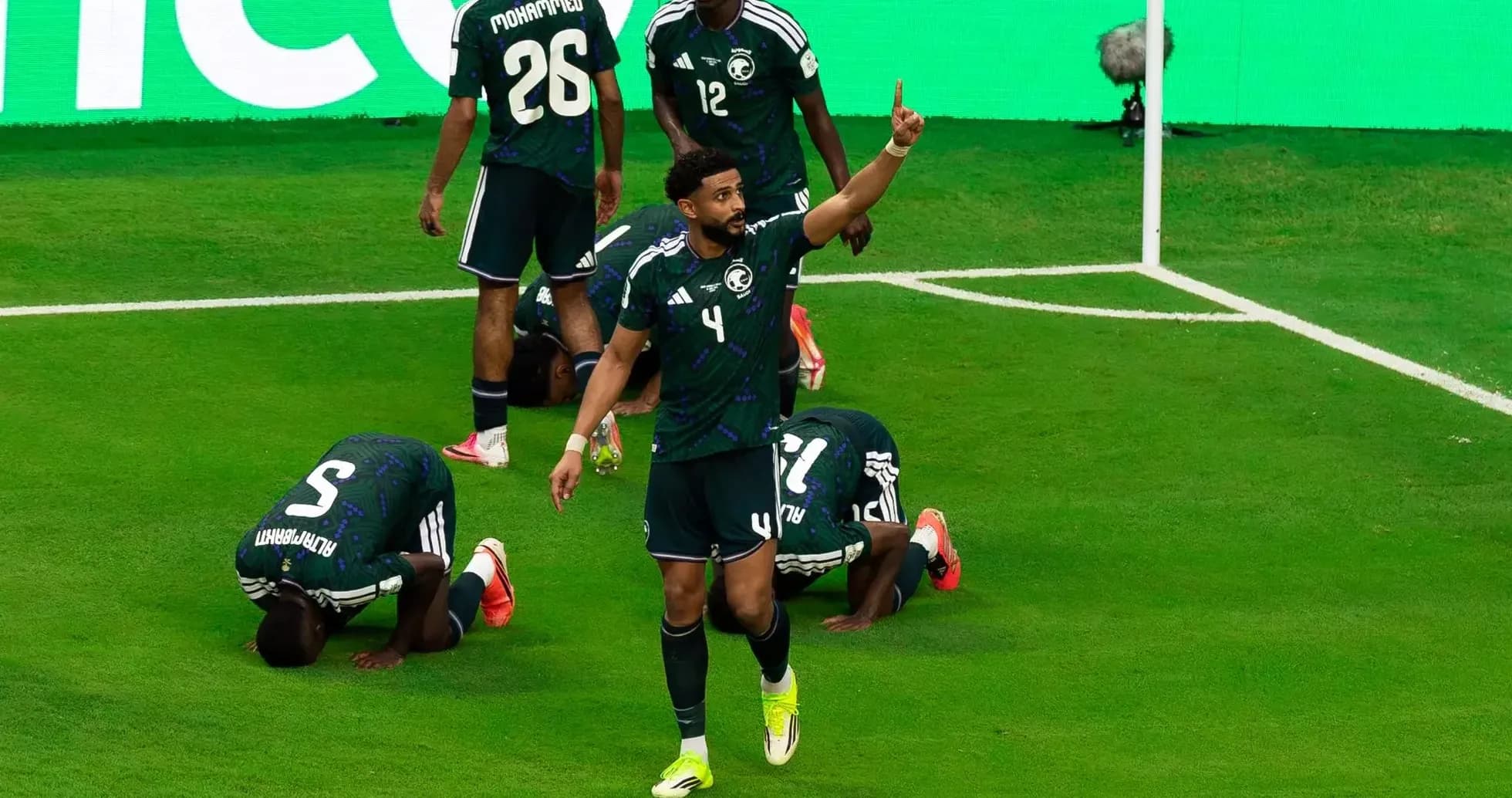
The game’s first major incident arrived on 41', when Saudi Arabia took the lead. A. Al Amri rose in the box to finish from a set-piece situation, and with no creator credited it went down as an unassisted effort: 41' Saudi Arabia goal — A. Al Amri (unassisted), making it 1-0 Saudi Arabia 1-0 Uruguay.
Just three minutes later, the goalscorer found his way into the book. On 44', A. Al Amri (Saudi Arabia) received a yellow card for roughing after a robust challenge in his own defensive third: 44' A. Al Amri (Saudi Arabia) — yellow card (Roughing).
At half-time Uruguay reacted with a double change to inject more energy and width. On 46', J. Sanabria replaced M. Vina (Uruguay), a like-for-like change at left-back but with greater attacking intent. Simultaneously on 46', A. Canobbio replaced D. Nunez (Uruguay), a switch that reconfigured the forward line and added a more mobile wide threat to support the central striker.
Saudi Arabia’s first substitution came on 63', aimed at refreshing the front line and adding work rate between the lines. N. Al Dawsari replaced M. Al Juwayr (Saudi Arabia), providing fresh legs in advanced areas to help relieve pressure and offer an outlet on transitions.
Uruguay continued to chase the game and adjusted their midfield balance on 72'. N. de la Cruz replaced M. Ugarte (Uruguay), sacrificing a pure holding midfielder for a more creative presence to increase vertical passing and late runs into the box.
The pressure finally told on 80', when Uruguay found the equaliser. M. Araujo cut in from the left and finished a move he had heavily influenced himself, with no assist recorded: 80' Uruguay goal — M. Araujo (unassisted), levelling the score at Saudi Arabia 1-1 Uruguay.
Immediately after scoring, Uruguay made a like-for-like change to keep their left flank fresh. On 81', B. Rodriguez replaced M. Araujo (Uruguay), maintaining width and direct running against a tiring Saudi back line. At the same minute, Saudi Arabia also adjusted in midfield: on 81', N. Boushal replaced M. Abu Al Shamat (Saudi Arabia), bringing on a more defensive-minded presence to help protect the draw.
As regulation time expired, Uruguay refreshed their central attacking option. On 90', R. Aguirre replaced F. Vinas (Uruguay), adding a more physical penalty-box presence for the closing aerial bombardment.
Saudi Arabia then used the entirety of stoppage time to manage the result with a triple change at 90+3'. First, A. Lajami replaced S. Abdulhamid (Saudi Arabia), reinforcing the defensive line. Moments later, A. Al Hamdan replaced M. Al Harbi (Saudi Arabia), giving fresh legs on the flank to help defend deep and chase clearances. Finally, A. Hejji replaced F. Al Buraikan (Saudi Arabia), another defensive-minded move that ensured extra energy in the final line of resistance as the match closed at 1-1.
Fixture Statistics & Tactical Audit
- xG: Saudi Arabia 0.99 vs Uruguay 1.48
- Possession: Saudi Arabia 35% vs Uruguay 65%
- Shots on Target: Saudi Arabia 3 vs Uruguay 9
- Goalkeeper Saves: Saudi Arabia 8 vs Uruguay 2
- Blocked Shots: Saudi Arabia 1 vs Uruguay 5
Uruguay were dominant in territorial and chance volume terms (65% possession, 24 total shots, 1.48 xG) and repeatedly worked shooting positions inside the box, forcing eight saves from Mohammed Al-Owais. Saudi Arabia, by contrast, relied on compact defending and set-piece efficiency, generating 0.99 xG from just seven attempts and three efforts on target. The draw therefore feels broadly fair: Uruguay’s sustained pressure merited at least a point, but their inability to convert a clear statistical superiority into multiple goals, combined with Saudi Arabia’s efficiency from limited opportunities, explains why the scoreline did not tilt in their favour.
Standings Update & Seasonal Impact
Both sides came into this Group H fixture having already drawn their opening matches, each with 1 point and a goal difference of 0 (1 scored, 1 conceded). The 1-1 result in Miami Gardens adds a further point apiece, taking Saudi Arabia to 2 points with 2 goals for and 2 against (goal difference 0), and Uruguay also to 2 points with 2 goals for and 2 against (goal difference 0). Uruguay remain in the Round of 32 qualification places, still ranked at the top end of the group on account of existing tiebreakers, while Saudi Arabia stay in a Round of 32 position just behind them. With two draws from two, both teams have left the group finely balanced: a single win in their final match is likely to be decisive in confirming progression.
Lineups & Personnel
Saudi Arabia Starting XI
- GK: Mohammed Al-Owais
- DF: Moteb Al-Harbi, Hassan Altambakti, Abdulelah Al-Amri, Saud Abdulhamid
- MF: Salem Al-Dawsari, Abdullah Al-Khaibari, Mohamed Kanno, Mohammed Abu Al-Shamat
- FW: Musab Al Juwayr, Firas Al-Buraikan
Uruguay Starting XI
- GK: Fernando Muslera
- DF: Matías Viña, Mathías Olivera, Sebastián Cáceres, Guillermo Varela
- MF: Manuel Ugarte, Rodrigo Bentancur, Maximiliano Araújo, Federico Viñas, Federico Valverde
- FW: Darwin Núñez
Post-Match Verdict
This was a resilient Saudi Arabia performance built on defensive organisation and goalkeeping excellence: despite facing 24 shots and 9 on target, they limited Uruguay to 1.48 xG and saw Al-Owais make 8 saves, underpinning a point that keeps them firmly in contention. Uruguay, meanwhile, were dominant in possession and territory (65% of the ball, 571 passes at 88% accuracy) and consistently created shooting opportunities, but lacked clinical edge in the final third (9 shots on target for just one goal) and were vulnerable at defensive set plays, as underlined by conceding from one of only seven Saudi attempts. Tactically, Bielsa’s side imposed their structure and pressing, yet Donis’s compact 4-4-2 and effective game management in the closing stages ensured that Uruguay’s statistical superiority did not translate into three points.