Sweden Dominates Tunisia 5-1 with Tactical Superiority
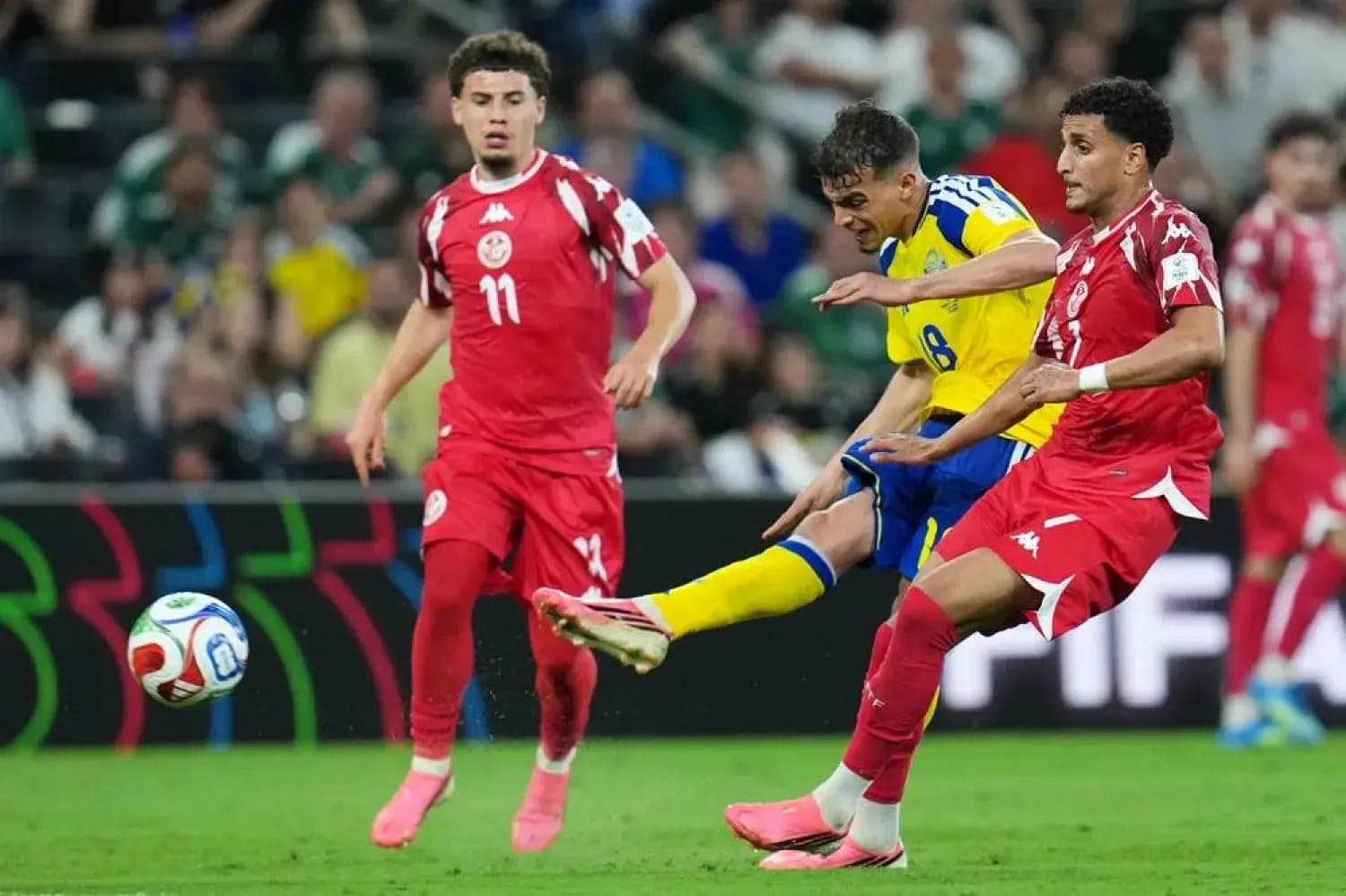
Sweden’s 5-1 dismantling of Tunisia at Estadio BBVA was built on a clear tactical superiority rather than territorial dominance. Despite having slightly less of the ball (49% to Tunisia’s 51%), Sweden’s 3-1-4-2 under Graham Potter consistently created higher-quality situations, reflected in a 1.36 xG to 0.28 edge and a 13-6 shot advantage. Tunisia’s 5-3-2 from Sabri Lamouchi never solved Sweden’s vertical connections between midfield and the front two, and once the game opened up after the interval, the Scandinavian side repeatedly sliced through a stretched Tunisian back five.
In possession, Sweden’s 3-1-4-2 was structured around a clear central spine. Victor Lindelöf, Isak Hien and Gustaf Lagerbielke formed the back three, with Jesper Karlström initially operating as the single pivot in front of them. Ahead, a line of four — Alexander Bernhardsson wide right, Benjamin Nygren and Yasin Ayari inside, and Gabriel Gudmundsson wide left — supported the front pairing of Viktor Gyökeres and Alexander Isak. The shape allowed Sweden to outnumber Tunisia between the lines: Ayari and Nygren regularly received in the half-spaces behind Tunisia’s midfield three, forcing the Tunisian centre-backs to step out and break their line.
The opening goal at 7 minutes, from Yasin Ayari, encapsulated that structure: Sweden’s interior midfielder arriving high, taking advantage of Tunisia’s compact but reactive block. With three centre-backs behind and Karlström anchoring, Sweden could commit both wing-backs and both forwards without losing rest defence balance, which in turn pinned Tunisia’s wing-backs deep and reduced their counter-attacking threat.
Tunisia’s 5-3-2, with Yan Valery and Ali Abdi as the outer defenders in a back five and Rani Khedira, Ellyes Skhiri and Hannibal Mejbri in midfield, was designed to be solid centrally. However, they struggled to manage Sweden’s dual strikers. Gyökeres and Isak constantly occupied different channels: one dropping into pockets, the other stretching depth. Sweden’s second goal on 30 minutes — Alexander Isak finishing from a Viktor Gyökeres assist — highlighted that complementary movement, as Gyökeres linked play and Isak attacked the space behind.
Tunisia’s best attacking moments came from set structures rather than sustained possession. Omar Rekik’s 43rd-minute goal, assisted by Hannibal Mejbri, was one of only two Tunisian shots on target all match. With just 2 shots inside the box from 6 total attempts, their 0.28 xG underlined how rarely they accessed dangerous zones. Sweden’s back three, screened by Karlström, generally forced Tunisia’s forwards Elias Saad and Anis Ben Slimane to receive with their backs to goal or drift wide, where the threat was easier to contain.
Discipline and defensive control also tilted Sweden’s way. Sweden committed 10 fouls to Tunisia’s 8, but crucially avoided any bookings, while Rani Khedira’s yellow card at 54 minutes for “Tripping” reflected Tunisia’s growing desperation to stop Sweden’s midfield runners. That moment came just before the game decisively swung: Gyökeres scored Sweden’s third at 59 minutes, assisted by Isak, again demonstrating the symmetry in their partnership — this time Isak providing and Gyökeres finishing.
From a goalkeeping perspective, Kristoffer Nordfeldt (Sweden) was largely untroubled, officially required to make only 1 save. Sweden’s defensive structure restricted Tunisia to low-quality efforts, so Nordfeldt’s involvement was more about claiming and distribution than shot-stopping. At the other end, Abdelmouhib Chamakh (Tunisia) also recorded 1 save, but the underlying numbers paint a different story: Tunisia’s goals prevented figure of -2.99, matched by Sweden’s, indicates that the Tunisian defensive unit and goalkeeper collectively underperformed relative to shot quality conceded, allowing Sweden to turn a modest xG into a rout.
Sweden’s passing profile reinforced their controlled aggression: 353 total passes, with 280 accurate at 79%. They did not dominate volume but were efficient, using the ball to progress rather than to circulate aimlessly. Tunisia, with 364 total passes and 288 accurate (also 79%), actually completed more passes, yet produced far less incision. Their possession was often in safer zones, in front of Sweden’s block rather than through it.
The substitutions in the second half sharpened Sweden’s edge rather than simply protecting a lead. At 65 minutes, Elliot Stroud (IN) came on for Gabriel Gudmundsson (OUT), and Lucas Bergvall (IN) came on for Benjamin Nygren (OUT), refreshing the wide and interior roles without altering the fundamental 3-1-4-2 structure. Tunisia’s triple change at 72 minutes — Sebastian Tounekti (IN) for Elias Saad (OUT), Mohamed Belhadj Mahmoud (IN) for Yan Valery (OUT), and Elias Achouri (IN) for Ellyes Skhiri (OUT) — was a clear attempt to inject energy and attacking impetus, but it destabilised their midfield protection and widened the spaces Sweden could attack.
The closing phase showcased Sweden’s depth and tactical continuity. At 84 minutes, Mattias Svanberg (IN) came on for Jesper Karlström (OUT) and immediately moved into advanced positions, scoring Sweden’s fourth just moments later, assisted by Isak. Tunisia continued to shuffle: Ismael Gharbi (IN) for Rani Khedira (OUT) on 83 minutes and Firas Chaouat (IN) for Anis Ben Slimane (OUT) on 84 minutes, but those changes could not alter the pattern. Sweden then introduced Anthony Elanga (IN) for Alexander Isak (OUT) at 90 minutes and Daniel Svensson (IN) for Alexander Bernhardsson (OUT) at 90+1, while maintaining the same attacking lanes. The fifth goal at 90+6, Ayari’s second, assisted by Bergvall, underlined how Sweden’s structure kept generating chances even with rotated personnel.
Statistically, the verdict is emphatic. Sweden turned 7 shots on goal from 13 attempts into 5 goals, aided by Tunisia’s poor defensive execution and the negative goals prevented figure. Tunisia’s 2 shots on goal from 6 attempts rarely troubled Nordfeldt (Sweden), and their 2 corner kicks and 6 offsides show a side trying but failing to stretch Sweden’s back line. Sweden’s 4 corner kicks and 3 offsides reflect a more controlled, well-timed attacking approach. With a 2-1 lead at half-time and a 5-1 final score, Sweden’s tactical plan — compact base, aggressive half-space occupation, and a devastating Gyökeres-Isak partnership — proved far more repeatable and coherent than Tunisia’s reactive 5-3-2, setting a strong early marker in the World Cup group stage.