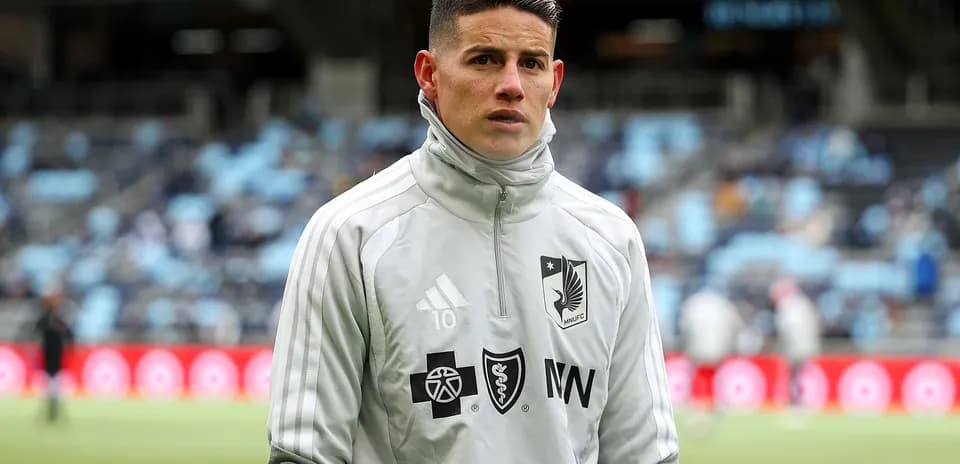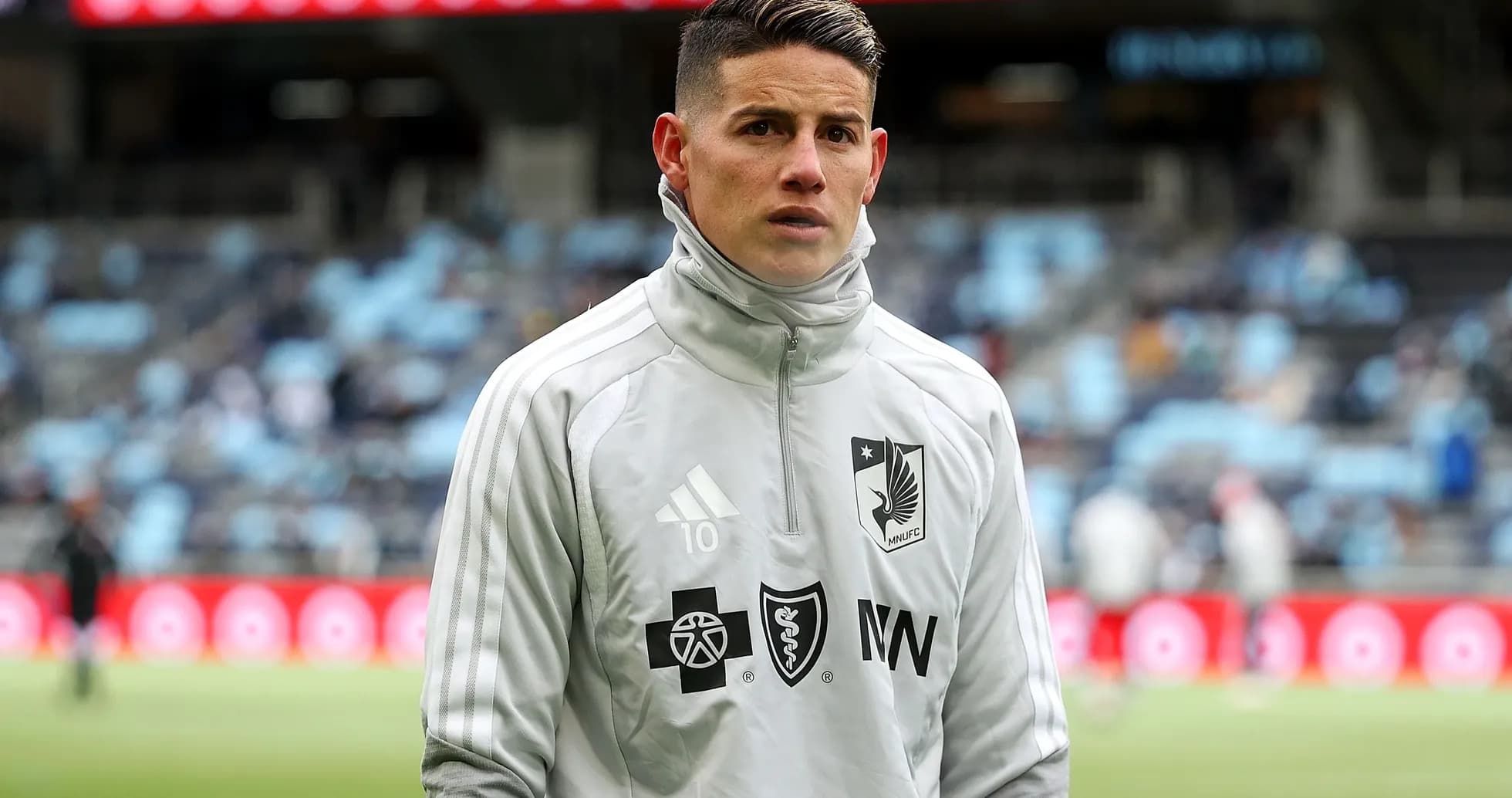
For a few uneasy days, the football world held its breath over James Rodríguez. Not because of a transfer saga or a dip in form, but something far more serious: his health.
The Colombian playmaker, now with Minnesota United, returned from international duty with Los Cafeteros only to be struck down by a sudden and alarming illness that left him in hospital and sparked a wave of speculation across the Atlantic.
From Paris to a hospital bed
The timeline is stark. On 29 March, James lined up for Colombia in a glamour friendly against France, a match that ended 3–1 to Les Bleus. For most, it was another high-level run-out, a chance to fine-tune before bigger tests ahead. For James, it was the start of a crisis.
After the final whistle, the 2014 World Cup top scorer began to suffer from intense physical exhaustion. The symptoms escalated quickly. What initially looked like fatigue from a demanding fixture soon took on a more worrying shape.
Doctors later diagnosed “severe dehydration.” By the morning of 31 March, the situation demanded more than rest and routine treatment. James was admitted to hospital, where he spent three days under constant medical supervision. He received fluids and intravenous therapy, stabilised, and was eventually discharged to continue his recovery at home, this time under the watchful eye of a specialist medical team.
For a player whose body has been scrutinised for years, this was different. This wasn’t a muscle tweak or a knock. It was a health scare.
Rumours of ‘rhabdomyolysis’ and a firm club response
While James remained in hospital and official updates stayed scarce, the information vacuum filled quickly. Reports emerged in US media claiming the Colombian was dealing with ‘rhabdomyolysis’ – a serious condition caused by the breakdown of muscle tissue that can lead to kidney failure and, in the worst cases, death.
The word alone was enough to ignite concern. It suggested something far beyond a routine setback for a 34-year-old athlete.
Minnesota United moved to shut that down. In a strongly worded statement, the club categorically denied any suggestion that James was suffering from rhabdomyolysis, stressing there was no biological or clinical evidence to support such claims. The message was clear: the rumours had run ahead of the facts.
The club underlined its stance on player welfare and privacy, and urged both the public and the media to stop speculating and to rely only on official updates. In an age where a single phrase can spiral into a global narrative, it was a sharp reminder of how quickly a medical issue can be distorted.
A fragile season, a cautious comeback
All of this has unfolded during a delicate chapter in James’s career. Since joining Minnesota United in February, the former Real Madrid star has managed just 39 minutes in his new colours. A series of physical issues has already slowed his introduction to MLS, raising inevitable questions about how much his body still has to give at this level, and how often.
This latest scare could easily have deepened the gloom around his move. Instead, the tone has shifted in recent days.
Minnesota United confirmed on Monday that James had returned to training. Not to full sessions, not yet, but to the pitch – a significant step in itself. Under close medical supervision, he completed a light, individual workout, the kind of carefully controlled session that signals a player is back on the path, even if the road ahead remains long.
The plan is measured. James will be eased back into group training in stages, following strict clinical protocols. No shortcuts, no rush. The club knows what he represents: a global name, a creative fulcrum, a potential game-changer in a league that thrives on marquee talent. But it also knows the cost of pushing too hard, too soon.
For now, the panic has subsided. The spectre of a career-threatening diagnosis has been pushed firmly aside by the medical facts. What remains is a more familiar challenge for James Rodríguez: rebuilding rhythm, regaining trust in his body, and proving that this chapter in Minnesota can still become more than a footnote in a career that once lit up the world stage.